Kashmir at zero local militancy?
As the last known local Lashkar recruit is killed, a violence-weary Kashmir asks questions of the future
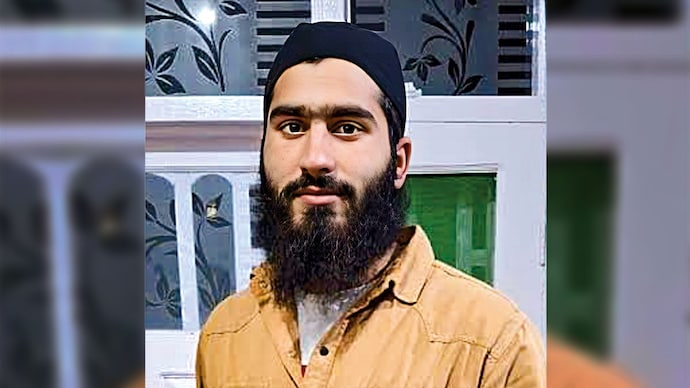
A Kashmir without any militants? Well, at least no known, active, locally recruited ones. That’s the state of affairs, for the first time in 35 years, according to police. This striking claim came after Latif Bhat, a Lashkar-e-Toiba (LeT) operative, was killed in Kulgam on November 18 after he refused an offer to surrender. That marked a significant moment: Union home minister Amit Shah called him “the last” listed active Kashmiri militant affiliated with the group. Whether that milestone—zero local militancy—changes things qualitatively is a more complicated question.
A Kashmir without any militants? Well, at least no known, active, locally recruited ones. That’s the state of affairs, for the first time in 35 years, according to police. This striking claim came after Latif Bhat, a Lashkar-e-Toiba (LeT) operative, was killed in Kulgam on November 18 after he refused an offer to surrender. That marked a significant moment: Union home minister Amit Shah called him “the last” listed active Kashmiri militant affiliated with the group. Whether that milestone—zero local militancy—changes things qualitatively is a more complicated question.
A Kashmir without any militants? Well, at least no known, active, locally recruited ones. That’s the state of affairs, for the first time in 35 years, according to police. This striking claim came after Latif Bhat, a Lashkar-e-Toiba (LeT) operative, was killed in Kulgam on November 18 after he refused an offer to surrender. That marked a significant moment: Union home minister Amit Shah called him “the last” listed active Kashmiri militant affiliated with the group. Whether that milestone—zero local militancy—changes things qualitatively is a more complicated question.
Local recruitment fell sharply in recent years, after a reactive surge following Hizbul Mujahideen commander Burhan Wani’s killing in July 2016. The records show 88 recruits that year, rising to 196 in 2018 and 174 in 2020, before declining to four in 2024 and one in 2025. J&K police chief Nalin Prabhat says only two Kashmiri youths joined LeT across 2025 and 2026: Umar Dar, killed in an orchard in Larnoo on November 16, and Bhat.
For years, local recruits supplied Pakistan-backed groups with more than gunmen. They brought knowledge of the terrain, logistics, contacts and an indigenous face. Their deaths could draw entire neighbourhoods into confrontation with the state, as the post-Burhan Wani unrest showed.
HOW CLOSE TO ZERO?
Former security brass, with long years in handling, share the optimistic reading—with some qualifiers. Former J&K director general of police Shesh Paul Vaid says the disappearance of local faces from the active ranks is a setback for Pakistan. Of an estimated 60-80 militants operating in J&K, he cites intelligence assessments showing over 95 per cent as foreigners, predominantly Pakistanis. That leaves locals in single digits—across the state, not just Kashmir. “The Pakistani establishment in Rawalpindi—which runs this terror industry—will be uneasy without the local boys joining,” Vaid told india today. But foreign militants still need local assistance. Overground support, he cautions, remains available.
Lieutenant General Deependra Singh Hooda (retd), who headed the Northern Command, calls the decline in active local militants “very positive”. Recruitment affects not just the individual but the surrounding society, he says. Its decline also allows greater attention to counter-infiltration: preventing Pakistan-based militants, who often provide leadership, from entering. Yet Hooda, too, is wary of declaring the conflict as fundamentally transformed. “It is not as if there are now no local militants, and the internal security now doesn’t need to be handled with sensitivity. That still remains,” he says.
But the decline in volumes is real, and it comes after sustained pressure from security agencies, particularly since the August 2019 removal of Article 370 and J&K’s bifurcation. Operations have targeted militants, overground workers, financing and online networks. Properties linked to militants have been attached under the Unlawful Activities (Prevention) Act, separatist leaders remain imprisoned, and public glorification of militancy has been curbed. Hooda identifies deterrence as a factor, alongside a “self-realisation” that militancy “doesn’t lead anywhere and creates only problems and grief for everyone”.
Vaid points to surrounding facts that may have helped atrophy the belief system: the short operational lives that militants have; the scenario of development, however skewed, that evolves in times of relative calm; and most of all, the social media’s exposure of conditions in Pakistan and Pakistan-occupied Kashmir. “The Internet has shown to Kashmiris that even those who are asking for food and electricity in PoK—the so-called Azad Kashmir—are fired upon,” he says. Pakistan’s treatment of dissent, including its crackdown on Imran Khan’s supporters, may have also weakened the appeal of militancy.
The government reads the quieter streets and bustling tourist footfalls as evidence that its approach has worked. But the tight policing of public expression complicates any straightforward reading of silence as consent. Nor has the security threat exactly disappeared. Two special police officers were killed in Kishtwar on November 12. Days later, L-G Manoj Sinha said agencies must dismantle the “terror-separatist ecosystem”. Prabhat went into action soon. That sounded like the old days.

