Design unscripted | Ameet Mirpuri Design Studio | Designer of the Month
From anchoring a pan-Indian studio in Visakhapatnam to designing homes with secret catering kitchens, Ameet Mirpuri has built a two-decade practice on one simple rule, to never repeat himself
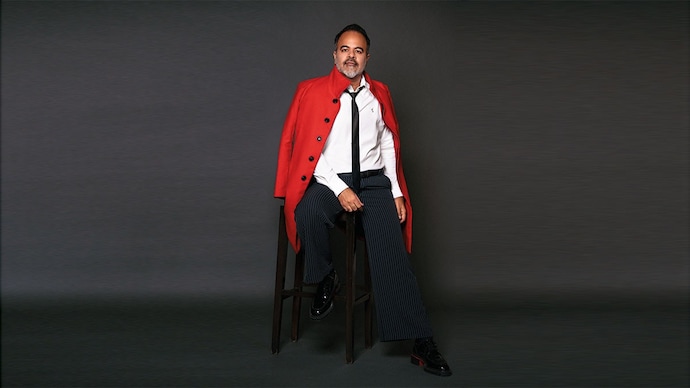
In an era where luxury interiors can often feel like a copy-paste exercise of imported marble and predictable moods, Ameet Mirpuri has spent the last 24 years doing the exact opposite. He operates out of coastal Visakhapatnam while juggling roughly 65 concurrent projects across Hyderabad, Goa, Bangalore, Mumbai and beyond; in fact, recent inquiries stretch to Paris, Dubai, Atlanta and Toronto. The common element? The founder of Ameet Mirpuri Design Studio refuses to subscribe to a house style. Whether he is orchestrating high-octane hospitality spaces or inward-looking holiday villas, Mirpuri treats every project not as a showcase of his own signature, but as an intimate portrait of the people who will live inside it.
In an era where luxury interiors can often feel like a copy-paste exercise of imported marble and predictable moods, Ameet Mirpuri has spent the last 24 years doing the exact opposite. He operates out of coastal Visakhapatnam while juggling roughly 65 concurrent projects across Hyderabad, Goa, Bangalore, Mumbai and beyond; in fact, recent inquiries stretch to Paris, Dubai, Atlanta and Toronto. The common element? The founder of Ameet Mirpuri Design Studio refuses to subscribe to a house style. Whether he is orchestrating high-octane hospitality spaces or inward-looking holiday villas, Mirpuri treats every project not as a showcase of his own signature, but as an intimate portrait of the people who will live inside it.
In an era where luxury interiors can often feel like a copy-paste exercise of imported marble and predictable moods, Ameet Mirpuri has spent the last 24 years doing the exact opposite. He operates out of coastal Visakhapatnam while juggling roughly 65 concurrent projects across Hyderabad, Goa, Bangalore, Mumbai and beyond; in fact, recent inquiries stretch to Paris, Dubai, Atlanta and Toronto. The common element? The founder of Ameet Mirpuri Design Studio refuses to subscribe to a house style. Whether he is orchestrating high-octane hospitality spaces or inward-looking holiday villas, Mirpuri treats every project not as a showcase of his own signature, but as an intimate portrait of the people who will live inside it.
Blueprints to Breakthroughs
Mirpuri’s journey began in 2002 when he returned to Visakhapatnam after studying interior design in Pune. He initially joined his father, who ran a furniture manufacturing and turnkey contracting business alongside a 60-year-old handicrafts store. Carrying blueprints on a scooter and supervising contractors, however, proved short-lived. “I’m far too obsessive about corners, edges, and tiny details,” Mirpuri admits. “I didn’t want to be told what to do; I wanted to be the one directing the vision.”
In 2006, he launched his design studio strictly as a design consultancy, a concept that baffled local clients accustomed to all-in-one contractors. His father eventually retired his turnkey arm, leaving Mirpuri with a deep, tactile education in heritage craft gleaned from the family store and its old workshop. The studio’s inflection point arrived in 2010 with Novotel Visakhapatnam. Originally brought on merely as a local consultant alongside Singaporean designers, Mirpuri was handed the reins when the overseas team fell out with the client before work began. Three years of gruelling late nights later, the five-star hotel was complete and Mirpuri realised he had outgrown Vizag’s scale. Driven by restlessness, he expanded into Hyderabad with a project called Over the Moon in 2011. As the practice grew from eight to 35 people, leadership evolved organically: Kshitija Kanwar joined after moving to Vizag with her naval-officer husband and practically demanded a job, rising swiftly to design director, while Sukhritaa Menda came on board as partner to spearhead global vendor sourcing.
Staying Rooted
Choosing to remain in a Tier-2 coastal city, while competing in major metros and now globally, came with early friction. Mirpuri jokes about being “geographically challenged”, noting that prospective clients have occasionally hesitated over his location. Yet staying close to his parents and his roots delivered an unexpected superpower: continuity. More than half his team has been with him for over a decade, and several for 16 years. Post-COVID, geography has blurred even further. Alongside stationed project managers in Hyderabad and Goa and a core Vizag team trained to travel for critical setups, Mirpuri employs full-time remote team members on payroll in Sri Lanka and Bali whom he has never met in person.
Room to Breathe
“People often ask what our signature is, and I tell them our biggest signature is that we don’t have one,” he explains. His previous Vizag office had been an experimental showcase of everything the studio could do, until the visual noise became overwhelming. Located in a bustling neighbourhood, the new studio needed to be soundproof and serene so his mind could breathe, save for subtle details like an embroidered, tassel-trimmed tabletop. Contrast that with his upcoming Hyderabad studio, which he promises will be unapologetically maximalist, or his own Vizag residence, where his parents inhabit a vintage-inflected lower duplex while his top-floor entertaining pad pairs emerald-green walls with black ceilings.
Memory Over Theatrics
Sensitivity to narrative defines how Mirpuri handles regional heritage. Rather than importing craft as a decorative trope, he insists cultural references must belong to the homeowner. For a singer and sitar player living on the 14th and 15th floors of a modern high-rise, he translated her childhood memories of performing in a traditional Andhra manduva courtyard into a double-height atrium framed by solid wooden pillars and carved railings—bringing the warmth of an ancestral courtyard into a glass-and-concrete tower without feeling like a film set.
In Hyderabad, another client who grew up around vernacular stone farmhouses faced gated-community by-laws prohibiting exposed stone facades. Mirpuri’s solution was to bring the landscape inside, crafting a sculptural internal staircase out of raw boulders, an idea partly inspired by the monolithic temple architecture of Hampi. Even his love for regional craft, which famously shaped Vizag’s 24-room Andhra Art and Craft Hotel through Etikoppaka lacquerware, Budithi brassware, Kalamkari and Tholu Bommalata shadow puppetry, comes down to personal connection. “Don’t chase a craft just because it’s trending,” he advises. “Live with the traditions you actually grew up around and understand.”
Blurring Boundaries
Designing at the upper echelons of private living has also blurred the line between homes and hospitality. What Mirpuri borrows from restaurants and hotels isn’t the aesthetic—it is back-of-house choreography. Today’s large villas routinely feature both a show kitchen and a commercial-grade stainless-steel catering kitchen with staff changing rooms, allowing private chefs to cook fresh on-site. Privacy drives the floor plan just as much. For high-profile homeowners (from actors to business leaders) Mirpuri designs concealed service corridors so staff can prep dinner, clear out by 7 PM and never cross paths with family spaces. Basements now house private salon-and-spa suites with separate entrances so hair and makeup artists can arrive before an event without walking through the house, while push-button, climate-controlled wine and whisky cellars are either displayed behind glass or tucked completely out of sight. As for what he is ready to retire from luxury homes altogether? Gold plating. “Use real gold leaf or brass; don’t fake it.”
In the end, Mirpuri’s enduring appeal lies in a remarkably grounded truth: a great home isn’t built to impress strangers on social media. It is built to hold the rhythms, memories and quiet rituals of the inhabitants.

