SBI data leak | The hidden threat
The leak of over 3,800 SBI customer records on the dark web is a grim reminder of how vulnerable personal data is to theft and misuse by fraudsters
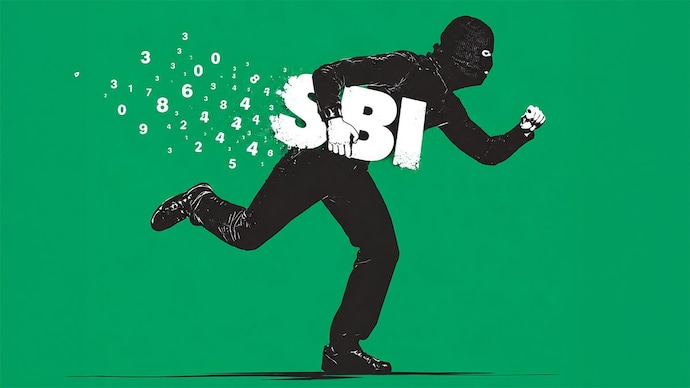
Imagine discovering that all the confidential information you have shared with your bank is exposed on the internet, where fraudsters can exploit it to trick you into parting with your hard-earned money. Sounds alarming, since the very institution you trust to safeguard your money could cause you misfortune, if you are not vigilant. But that’s what has happened at more than one Indian bank in recent years.
Imagine discovering that all the confidential information you have shared with your bank is exposed on the internet, where fraudsters can exploit it to trick you into parting with your hard-earned money. Sounds alarming, since the very institution you trust to safeguard your money could cause you misfortune, if you are not vigilant. But that’s what has happened at more than one Indian bank in recent years.
Imagine discovering that all the confidential information you have shared with your bank is exposed on the internet, where fraudsters can exploit it to trick you into parting with your hard-earned money. Sounds alarming, since the very institution you trust to safeguard your money could cause you misfortune, if you are not vigilant. But that’s what has happened at more than one Indian bank in recent years.
The latest in an ignominious series of data leaks has hit the State Bank of India (SBI), India’s largest commercial bank, which has around 530 million customers. On October 21, the lender said that the Defence Cyber Agency, its threat intelligence provider, and the Indian Computer Emergency Response Team (CERT-In) had, on October 18, alerted it regarding suspected customer data exposure. During the preliminary analysis of around 375,000 records available on the dark web—a small, hidden part of the internet that is not indexed by standard search engines like Google and requires specialised software to access—the bank identified 3,897 customer records containing “personally identifiable information”. The information included names, mobile phone numbers, dates of birth, email and residential addresses, customer identification details and metadata associated with loan records, among others. It may not end with just those 3,897 records, because the bank is still investigating both the source as well as the extent of the exposure. “We wish to submit that this does not have any material impact on the bank’s core business operations, financial performance or business continuity,” SBI said in its statement. “The bank’s core business functions continue to operate normally without disruptions.”
A TRAIL OF BREACHES
The incident is the latest in a growing number of cybersecurity breaches involving Indian banks and their technology providers. While some of those events exposed personal information, others enabled fraudulent withdrawals or disrupted payment services. On July 27, Bank of Baroda disclosed a cybersecurity incident involving business email compromise. The dataset was advertised on a dark-web site as containing more than 700 GB of information, based on an analysis of the site’s metadata, according to media reports. The bank launched a forensic investigation and said the incident was not expected to have a material impact on its operations, financial performance or business continuity.
Similarly, in January 2025, the BASHE ransomware and cyber extortion group claimed that it had breached ICICI Bank and threatened to release data unless a ransom was paid. The bank did not publicly confirm the alleged breach. The Reserve Bank of India (RBI) penalised it Rs 97.80 lakh in April that year for non-compliance with Cyber Security Framework guidelines.
In November 2021, cybersecurity firm CyberX9 alleged that a vulnerability in a Punjab National Bank (PNB) server had potentially exposed the personal and financial information of around 180 million customers for nearly seven months, according to media reports. PNB, however, denied that its systems had been breached or customer data stolen.
Gautam S. Mengle, assistant vice president, Culsight, a firm specialising in cybersecurity awareness and human risk assurance, says that such incidents need to be viewed with a lot more seriousness as they can lead to grave cybercrimes. People are generally more concerned about the monetary part in such crimes—how much money has been lost—that they tend to ignore large crimes that this could lead into. “The most expensive commodity on the dark web is data,” he says. “People are willing to pay top dollar for such data through online bids, and that is what is driving cybercrimes.”
Such incidents happen either through external intrusions or because staff at these banks inadvertently click the wrong link, exposing the bank to fraudsters (see How Data Gets Leaked). In SBI’s case, that will be known only once the investigations are completed.
FROM LEAK TO FRAUD
How does the personal data that has been leaked trigger bigger crimes? It could be used to make fake IDs, to secure loans through fraudulent means, to get bogus SIM cards and open bogus bank accounts. Scammers can use the data for phishing—tricking people into giving away sensitive information such as passwords, credit card numbers or bank details, or into downloading malicious software by pretending to be a trusted source. “Modern AI-powered malware can be more dangerous, because it can write its own code in real time,” says Mengle.
The best antidote to this is to create awareness. “An employee, for instance, can be converted from being a ‘human vulnerability’ to ‘human firewall’ by creating appropriate awareness,” says Mengle. In most organisations, employees are frequently told not to click on any link that is suspicious. However, Mengle says that only if the employee gets to click on such links, deliberately generated to create awareness, will he or she understand the full gravity of the situation. To do this, many organisations provide training in “internal phishing simulations”, where the results are analysed to identify how vulnerable an employee is.
This is important since more cyberattacks are carried out today without using any malware but by simply tricking people into sharing their login names, passwords or OTPs (one time passwords). Also important is for organisations to encourage employees to frequently change their passwords, and use strong passwords because cyber attackers can easily break through weak or common passwords (like the person’s name followed by 123).
Apart from training staff to recognise and block such attempts, experts propose several other measures to prevent data leaks in large financial institutions. One is to have robust access controls, and assign rights according to job functions. Second is to conduct routine penetration tests and vulnerability assessments in networks, apps and systems, and even employ ethical hackers for attack simulation and defence testing. Third is encrypting data while it is in transit, and fourth, having adequate intrusion detection and prevention systems and firewalls in place. It is also essential to monitor incidents in real time and stay alert to emerging threats, while keeping secure backups of all data for prompt recovery.
Because once personal data falls into the wrong hands, the damage can go far beyond the loss of money.

