Bring Matt Damon home: How The Odyssey keeps Hollywood's $600 million joke alive
The old internet gag about Hollywood repeatedly rescuing actor Matt Damon finds new life with The Odyssey. This time, Damon's next great homecoming depends on nobody but himself: a quiet reminder that every great journey, on screen or off, is ultimately about finding your way back. And honestly? We'll still be cheering from the shore.
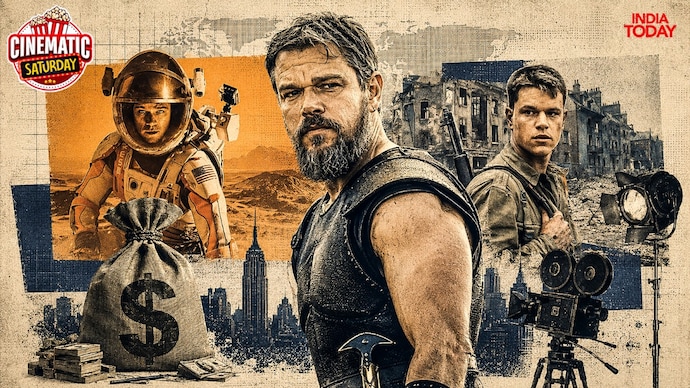
The internet has few running jokes as dependable as this one: Hollywood simply cannot stop spending absurd amounts of money to bring Matt Damon home.
Lose him on a World War II battlefield? Send a squad after him. Strand him on Mars? Assemble NASA. Leave him floating somewhere near Saturn? Matthew McConaughey will sort it out.
The meme has survived for years because it feels strangely accurate. Every few years, Damon ends up playing someone the entire movie revolves around rescuing. Fans have even joked that Hollywood has spent "over $600 million" trying to get Matt Damon back. Not quite.
The actual production budgets of Saving Private Ryan ($70 million), Interstellar ($165 million) and The Martian ($108 million) add up to around $343 million. Throw in marketing, inflation, reshoots and a generous internet exaggeration, and suddenly the "$600 million to rescue Matt Damon" joke doesn't sound so ridiculous after all.
Now comes Christopher Nolan's The Odyssey, reportedly mounted on a budget of around $250 million, with Damon playing Odysseus, the original man trying to get home. Again.
The soldier everyone had to find
Steven Spielberg's Saving Private Ryan (1998) turned Damon into the most expensive missing person in cinema. Private James Ryan isn't a war hero. He hasn't won a decisive battle or discovered a secret weapon. He's just the last surviving brother in a family that has already sacrificed too much.
An entire squad risks its lives simply to bring one ordinary soldier home.
That's also what made Ryan so memorable. Damon never played him as someone larger than life. He as awkward, grateful and burdened by the guilt of watching strangers die for him. By the time Captain Miller told him, "Earn this," the rescue had become about something much bigger than one man.
The astronaut who wasn't worth rescuing
Then Christopher Nolan did something deliciously cruel. In Interstellar (2014), Damon appeared as Dr Mann, the brilliant scientist everyone believed is humanity's best hope. The mission crossed galaxies to save him.
Turned out, they probably shouldn't have bothered. Instead of the noble explorer they expected, they found a desperate man who faked data, betrayed the crew and was willing to sacrifice everyone else just to survive.
It was one of Nolan's smartest twists because when has Damon been not so good at playing decent, trustworthy people? You believe Dr Mann before you realise you absolutely shouldn't.
The man who survived on potatoes and sarcasm
Ridley Scott's The Martian (2015) is perhaps the film most responsible for the meme. Mark Watney got stranded on Mars after his crew believed he was dead. Most people would panic. Watney grew potatoes.
His approach to survival was equal parts genius, optimism and wonderfully dry humour. "I am gonna have to science the s**t out of this" became one of the decade's defining movie lines because it perfectly captured who he was.
The film eventually turned into the biggest rescue mission imaginable, with scientists, engineers and astronauts across the world working together to bring one sarcastic botanist back to Earth.
If Saving Private Ryan asked whether one life is worth risking many others, The Martian answered with an enthusiastic, "Absolutely."
This time, nobody is coming
That's what makes The Odyssey such a fascinating next chapter. For once, Matt Damon isn't waiting for someone to find him. He is the journey.
As Odysseus, the king of Ithaca, Damon plays perhaps literature's greatest traveller - a man who spends 10 years battling monsters, gods, storms and temptation simply to return home after the Trojan War. Nobody launches a rescue mission or assembles a team. Nobody arrives just in time. If Odysseus wants to see home again, he'll have to outsmart every obstacle himself.
For an actor who has built an accidental filmography around being rescued, that's a wonderfully fitting evolution.
Why does this keep happening?
The funny thing is, Damon doesn't actually play the same character. James Ryan is a frightened young soldier. Dr Mann is a coward hiding behind genius. Mark Watney is an irrepressible problem-solver. Odysseus is a warrior, strategist and king.
They are wildly different people. So why does the pattern feel so obvious? Because Damon brings the same qualities to all of them: He's smart without looking smug, vulnerable without seeming weak and feels capable but never invincible. Most importantly, he looks like someone you could actually know.
Unlike larger-than-life action stars who punch their way through every problem, Damon wins us over with intelligence, resilience and sheer stubbornness. His heroes don't feel superhuman. They feel human.
Which is exactly why audiences keep rooting for them. Which is why Hollywood keeps spending millions to bring him back home. Because if Matt Damon is stuck somewhere, the journey through that film is going to be worth a watch.
And to a large extent, it is because Damon makes that journey worth a watch. His face has always carried something reassuringly ordinary. He looks tired when he should, scared when he should, hopeful when it matters most. When he finally makes it home, it feels less like watching a movie star win and more like seeing someone who simply refused to give up. It becomes a story of personal win.
Whether it's Normandy, deep space, Mars or the mythical seas of ancient Greece, every one of these stories is driven by the same emotional pull: the belief that home is worth fighting your way back to.
It's fascinating to see Damon ending up at the centre of them.
As The Odyssey sails into theatres, Matt Damon is chasing home one more time. And we will be there, popcorn in hand, eyes glued to the screen, rooting for him every step of the way. Some traditions are simply too good to give up.
The internet has few running jokes as dependable as this one: Hollywood simply cannot stop spending absurd amounts of money to bring Matt Damon home.
Lose him on a World War II battlefield? Send a squad after him. Strand him on Mars? Assemble NASA. Leave him floating somewhere near Saturn? Matthew McConaughey will sort it out.
The meme has survived for years because it feels strangely accurate. Every few years, Damon ends up playing someone the entire movie revolves around rescuing. Fans have even joked that Hollywood has spent "over $600 million" trying to get Matt Damon back. Not quite.
The actual production budgets of Saving Private Ryan ($70 million), Interstellar ($165 million) and The Martian ($108 million) add up to around $343 million. Throw in marketing, inflation, reshoots and a generous internet exaggeration, and suddenly the "$600 million to rescue Matt Damon" joke doesn't sound so ridiculous after all.
Now comes Christopher Nolan's The Odyssey, reportedly mounted on a budget of around $250 million, with Damon playing Odysseus, the original man trying to get home. Again.
The soldier everyone had to find
Steven Spielberg's Saving Private Ryan (1998) turned Damon into the most expensive missing person in cinema. Private James Ryan isn't a war hero. He hasn't won a decisive battle or discovered a secret weapon. He's just the last surviving brother in a family that has already sacrificed too much.
An entire squad risks its lives simply to bring one ordinary soldier home.
That's also what made Ryan so memorable. Damon never played him as someone larger than life. He as awkward, grateful and burdened by the guilt of watching strangers die for him. By the time Captain Miller told him, "Earn this," the rescue had become about something much bigger than one man.
The astronaut who wasn't worth rescuing
Then Christopher Nolan did something deliciously cruel. In Interstellar (2014), Damon appeared as Dr Mann, the brilliant scientist everyone believed is humanity's best hope. The mission crossed galaxies to save him.
Turned out, they probably shouldn't have bothered. Instead of the noble explorer they expected, they found a desperate man who faked data, betrayed the crew and was willing to sacrifice everyone else just to survive.
It was one of Nolan's smartest twists because when has Damon been not so good at playing decent, trustworthy people? You believe Dr Mann before you realise you absolutely shouldn't.
The man who survived on potatoes and sarcasm
Ridley Scott's The Martian (2015) is perhaps the film most responsible for the meme. Mark Watney got stranded on Mars after his crew believed he was dead. Most people would panic. Watney grew potatoes.
His approach to survival was equal parts genius, optimism and wonderfully dry humour. "I am gonna have to science the s**t out of this" became one of the decade's defining movie lines because it perfectly captured who he was.
The film eventually turned into the biggest rescue mission imaginable, with scientists, engineers and astronauts across the world working together to bring one sarcastic botanist back to Earth.
If Saving Private Ryan asked whether one life is worth risking many others, The Martian answered with an enthusiastic, "Absolutely."
This time, nobody is coming
That's what makes The Odyssey such a fascinating next chapter. For once, Matt Damon isn't waiting for someone to find him. He is the journey.
As Odysseus, the king of Ithaca, Damon plays perhaps literature's greatest traveller - a man who spends 10 years battling monsters, gods, storms and temptation simply to return home after the Trojan War. Nobody launches a rescue mission or assembles a team. Nobody arrives just in time. If Odysseus wants to see home again, he'll have to outsmart every obstacle himself.
For an actor who has built an accidental filmography around being rescued, that's a wonderfully fitting evolution.
Why does this keep happening?
The funny thing is, Damon doesn't actually play the same character. James Ryan is a frightened young soldier. Dr Mann is a coward hiding behind genius. Mark Watney is an irrepressible problem-solver. Odysseus is a warrior, strategist and king.
They are wildly different people. So why does the pattern feel so obvious? Because Damon brings the same qualities to all of them: He's smart without looking smug, vulnerable without seeming weak and feels capable but never invincible. Most importantly, he looks like someone you could actually know.
Unlike larger-than-life action stars who punch their way through every problem, Damon wins us over with intelligence, resilience and sheer stubbornness. His heroes don't feel superhuman. They feel human.
Which is exactly why audiences keep rooting for them. Which is why Hollywood keeps spending millions to bring him back home. Because if Matt Damon is stuck somewhere, the journey through that film is going to be worth a watch.
And to a large extent, it is because Damon makes that journey worth a watch. His face has always carried something reassuringly ordinary. He looks tired when he should, scared when he should, hopeful when it matters most. When he finally makes it home, it feels less like watching a movie star win and more like seeing someone who simply refused to give up. It becomes a story of personal win.
Whether it's Normandy, deep space, Mars or the mythical seas of ancient Greece, every one of these stories is driven by the same emotional pull: the belief that home is worth fighting your way back to.
It's fascinating to see Damon ending up at the centre of them.
As The Odyssey sails into theatres, Matt Damon is chasing home one more time. And we will be there, popcorn in hand, eyes glued to the screen, rooting for him every step of the way. Some traditions are simply too good to give up.

