Prakash Raj gets bail in multiple voter ID case in Bengaluru court
Actor Prakash Raj appeared before a Bengaluru court in the voter ID case and sought bail after a non-bailable warrant. The court recalled the warrant after his counsel said summons were never served and granted bail on a cash surety of Rs 4,000.
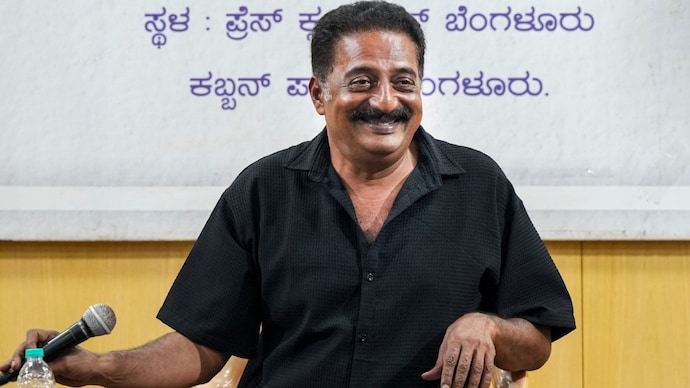
Actor Prakash Raj appeared before the 48th Additional Chief Judicial Magistrate Court in Bengaluru on Friday in connection with a voter ID-related case, after the court had earlier issued a non-bailable warrant against him for allegedly failing to respond to court notices.
During the hearing, his lawyers sought recall of the warrant, while the actor personally appeared before the court to seek bail.
After hearing the arguments, the 48th ACJM Court recalled the non-bailable warrant and granted bail to Prakash Raj. He was granted bail on furnishing a cash surety of Rs 4,000, bringing the immediate proceedings arising from the warrant to a close.
During the hearing, Prakash Raj's counsel argued that the summons had never been served on him and that they had learnt about the proceedings only through media reports and other sources. The court then allowed the application seeking recall of the warrant.
The case relates to allegations that Prakash Raj possesses voter identity cards in multiple states. According to the background of the matter, a complaint was filed in 2019 by advocate Dileep Kumar at the Halasuru Gate Police Station, alleging that the actor held voter ID cards in four states, including Karnataka, Tamil Nadu and Telangana, which, if proved, would violate election rules.
The complainant alleged that no action was taken by the police on the complaint. He later approached the Bengaluru City Police Commissioner and the Election Commission of India, and after receiving no response from either authority, moved the court.
Under Election Commission regulations, a citizen can be registered as a voter in only one place in the country. The complaint alleges that Prakash Raj violated these provisions by possessing multiple voter identity cards. The 48th ACJM Court had reportedly issued summons to the actor on two occasions, directing him to appear before it, but he did not appear on either date, following which the court issued a non-bailable warrant.
Actor Prakash Raj appeared before the 48th Additional Chief Judicial Magistrate Court in Bengaluru on Friday in connection with a voter ID-related case, after the court had earlier issued a non-bailable warrant against him for allegedly failing to respond to court notices.
During the hearing, his lawyers sought recall of the warrant, while the actor personally appeared before the court to seek bail.
After hearing the arguments, the 48th ACJM Court recalled the non-bailable warrant and granted bail to Prakash Raj. He was granted bail on furnishing a cash surety of Rs 4,000, bringing the immediate proceedings arising from the warrant to a close.
During the hearing, Prakash Raj's counsel argued that the summons had never been served on him and that they had learnt about the proceedings only through media reports and other sources. The court then allowed the application seeking recall of the warrant.
The case relates to allegations that Prakash Raj possesses voter identity cards in multiple states. According to the background of the matter, a complaint was filed in 2019 by advocate Dileep Kumar at the Halasuru Gate Police Station, alleging that the actor held voter ID cards in four states, including Karnataka, Tamil Nadu and Telangana, which, if proved, would violate election rules.
The complainant alleged that no action was taken by the police on the complaint. He later approached the Bengaluru City Police Commissioner and the Election Commission of India, and after receiving no response from either authority, moved the court.
Under Election Commission regulations, a citizen can be registered as a voter in only one place in the country. The complaint alleges that Prakash Raj violated these provisions by possessing multiple voter identity cards. The 48th ACJM Court had reportedly issued summons to the actor on two occasions, directing him to appear before it, but he did not appear on either date, following which the court issued a non-bailable warrant.

