Why Sai Pallavi is the most honest Sita Indian cinema has seen in years
The debate around Sai Pallavi's Sita says more about our obsession with beauty than it does about her casting. By choosing authenticity over glamour, Ramayana brings the focus back to the qualities that truly made Sita extraordinary.
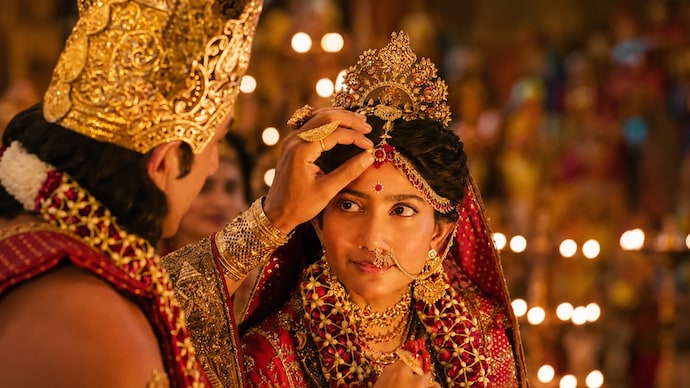
Let's play a quick game. Close your eyes and imagine Sita. Chances are, the image that appeared in your head wasn't created by Valmiki or even your own imagination. It was created by cinema. Perfect skin. Immaculate makeup. Heavy jewellery. Soft lighting. The picture of grace, carefully polished over decades of films and television.
Now ask yourself one question. Who told us Sita had to look like that?
There is something remarkable about the way Sai Pallavi appears in the trailer for Nitesh Tiwari's Ramayana. In a simple yellow saree, gripping a sword and a shield for a few fleeting seconds. It isn't a grand action sequence. It doesn't arrive with thunderous background music or a whistle-worthy dialogue. Yet those few seconds have sparked one of the biggest conversations around the film.
Not about Ram. Not about Raavan. Not about the scale of the epic. About whether Sai Pallavi is "beautiful enough" to play Sita. That alone says a lot.
For centuries, Sita has been remembered for her resilience, courage and unwavering faith. Yet, when it comes to casting her, the first question many seem to ask is whether the actor fits the image of the goddess they have carried in their heads. Somewhere along the way, the conversation shifted from whether an actor could embody Sita's spirit to whether she looked divine enough.
Perhaps we have all been looking at Sita through the wrong lens. Because the truth is, nobody knows what Sita looked like.
What exists today are artistic interpretations shaped by paintings, television serials and films. Over the years, they have slowly merged into a single visual template - flawless skin, perfectly lined eyes, elaborate jewellery and an almost untouchable beauty. That image has become so deeply ingrained that anything outside it immediately feels unfamiliar.
But Sita was never just a face.
She was Janaki, daughter of King Janak, born from the earth itself. She chose exile over comfort, stood beside her husband, Lord Ram, through unimaginable hardship, endured captivity without surrendering her dignity and remained steadfast even when her character was questioned. She is remembered not because she was the most beautiful woman in the epic, but because she possessed an extraordinary strength of character.
That is precisely why Sai Pallavi feels like the perfect choice.
Not because she doesn't fit the image we've grown up with, but because she forces us to question whether that image was ever right to begin with.
Long before Nitesh Tiwari's Ramayana, Sai Pallavi had already built a career by quietly rejecting the beauty standards that continue to define female stardom. Ever since her debut Premam, she has appeared on screen with minimal makeup, embraced her natural skin, visible blemishes and freckles, and refused to chase an airbrushed idea of perfection. It was never projected as an act of rebellion. It simply became a reflection of the kind of actor she chose to be.
In an industry where actors (female) are still expected to erase every perceived flaw before stepping in front of the camera, Sai Pallavi has consistently done the opposite. She has never relied on glamour to command attention. She has relied on honesty.
That honesty becomes her greatest strength as Sita.
The trailer doesn't ask audiences to admire Sai Pallavi's beauty. It asks them to believe in her humanity. And that is precisely what makes her feel like Sita.
There is warmth in her eyes without excessive sweetness. Grace without fragility. Strength without spectacle. She doesn't appear to be performing divinity as an unattainable ideal. Instead, she embodies a woman whose compassion, resilience and conviction eventually made her divine. That distinction matters.
Then comes the moment that has stayed with audiences the most. For barely a few seconds, Sai Pallavi is seen holding a curved sword and a shield.
Predictably, it sparked debate. Was Sita really a warrior? Perhaps that isn't even the most important question.
The sword is significant not because it transforms Sita into an action hero, but because it acknowledges something cinema has rarely allowed her to possess – agency. It shows that as a woman, Sita was also capable of protecting herself, making choices and standing beside Ram rather than merely behind him. That interpretation isn't new. Several literary retellings have explored Sita as a woman of remarkable courage and inner strength. Mainstream cinema simply chose to remember only her patience and sacrifice.
If Nitesh Tiwari is reclaiming that forgotten dimension of her character, then he isn't rewriting mythology. He is reminding audiences that Sita was always far more layered than popular culture allowed her to be.
Ironically, the criticism (particularly around beauty) directed at Sai Pallavi only reinforces why this casting matters. The discomfort isn't because she doesn't 'resemble Sita'. It's because she doesn't resemble the version of Sita that decades of cinema have conditioned audiences to accept.
There is a difference.
For years, female actors have been expected to look perfect before they are allowed to feel believable. Sai Pallavi has spent an entire career challenging that expectation. Her performances have always asked audiences to look beyond flawless skin and carefully constructed glamour. Ramayana simply extends that philosophy to one of mythology's most revered women.
Nitesh Tiwari could have chosen a face that comfortably fit the conventional image of Sita. Instead, he chose an actor whose greatest strength has always been disappearing into her characters rather than decorating them. That decision feels less like a casting choice and more like a statement. Because Sita was never meant to be remembered for her beauty. She was remembered for her courage. For her compassion. For her resilience.
Sita was never just a face. Perhaps it is finally time Indian cinema remembered that too.
Let's play a quick game. Close your eyes and imagine Sita. Chances are, the image that appeared in your head wasn't created by Valmiki or even your own imagination. It was created by cinema. Perfect skin. Immaculate makeup. Heavy jewellery. Soft lighting. The picture of grace, carefully polished over decades of films and television.
Now ask yourself one question. Who told us Sita had to look like that?
There is something remarkable about the way Sai Pallavi appears in the trailer for Nitesh Tiwari's Ramayana. In a simple yellow saree, gripping a sword and a shield for a few fleeting seconds. It isn't a grand action sequence. It doesn't arrive with thunderous background music or a whistle-worthy dialogue. Yet those few seconds have sparked one of the biggest conversations around the film.
Not about Ram. Not about Raavan. Not about the scale of the epic. About whether Sai Pallavi is "beautiful enough" to play Sita. That alone says a lot.
For centuries, Sita has been remembered for her resilience, courage and unwavering faith. Yet, when it comes to casting her, the first question many seem to ask is whether the actor fits the image of the goddess they have carried in their heads. Somewhere along the way, the conversation shifted from whether an actor could embody Sita's spirit to whether she looked divine enough.
Perhaps we have all been looking at Sita through the wrong lens. Because the truth is, nobody knows what Sita looked like.
What exists today are artistic interpretations shaped by paintings, television serials and films. Over the years, they have slowly merged into a single visual template - flawless skin, perfectly lined eyes, elaborate jewellery and an almost untouchable beauty. That image has become so deeply ingrained that anything outside it immediately feels unfamiliar.
But Sita was never just a face.
She was Janaki, daughter of King Janak, born from the earth itself. She chose exile over comfort, stood beside her husband, Lord Ram, through unimaginable hardship, endured captivity without surrendering her dignity and remained steadfast even when her character was questioned. She is remembered not because she was the most beautiful woman in the epic, but because she possessed an extraordinary strength of character.
That is precisely why Sai Pallavi feels like the perfect choice.
Not because she doesn't fit the image we've grown up with, but because she forces us to question whether that image was ever right to begin with.
Long before Nitesh Tiwari's Ramayana, Sai Pallavi had already built a career by quietly rejecting the beauty standards that continue to define female stardom. Ever since her debut Premam, she has appeared on screen with minimal makeup, embraced her natural skin, visible blemishes and freckles, and refused to chase an airbrushed idea of perfection. It was never projected as an act of rebellion. It simply became a reflection of the kind of actor she chose to be.
In an industry where actors (female) are still expected to erase every perceived flaw before stepping in front of the camera, Sai Pallavi has consistently done the opposite. She has never relied on glamour to command attention. She has relied on honesty.
That honesty becomes her greatest strength as Sita.
The trailer doesn't ask audiences to admire Sai Pallavi's beauty. It asks them to believe in her humanity. And that is precisely what makes her feel like Sita.
There is warmth in her eyes without excessive sweetness. Grace without fragility. Strength without spectacle. She doesn't appear to be performing divinity as an unattainable ideal. Instead, she embodies a woman whose compassion, resilience and conviction eventually made her divine. That distinction matters.
Then comes the moment that has stayed with audiences the most. For barely a few seconds, Sai Pallavi is seen holding a curved sword and a shield.
Predictably, it sparked debate. Was Sita really a warrior? Perhaps that isn't even the most important question.
The sword is significant not because it transforms Sita into an action hero, but because it acknowledges something cinema has rarely allowed her to possess – agency. It shows that as a woman, Sita was also capable of protecting herself, making choices and standing beside Ram rather than merely behind him. That interpretation isn't new. Several literary retellings have explored Sita as a woman of remarkable courage and inner strength. Mainstream cinema simply chose to remember only her patience and sacrifice.
If Nitesh Tiwari is reclaiming that forgotten dimension of her character, then he isn't rewriting mythology. He is reminding audiences that Sita was always far more layered than popular culture allowed her to be.
Ironically, the criticism (particularly around beauty) directed at Sai Pallavi only reinforces why this casting matters. The discomfort isn't because she doesn't 'resemble Sita'. It's because she doesn't resemble the version of Sita that decades of cinema have conditioned audiences to accept.
There is a difference.
For years, female actors have been expected to look perfect before they are allowed to feel believable. Sai Pallavi has spent an entire career challenging that expectation. Her performances have always asked audiences to look beyond flawless skin and carefully constructed glamour. Ramayana simply extends that philosophy to one of mythology's most revered women.
Nitesh Tiwari could have chosen a face that comfortably fit the conventional image of Sita. Instead, he chose an actor whose greatest strength has always been disappearing into her characters rather than decorating them. That decision feels less like a casting choice and more like a statement. Because Sita was never meant to be remembered for her beauty. She was remembered for her courage. For her compassion. For her resilience.
Sita was never just a face. Perhaps it is finally time Indian cinema remembered that too.
Let's play a quick game. Close your eyes and imagine Sita. Chances are, the image that appeared in your head wasn't created by Valmiki or even your own imagination. It was created by cinema. Perfect skin. Immaculate makeup. Heavy jewellery. Soft lighting. The picture of grace, carefully polished over decades of films and television.
Now ask yourself one question. Who told us Sita had to look like that?
There is something remarkable about the way Sai Pallavi appears in the trailer for Nitesh Tiwari's Ramayana. In a simple yellow saree, gripping a sword and a shield for a few fleeting seconds. It isn't a grand action sequence. It doesn't arrive with thunderous background music or a whistle-worthy dialogue. Yet those few seconds have sparked one of the biggest conversations around the film.
Not about Ram. Not about Raavan. Not about the scale of the epic. About whether Sai Pallavi is "beautiful enough" to play Sita. That alone says a lot.
For centuries, Sita has been remembered for her resilience, courage and unwavering faith. Yet, when it comes to casting her, the first question many seem to ask is whether the actor fits the image of the goddess they have carried in their heads. Somewhere along the way, the conversation shifted from whether an actor could embody Sita's spirit to whether she looked divine enough.
Perhaps we have all been looking at Sita through the wrong lens. Because the truth is, nobody knows what Sita looked like.
What exists today are artistic interpretations shaped by paintings, television serials and films. Over the years, they have slowly merged into a single visual template - flawless skin, perfectly lined eyes, elaborate jewellery and an almost untouchable beauty. That image has become so deeply ingrained that anything outside it immediately feels unfamiliar.
But Sita was never just a face.
She was Janaki, daughter of King Janak, born from the earth itself. She chose exile over comfort, stood beside her husband, Lord Ram, through unimaginable hardship, endured captivity without surrendering her dignity and remained steadfast even when her character was questioned. She is remembered not because she was the most beautiful woman in the epic, but because she possessed an extraordinary strength of character.
That is precisely why Sai Pallavi feels like the perfect choice.
Not because she doesn't fit the image we've grown up with, but because she forces us to question whether that image was ever right to begin with.
Long before Nitesh Tiwari's Ramayana, Sai Pallavi had already built a career by quietly rejecting the beauty standards that continue to define female stardom. Ever since her debut Premam, she has appeared on screen with minimal makeup, embraced her natural skin, visible blemishes and freckles, and refused to chase an airbrushed idea of perfection. It was never projected as an act of rebellion. It simply became a reflection of the kind of actor she chose to be.
In an industry where actors (female) are still expected to erase every perceived flaw before stepping in front of the camera, Sai Pallavi has consistently done the opposite. She has never relied on glamour to command attention. She has relied on honesty.
That honesty becomes her greatest strength as Sita.
The trailer doesn't ask audiences to admire Sai Pallavi's beauty. It asks them to believe in her humanity. And that is precisely what makes her feel like Sita.
There is warmth in her eyes without excessive sweetness. Grace without fragility. Strength without spectacle. She doesn't appear to be performing divinity as an unattainable ideal. Instead, she embodies a woman whose compassion, resilience and conviction eventually made her divine. That distinction matters.
Then comes the moment that has stayed with audiences the most. For barely a few seconds, Sai Pallavi is seen holding a curved sword and a shield.
Predictably, it sparked debate. Was Sita really a warrior? Perhaps that isn't even the most important question.
The sword is significant not because it transforms Sita into an action hero, but because it acknowledges something cinema has rarely allowed her to possess – agency. It shows that as a woman, Sita was also capable of protecting herself, making choices and standing beside Ram rather than merely behind him. That interpretation isn't new. Several literary retellings have explored Sita as a woman of remarkable courage and inner strength. Mainstream cinema simply chose to remember only her patience and sacrifice.
If Nitesh Tiwari is reclaiming that forgotten dimension of her character, then he isn't rewriting mythology. He is reminding audiences that Sita was always far more layered than popular culture allowed her to be.
Ironically, the criticism (particularly around beauty) directed at Sai Pallavi only reinforces why this casting matters. The discomfort isn't because she doesn't 'resemble Sita'. It's because she doesn't resemble the version of Sita that decades of cinema have conditioned audiences to accept.
There is a difference.
For years, female actors have been expected to look perfect before they are allowed to feel believable. Sai Pallavi has spent an entire career challenging that expectation. Her performances have always asked audiences to look beyond flawless skin and carefully constructed glamour. Ramayana simply extends that philosophy to one of mythology's most revered women.
Nitesh Tiwari could have chosen a face that comfortably fit the conventional image of Sita. Instead, he chose an actor whose greatest strength has always been disappearing into her characters rather than decorating them. That decision feels less like a casting choice and more like a statement. Because Sita was never meant to be remembered for her beauty. She was remembered for her courage. For her compassion. For her resilience.
Sita was never just a face. Perhaps it is finally time Indian cinema remembered that too.

