Satluj: Real story of Jaswant Singh Khalra, a 16-year court battle and the murder
The Satluj OTT row has renewed attention on the Jaswant Singh Khalra case, which began with his 1995 abduction after he exposed alleged secret cremations. The case led to Supreme Court intervention, a CBI probe and life terms for six Punjab Police officials.
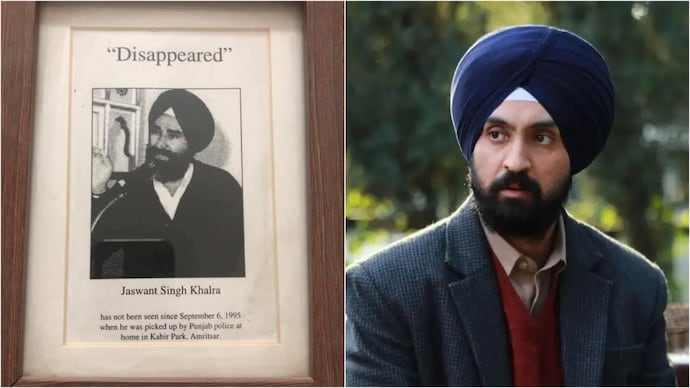
The abduction and killing of human rights activist Jaswant Singh Khalra remains one of the most significant human rights cases in independent India. Khalra, who spent years exposing what he said were illegal cremations carried out during Punjab's militancy period, disappeared in 1995 after allegedly being picked up by police personnel. What followed was a Supreme Court intervention, a CBI investigation and, eventually, the conviction of six Punjab Police officials, making the case a landmark in the judicial scrutiny of enforced disappearances and custodial killings in India.
The case has returned to public conversation this year with the release and OTT removal of Satluj, Honey Trehan's film starring Diljit Dosanjh as Khalra, which follows his investigation and its aftermath.
Uncovering the "secret cremations"
Khalra's work as a human rights activist began by examining municipal cremation records in Amritsar during Punjab's militancy years in the 1980s and early 1990s. By comparing cremation registers with firewood purchase records, he alleged that the Punjab Police had secretly cremated thousands of bodies, recording them as "unidentified" or "unclaimed" without investigating how the people had died.
On January 16, 1995, Khalra made his findings public through a press note titled 'Disappeared & Cremation Grounds'. In it, he said that around 2,000 unclaimed cremations had taken place in Punjab's Tarn Taran district alone, with hundreds more recorded at cremation grounds in Patti and Amritsar. The disclosure travelled far beyond Punjab, drawing attention from human rights groups in India and abroad. It also placed Khalra in direct confrontation with the very police force he had implicated.
The abduction
Less than eight months later, on the morning of September 6, 1995, Khalra was abducted. At around 9:20 am, he was washing his car outside his home in Kabir Park, Amritsar, when he was picked up by Punjab Police personnel. According to findings later recorded by the Supreme Court, uniformed policemen forced him into a sky-blue Maruti van, escorted by an armed police Gypsy. Neighbours reportedly witnessed the abduction, among them Rajeev Singh, who is said to have noted down the van's registration number. Khalra was never seen alive again.
The Supreme Court steps in
Concern over his disappearance reached the Supreme Court within days. On September 11, 1995, a telegram sent by Gurcharan Singh Tohra to Justice Kuldip Singh was treated as a habeas corpus petition, a legal plea asking the court to order the authorities to produce a person believed to have been illegally detained and explain why they are being held. The Supreme Court then issued notices to the Union Government, the Punjab Government, the Director General of Police and the Senior Superintendent of Police, Amritsar.
The petition was also formally served on Punjab's then DGP, KPS Gill, that same day. Separately, Khalra's wife, Paramjit Kaur, filed her own petition under Article 32 of the Constitution, seeking a writ of habeas corpus.
The matter came to a head on 15 November 1995, when the Supreme Court, hearing Paramjit Kaur vs State of Punjab, took note of Khalra's earlier allegations about illegal cremations and ordered the CBI to investigate both his abduction and the wider claims. The court also directed that then Tarn Taran SSP Ajit Singh Sandhu be moved out of the region and removed the investigation from Punjab Police, saying the family could not be expected to trust the state police to investigate its own officers. It remains one of the rare instances in which the Supreme Court intervened this directly in an alleged custodial disappearance involving serving police officials.
What the CBI found
Between 1995 and 1996, the CBI carried out its investigation under the Supreme Court's supervision, submitting periodic status reports to the court. Its conclusion was unambiguous: Khalra had indeed been illegally detained at a police facility in Tarn Taran before being murdered. The agency recommended prosecuting several Punjab Police personnel and named senior officers, including SSP Ajit Singh Sandhu, as having overseen the operation.
The list of accused shifted before the trial reached its conclusion. Sandhu himself died in 1997, in what was widely reported at the time as suicide. DSP Ashok Kumar also died before proceedings ended, while another accused, Rashpal Singh, was discharged or acquitted at an earlier stage. In the end, six police officials stood trial.
Alongside the criminal case, the Supreme Court's directions also opened parallel proceedings before the National Human Rights Commission, concerning illegal cremations alleged to have taken place in Amritsar, Majitha and Tarn Taran between 1984 and 1994. The CBI's own reporting put the number of unlawful cremations in Tarn Taran district alone at 2,097, records that both the Supreme Court and the NHRC went on to treat as credible.
Conviction, appeal, and a final verdict
The trial court delivered its verdict on November 18, 2005, nearly a decade after Jaswant Singh Khalra vanished. Additional Sessions Judge Bhupinder Singh, sitting in Patiala, convicted all six accused of kidnapping and murdering the activist. DSP Jaspal Singh and Amarjit Singh were sentenced to life imprisonment, while Sub-Inspectors Satnam Singh, Surinder Pal Singh and Jasbir Singh, along with Head Constable Prithipal Singh, received seven years each, with the latter four also handed concurrent sentences for conspiracy and destruction of evidence.
That gap in sentencing did not last. On October 16, 2007, a division bench of the Punjab and Haryana High Court, comprising Justices Mehtab Singh Gill and A.N. Jindal, enhanced the seven-year terms of the four remaining officers to life imprisonment, placing all six convicted men on equal footing. The convicts appealed to the Supreme Court, which dismissed their pleas and upheld the life sentences, delivering a judgment that strongly criticised the conduct of Punjab Police during the counter-insurgency years.
| Year/Date | Development |
|---|---|
| 1984–1994 | Alleged secret cremations take place during Punjab's militancy period. |
| January 16, 1995 | Jaswant Singh Khalra publicly releases findings on alleged illegal cremations. |
| September 6, 1995 | Khalra is abducted outside his residence in Amritsar. |
| September 11, 1995 | The Supreme Court initiates habeas corpus proceedings in the case. |
| November 15, 1995 | The Supreme Court orders a CBI probe into Khalra's abduction and the alleged illegal cremations. |
| 1995–1996 | The CBI conducts its investigation and implicates several Punjab Police officials. |
| 1997 | Then Tarn Taran SSP Ajit Singh Sandhu dies while proceedings in the case are ongoing. |
| November 18, 2005 | A trial court convicts six Punjab Police officials in the Khalra abduction and murder case. |
| October 16, 2007 | The Punjab and Haryana High Court enhances the sentences of four convicted officials to life imprisonment. |
| April 11, 2011 | The Supreme Court upholds life imprisonment for all six convicted officials. |
Why the case still matters
Three decades on, the Khalra case is still regarded as a watershed moment in India's human rights jurisprudence. What began as a habeas corpus petition filed by a grieving family grew into one of the most extensively documented prosecutions to emerge from Punjab's militancy period, establishing that even police officials could be held to account for a custodial disappearance and killing.
It also forced open, through the NHRC proceedings that ran alongside it, a wider reckoning with claims of large-scale illegal cremations during the insurgency era, a subject that had, until Khalra's own investigation, gone largely undocumented.
The case is back in focus with the internet talking about Honey Trehan's film Satluj. Starring Diljit Dosanjh as Khalra, the Hindi drama was released on Zee5 three days ago, after a near three-year battle with the Central Board of Film Certification, which had reportedly sought 127 cuts before clearing it. The film, earlier titled Punjab '95, finally arrived uncut and under its new name, only for the OTT platform to pull it from the platform in India within 48 hours, citing no fixed timeline for its return.
The abduction and killing of human rights activist Jaswant Singh Khalra remains one of the most significant human rights cases in independent India. Khalra, who spent years exposing what he said were illegal cremations carried out during Punjab's militancy period, disappeared in 1995 after allegedly being picked up by police personnel. What followed was a Supreme Court intervention, a CBI investigation and, eventually, the conviction of six Punjab Police officials, making the case a landmark in the judicial scrutiny of enforced disappearances and custodial killings in India.
The case has returned to public conversation this year with the release and OTT removal of Satluj, Honey Trehan's film starring Diljit Dosanjh as Khalra, which follows his investigation and its aftermath.
Uncovering the "secret cremations"
Khalra's work as a human rights activist began by examining municipal cremation records in Amritsar during Punjab's militancy years in the 1980s and early 1990s. By comparing cremation registers with firewood purchase records, he alleged that the Punjab Police had secretly cremated thousands of bodies, recording them as "unidentified" or "unclaimed" without investigating how the people had died.
On January 16, 1995, Khalra made his findings public through a press note titled 'Disappeared & Cremation Grounds'. In it, he said that around 2,000 unclaimed cremations had taken place in Punjab's Tarn Taran district alone, with hundreds more recorded at cremation grounds in Patti and Amritsar. The disclosure travelled far beyond Punjab, drawing attention from human rights groups in India and abroad. It also placed Khalra in direct confrontation with the very police force he had implicated.
The abduction
Less than eight months later, on the morning of September 6, 1995, Khalra was abducted. At around 9:20 am, he was washing his car outside his home in Kabir Park, Amritsar, when he was picked up by Punjab Police personnel. According to findings later recorded by the Supreme Court, uniformed policemen forced him into a sky-blue Maruti van, escorted by an armed police Gypsy. Neighbours reportedly witnessed the abduction, among them Rajeev Singh, who is said to have noted down the van's registration number. Khalra was never seen alive again.
The Supreme Court steps in
Concern over his disappearance reached the Supreme Court within days. On September 11, 1995, a telegram sent by Gurcharan Singh Tohra to Justice Kuldip Singh was treated as a habeas corpus petition, a legal plea asking the court to order the authorities to produce a person believed to have been illegally detained and explain why they are being held. The Supreme Court then issued notices to the Union Government, the Punjab Government, the Director General of Police and the Senior Superintendent of Police, Amritsar.
The petition was also formally served on Punjab's then DGP, KPS Gill, that same day. Separately, Khalra's wife, Paramjit Kaur, filed her own petition under Article 32 of the Constitution, seeking a writ of habeas corpus.
The matter came to a head on 15 November 1995, when the Supreme Court, hearing Paramjit Kaur vs State of Punjab, took note of Khalra's earlier allegations about illegal cremations and ordered the CBI to investigate both his abduction and the wider claims. The court also directed that then Tarn Taran SSP Ajit Singh Sandhu be moved out of the region and removed the investigation from Punjab Police, saying the family could not be expected to trust the state police to investigate its own officers. It remains one of the rare instances in which the Supreme Court intervened this directly in an alleged custodial disappearance involving serving police officials.
What the CBI found
Between 1995 and 1996, the CBI carried out its investigation under the Supreme Court's supervision, submitting periodic status reports to the court. Its conclusion was unambiguous: Khalra had indeed been illegally detained at a police facility in Tarn Taran before being murdered. The agency recommended prosecuting several Punjab Police personnel and named senior officers, including SSP Ajit Singh Sandhu, as having overseen the operation.
The list of accused shifted before the trial reached its conclusion. Sandhu himself died in 1997, in what was widely reported at the time as suicide. DSP Ashok Kumar also died before proceedings ended, while another accused, Rashpal Singh, was discharged or acquitted at an earlier stage. In the end, six police officials stood trial.
Alongside the criminal case, the Supreme Court's directions also opened parallel proceedings before the National Human Rights Commission, concerning illegal cremations alleged to have taken place in Amritsar, Majitha and Tarn Taran between 1984 and 1994. The CBI's own reporting put the number of unlawful cremations in Tarn Taran district alone at 2,097, records that both the Supreme Court and the NHRC went on to treat as credible.
Conviction, appeal, and a final verdict
The trial court delivered its verdict on November 18, 2005, nearly a decade after Jaswant Singh Khalra vanished. Additional Sessions Judge Bhupinder Singh, sitting in Patiala, convicted all six accused of kidnapping and murdering the activist. DSP Jaspal Singh and Amarjit Singh were sentenced to life imprisonment, while Sub-Inspectors Satnam Singh, Surinder Pal Singh and Jasbir Singh, along with Head Constable Prithipal Singh, received seven years each, with the latter four also handed concurrent sentences for conspiracy and destruction of evidence.
That gap in sentencing did not last. On October 16, 2007, a division bench of the Punjab and Haryana High Court, comprising Justices Mehtab Singh Gill and A.N. Jindal, enhanced the seven-year terms of the four remaining officers to life imprisonment, placing all six convicted men on equal footing. The convicts appealed to the Supreme Court, which dismissed their pleas and upheld the life sentences, delivering a judgment that strongly criticised the conduct of Punjab Police during the counter-insurgency years.
| Year/Date | Development |
|---|---|
| 1984–1994 | Alleged secret cremations take place during Punjab's militancy period. |
| January 16, 1995 | Jaswant Singh Khalra publicly releases findings on alleged illegal cremations. |
| September 6, 1995 | Khalra is abducted outside his residence in Amritsar. |
| September 11, 1995 | The Supreme Court initiates habeas corpus proceedings in the case. |
| November 15, 1995 | The Supreme Court orders a CBI probe into Khalra's abduction and the alleged illegal cremations. |
| 1995–1996 | The CBI conducts its investigation and implicates several Punjab Police officials. |
| 1997 | Then Tarn Taran SSP Ajit Singh Sandhu dies while proceedings in the case are ongoing. |
| November 18, 2005 | A trial court convicts six Punjab Police officials in the Khalra abduction and murder case. |
| October 16, 2007 | The Punjab and Haryana High Court enhances the sentences of four convicted officials to life imprisonment. |
| April 11, 2011 | The Supreme Court upholds life imprisonment for all six convicted officials. |
Why the case still matters
Three decades on, the Khalra case is still regarded as a watershed moment in India's human rights jurisprudence. What began as a habeas corpus petition filed by a grieving family grew into one of the most extensively documented prosecutions to emerge from Punjab's militancy period, establishing that even police officials could be held to account for a custodial disappearance and killing.
It also forced open, through the NHRC proceedings that ran alongside it, a wider reckoning with claims of large-scale illegal cremations during the insurgency era, a subject that had, until Khalra's own investigation, gone largely undocumented.
The case is back in focus with the internet talking about Honey Trehan's film Satluj. Starring Diljit Dosanjh as Khalra, the Hindi drama was released on Zee5 three days ago, after a near three-year battle with the Central Board of Film Certification, which had reportedly sought 127 cuts before clearing it. The film, earlier titled Punjab '95, finally arrived uncut and under its new name, only for the OTT platform to pull it from the platform in India within 48 hours, citing no fixed timeline for its return.

