Who was Jaswant Singh Khalra, the activist behind Diljit Dosanjh's Satluj?
The removal of Diljit Dosanjh-starrer Satluj from Zee5 has renewed attention on social activist Jaswant Singh Khalra, whose life inspired the film. His work exposing disappearances and secret cremations remains central to the story.
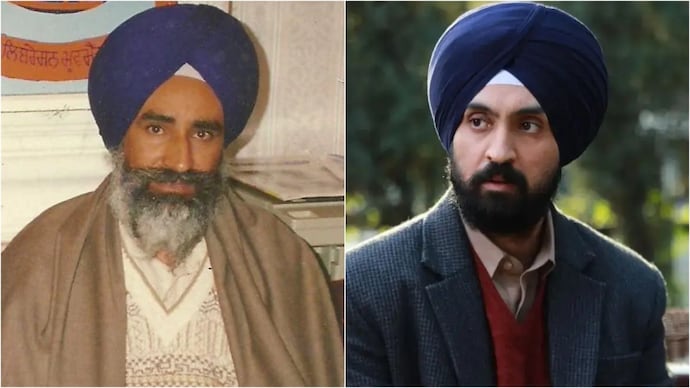
Diljit Dosanjh's film Satluj has put the spotlight back on Jaswant Singh Khalra, the human rights activist whose life inspired it, after the film was pulled off Zee5 in India until further notice. The activist exposed the alleged illegal cremation of thousands of unidentified bodies during Punjab's militancy era in the 1980s and 1990s.
Dosanjh addressed the removal in a post on Instagram, written in Punjabi, which translated reads: "I challenge the darkness. Shaheed Jaswant Singh Khalra Ji. Punjab 95. Satluj is what happened to Khalra Saab."
Earlier titled Punjab '95, the Honey Trehan directorial had been stuck in limbo after the Central Board of Film Certification (CBFC) reportedly sought as many as 127 cuts, a figure the makers themselves had mentioned, before finally reaching viewers uncut and under a new name.
With the film back in the news, here is a look at the real-life figure whose story it is built on.
Who was Jaswant Singh Khalra?
Jaswant Singh Khalra was a Punjab-based human rights activist remembered for bringing to light allegations of illegal killings and secret cremations carried out during the years of militancy in the state. Born in 1952 in Khalra village in Amritsar district, he spent the 1980s working at a bank before turning his attention full-time to human rights work.
The investigation that made him a household name
Reports from that time suggest that Khalra was deeply shaken by the aftermath of Operation Blue Star, the assassination of Indira Gandhi and the 1984 anti-Sikh riots, a period during which numerous Sikh families said their relatives had vanished after being detained by Punjab Police on suspicion of militant links.
Troubled by the growing number of disappearances around him, Khalra began piecing together evidence. His enquiries eventually took him to municipal records in Amritsar, where he had reportedly uncovered documentation listing the names, ages and addresses of thousands of individuals allegedly killed and cremated in secret by the police, without any word ever reaching their families. The revelation drew both national and international scrutiny, and turned Khalra into one of the most prominent human rights campaigners to emerge from Punjab.
Khalra's disappearance and the case that followed
In a tragic twist, Khalra suffered the same fate as the people whose disappearances he had spent years investigating. He went missing in 1995 after he was last seen washing his car outside his home, according to the Khalis Foundation. He was never seen alive again. He was allegedly abducted by Punjab Police officers.
A year later, the Central Bureau of Investigation (CBI) concluded that Khalra had been illegally detained at a police station in Tarn Taran before he was killed. Based on its findings, the agency recommended criminal charges against nine Punjab Police personnel for his abduction and murder.
The case took years to conclude. On October 16, 2007, a division bench of the Punjab and Haryana High Court, comprising Justices Mehtab Singh Gill and AN Jindal, increased the sentences of four convicted former officers, Sub-Inspectors Satnam Singh, Surinder Pal Singh and Jasbir Singh, and Head Constable Prithipal Singh, to life imprisonment.
Khalra is survived by his wife, Paramjit Kaur Khalra, and their two children, Navkiran Kaur and Janmeet Singh.
Here's the trailer of Satluj:
Zee5 has since confirmed the film's removal in a statement put out on social media, saying the response to Satluj had been overwhelming and thanking audiences who had subscribed, watched and stood by it. The platform maintained that it continues to back the film, its director and its creative vision, and said it was looking at legal avenues to bring Satluj back for Indian viewers as soon as possible.
Directed by Honey Trehan, Satluj also stars Arjun Rampal, Kanwaljit Singh, Suvinder Vicky and Geetika Vidya Ohlyan in pivotal roles. Its arrival on Zee5 brought an end to a certification battle that had dragged on for nearly three years, but eventually the film was taken down from the OTT platform.
Diljit Dosanjh's film Satluj has put the spotlight back on Jaswant Singh Khalra, the human rights activist whose life inspired it, after the film was pulled off Zee5 in India until further notice. The activist exposed the alleged illegal cremation of thousands of unidentified bodies during Punjab's militancy era in the 1980s and 1990s.
Dosanjh addressed the removal in a post on Instagram, written in Punjabi, which translated reads: "I challenge the darkness. Shaheed Jaswant Singh Khalra Ji. Punjab 95. Satluj is what happened to Khalra Saab."
Earlier titled Punjab '95, the Honey Trehan directorial had been stuck in limbo after the Central Board of Film Certification (CBFC) reportedly sought as many as 127 cuts, a figure the makers themselves had mentioned, before finally reaching viewers uncut and under a new name.
With the film back in the news, here is a look at the real-life figure whose story it is built on.
Who was Jaswant Singh Khalra?
Jaswant Singh Khalra was a Punjab-based human rights activist remembered for bringing to light allegations of illegal killings and secret cremations carried out during the years of militancy in the state. Born in 1952 in Khalra village in Amritsar district, he spent the 1980s working at a bank before turning his attention full-time to human rights work.
The investigation that made him a household name
Reports from that time suggest that Khalra was deeply shaken by the aftermath of Operation Blue Star, the assassination of Indira Gandhi and the 1984 anti-Sikh riots, a period during which numerous Sikh families said their relatives had vanished after being detained by Punjab Police on suspicion of militant links.
Troubled by the growing number of disappearances around him, Khalra began piecing together evidence. His enquiries eventually took him to municipal records in Amritsar, where he had reportedly uncovered documentation listing the names, ages and addresses of thousands of individuals allegedly killed and cremated in secret by the police, without any word ever reaching their families. The revelation drew both national and international scrutiny, and turned Khalra into one of the most prominent human rights campaigners to emerge from Punjab.
Khalra's disappearance and the case that followed
In a tragic twist, Khalra suffered the same fate as the people whose disappearances he had spent years investigating. He went missing in 1995 after he was last seen washing his car outside his home, according to the Khalis Foundation. He was never seen alive again. He was allegedly abducted by Punjab Police officers.
A year later, the Central Bureau of Investigation (CBI) concluded that Khalra had been illegally detained at a police station in Tarn Taran before he was killed. Based on its findings, the agency recommended criminal charges against nine Punjab Police personnel for his abduction and murder.
The case took years to conclude. On October 16, 2007, a division bench of the Punjab and Haryana High Court, comprising Justices Mehtab Singh Gill and AN Jindal, increased the sentences of four convicted former officers, Sub-Inspectors Satnam Singh, Surinder Pal Singh and Jasbir Singh, and Head Constable Prithipal Singh, to life imprisonment.
Khalra is survived by his wife, Paramjit Kaur Khalra, and their two children, Navkiran Kaur and Janmeet Singh.
Here's the trailer of Satluj:
Zee5 has since confirmed the film's removal in a statement put out on social media, saying the response to Satluj had been overwhelming and thanking audiences who had subscribed, watched and stood by it. The platform maintained that it continues to back the film, its director and its creative vision, and said it was looking at legal avenues to bring Satluj back for Indian viewers as soon as possible.
Directed by Honey Trehan, Satluj also stars Arjun Rampal, Kanwaljit Singh, Suvinder Vicky and Geetika Vidya Ohlyan in pivotal roles. Its arrival on Zee5 brought an end to a certification battle that had dragged on for nearly three years, but eventually the film was taken down from the OTT platform.

