India is building the rocket engine only SpaceX has ever flown. It's not by Isro
A Bengaluru startup is testing India's first full-flow staged combustion rocket engine, the same rare technology that only SpaceX's Raptor has ever flown to space.
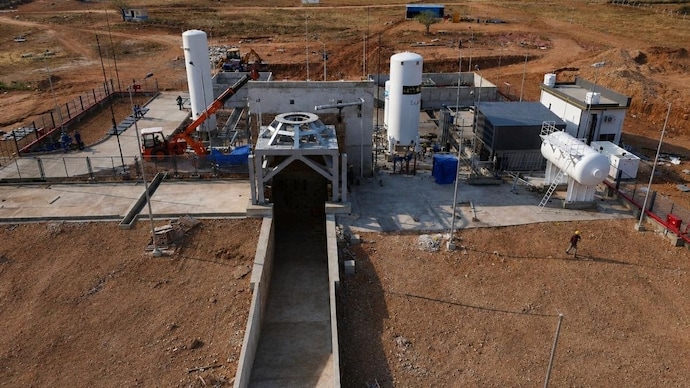
On a 21.5-acre stretch of land in Andhra Pradesh, engineers are bolting a rocket engine to a steel stand and setting it on fire. Deliberately. Again and again.
Each burn is a question. Can a machine built entirely in India, from its first drawing to its final weld, survive the violence of its own power? The answer will decide whether the country gets its most advanced rocket yet.
The surprise is who is asking the question. The engine belongs to Astrobase Space Technologies, a Bengaluru-based startup founded in 2024 by former Indian Space Research Organisation (Isro) scientist Devakumar Thammisetty and Neeraj Khandelwal, an IIT Bombay-trained electrical engineer who co-founded the crypto exchange CoinDCX before turning his attention skyward.
In an exclusive conversation with IndiaToday.in, Khandelwal said the engine, in terms of technology, sits among the top five rocket engines in the world. Outside the United States and China, he asserts, no other company has this technology.
To understand why that claim matters, you first need to meet a number that keeps India’s space planners awake at night.
THE NUMBER THAT HAUNTS INDIA'S SPACE AMBITIONS
India has around 55 operational satellites in orbit today, Khandelwal points out. The United States has more than 13,000. China is approaching 1,500.
Each one of those satellites is quietly doing a job. They beam television into homes, carry banking transactions, track cyclones before they make landfall, guide ships and aircraft, and keep militaries connected. Khandelwal calls the gap between 55 and 13,000 a national security issue, and the arithmetic behind it is brutally simple.
Satellites are mortal. They slowly lose altitude, drift back towards Earth and expire, which means each one must be replaced roughly every five years. If India wants even 500 satellites by 2035, a modest target next to American and Chinese numbers, the country needs the capacity to launch about 1000 tonnes of payload into orbit every single year. Payload is simply whatever a rocket carries, the cargo it delivers to space.
Launch, as Khandelwal puts it, is the choke point of the entire space industry. Everything else, the satellites, the applications, the ambitions, waits in a queue behind it. That 100-tonne annual capacity is Astrobase's goal.
THE HOLY GRAIL OF ROCKET ENGINES
At the heart of Astrobase's rocket is a technology with an intimidating name: the full-flow staged combustion engine, or FFSC. It is India's first, and it is worth pausing to understand why engineers call it the holy grail of propulsion.
A rocket engine is essentially a controlled explosion. It burns fuel with an oxidiser, the substance that supplies the oxygen needed for burning, and hurls the hot gases downwards to push the rocket up. That push is called thrust.
The hard part is feeding the fire. Propellants must be forced into the combustion chamber at ferocious pressures, and the pumps doing the forcing need power of their own.
Simpler engines solve this by burning a little propellant separately, just to spin the pumps, and throwing the exhaust away, like a car dribbling petrol out of its tank as it drives.
A full-flow staged combustion engine closes that leak. Every drop of fuel and every drop of oxidiser passes through the pumping system and still ends up burned in the main chamber, squeezed for every last unit of energy.
The result is an engine of exceptional efficiency, and in rocketry, efficiency is everything.
Khandelwal offers a striking rule of thumb: make an engine roughly 10 per cent more efficient, and the payload capacity of the vehicle can double. This technology is so difficult that only a handful of such engines exist in the world, he says.
The most famous is SpaceX's Raptor, the engine that powers Starship and the only one of its kind to have ever flown to space. Astrobase's engine belongs to this same rare family.
The engine burns liquid oxygen and methane and is designed to generate 800 kilonewtons of thrust in vacuum, enough push to lift roughly 80 tonnes. Its core components are 3D printed, and the entire engine has been designed, manufactured and integrated in-house.
WHY METHANE IS THE FUEL OF THE FUTURE
The choice of methane is deliberate. It is the principal component of the natural gas that warms kitchens across India, and peer-reviewed research published in the journal Acta Astronautica describes oxygen-methane propulsion as holding great potential for the next generation of operational rockets.
Methane burns clean, leaving little soot behind, a property documented by Nasa researchers as far back as the 1980s. That matters enormously if you want to fly the same engine again and again, because a sooty engine must be scrubbed back to health after every flight.
Studies have found liquid oxygen and methane to be among the best propellant combinations for reusable, high-thrust rocket engines, thanks to low cost and clean combustion.
Isro’s semi-cryogenic engine under development runs on kerosene, and the agency has separately begun work on methane-based propulsion for its future launch vehicles.
Astrobase, meanwhile, has already built what it describes as India's first methane-based rocket engine test facility, the sprawling Andhra Pradesh site where the firing campaign is under way.
A hot fire is exactly what it sounds like: the engine is ignited at full fury on a test stand while sensors record whether it behaves. A sub-scale version of the engine succeeded on its very first hot fire attempt in September 2025.
AN ENGINE BUILT TO FLY 50 TIMES
Reusability is the other obsession. A single Astrobase engine is designed to fly more than 50 times, the co-founder claims.
Khandelwal is blunt about why this matters. A reusable rocket begins with a reusable engine. Any company promising reusable vehicles without a reusable engine, he suggests, will struggle to deliver on that promise.
The rocket itself will have two stages, the stacked sections that fire one after another during a launch.
The first stage is designed to return and land back at its launch site, and the second will be made reusable in the years after launch operations begin.
The vehicle is built to carry 3 tonnes to low-Earth orbit, the region within about 2,000 kilometres of the planet where most satellites live.
THE ROAD TO 2028
The ambition has official backing. In June 2026, IN-SPACe, India's space regulator and promoter, selected Astrobase as one of the first three beneficiaries of its Rs 500 crore Technology Adoption Fund, after a rigorous multi-stage evaluation involving experts from Isro and other government bodies.
Khandelwal told IndiaToday.in that the company received Rs 25 crore, the maximum support permitted per project under the scheme, following a year-long technical review.
The roadmap ahead is aggressive: a hop test of the booster in 2027, in which the vehicle lifts off and lands vertically, a full static fire on the launch pad in 2028, and the inaugural orbital launch the same year.
Khandelwal's ambition stretches further still. He wants to build five to seven cutting-edge technologies in India in his lifetime, to prove to millions of young Indians that the most advanced machines on Earth can be built in their home country.
The engine now roaring in Andhra Pradesh is expected to be the first proof.
On a 21.5-acre stretch of land in Andhra Pradesh, engineers are bolting a rocket engine to a steel stand and setting it on fire. Deliberately. Again and again.
Each burn is a question. Can a machine built entirely in India, from its first drawing to its final weld, survive the violence of its own power? The answer will decide whether the country gets its most advanced rocket yet.
The surprise is who is asking the question. The engine belongs to Astrobase Space Technologies, a Bengaluru-based startup founded in 2024 by former Indian Space Research Organisation (Isro) scientist Devakumar Thammisetty and Neeraj Khandelwal, an IIT Bombay-trained electrical engineer who co-founded the crypto exchange CoinDCX before turning his attention skyward.
In an exclusive conversation with IndiaToday.in, Khandelwal said the engine, in terms of technology, sits among the top five rocket engines in the world. Outside the United States and China, he asserts, no other company has this technology.
To understand why that claim matters, you first need to meet a number that keeps India’s space planners awake at night.
THE NUMBER THAT HAUNTS INDIA'S SPACE AMBITIONS
India has around 55 operational satellites in orbit today, Khandelwal points out. The United States has more than 13,000. China is approaching 1,500.
Each one of those satellites is quietly doing a job. They beam television into homes, carry banking transactions, track cyclones before they make landfall, guide ships and aircraft, and keep militaries connected. Khandelwal calls the gap between 55 and 13,000 a national security issue, and the arithmetic behind it is brutally simple.
Satellites are mortal. They slowly lose altitude, drift back towards Earth and expire, which means each one must be replaced roughly every five years. If India wants even 500 satellites by 2035, a modest target next to American and Chinese numbers, the country needs the capacity to launch about 1000 tonnes of payload into orbit every single year. Payload is simply whatever a rocket carries, the cargo it delivers to space.
Launch, as Khandelwal puts it, is the choke point of the entire space industry. Everything else, the satellites, the applications, the ambitions, waits in a queue behind it. That 100-tonne annual capacity is Astrobase's goal.
THE HOLY GRAIL OF ROCKET ENGINES
At the heart of Astrobase's rocket is a technology with an intimidating name: the full-flow staged combustion engine, or FFSC. It is India's first, and it is worth pausing to understand why engineers call it the holy grail of propulsion.
A rocket engine is essentially a controlled explosion. It burns fuel with an oxidiser, the substance that supplies the oxygen needed for burning, and hurls the hot gases downwards to push the rocket up. That push is called thrust.
The hard part is feeding the fire. Propellants must be forced into the combustion chamber at ferocious pressures, and the pumps doing the forcing need power of their own.
Simpler engines solve this by burning a little propellant separately, just to spin the pumps, and throwing the exhaust away, like a car dribbling petrol out of its tank as it drives.
A full-flow staged combustion engine closes that leak. Every drop of fuel and every drop of oxidiser passes through the pumping system and still ends up burned in the main chamber, squeezed for every last unit of energy.
The result is an engine of exceptional efficiency, and in rocketry, efficiency is everything.
Khandelwal offers a striking rule of thumb: make an engine roughly 10 per cent more efficient, and the payload capacity of the vehicle can double. This technology is so difficult that only a handful of such engines exist in the world, he says.
The most famous is SpaceX's Raptor, the engine that powers Starship and the only one of its kind to have ever flown to space. Astrobase's engine belongs to this same rare family.
The engine burns liquid oxygen and methane and is designed to generate 800 kilonewtons of thrust in vacuum, enough push to lift roughly 80 tonnes. Its core components are 3D printed, and the entire engine has been designed, manufactured and integrated in-house.
WHY METHANE IS THE FUEL OF THE FUTURE
The choice of methane is deliberate. It is the principal component of the natural gas that warms kitchens across India, and peer-reviewed research published in the journal Acta Astronautica describes oxygen-methane propulsion as holding great potential for the next generation of operational rockets.
Methane burns clean, leaving little soot behind, a property documented by Nasa researchers as far back as the 1980s. That matters enormously if you want to fly the same engine again and again, because a sooty engine must be scrubbed back to health after every flight.
Studies have found liquid oxygen and methane to be among the best propellant combinations for reusable, high-thrust rocket engines, thanks to low cost and clean combustion.
Isro’s semi-cryogenic engine under development runs on kerosene, and the agency has separately begun work on methane-based propulsion for its future launch vehicles.
Astrobase, meanwhile, has already built what it describes as India's first methane-based rocket engine test facility, the sprawling Andhra Pradesh site where the firing campaign is under way.
A hot fire is exactly what it sounds like: the engine is ignited at full fury on a test stand while sensors record whether it behaves. A sub-scale version of the engine succeeded on its very first hot fire attempt in September 2025.
AN ENGINE BUILT TO FLY 50 TIMES
Reusability is the other obsession. A single Astrobase engine is designed to fly more than 50 times, the co-founder claims.
Khandelwal is blunt about why this matters. A reusable rocket begins with a reusable engine. Any company promising reusable vehicles without a reusable engine, he suggests, will struggle to deliver on that promise.
The rocket itself will have two stages, the stacked sections that fire one after another during a launch.
The first stage is designed to return and land back at its launch site, and the second will be made reusable in the years after launch operations begin.
The vehicle is built to carry 3 tonnes to low-Earth orbit, the region within about 2,000 kilometres of the planet where most satellites live.
THE ROAD TO 2028
The ambition has official backing. In June 2026, IN-SPACe, India's space regulator and promoter, selected Astrobase as one of the first three beneficiaries of its Rs 500 crore Technology Adoption Fund, after a rigorous multi-stage evaluation involving experts from Isro and other government bodies.
Khandelwal told IndiaToday.in that the company received Rs 25 crore, the maximum support permitted per project under the scheme, following a year-long technical review.
The roadmap ahead is aggressive: a hop test of the booster in 2027, in which the vehicle lifts off and lands vertically, a full static fire on the launch pad in 2028, and the inaugural orbital launch the same year.
Khandelwal's ambition stretches further still. He wants to build five to seven cutting-edge technologies in India in his lifetime, to prove to millions of young Indians that the most advanced machines on Earth can be built in their home country.
The engine now roaring in Andhra Pradesh is expected to be the first proof.

