Mojtaba vows payback for father Khamenei's death, says vengeance is nation's demand
Ayatollah Mojtaba Khamenei, in his first public message since succeeding his father, vowed to avenge Ayatollah Ali Khamenei's killing, calling it "the demand of the nation", even as tensions between Iran and the US continue despite ongoing diplomatic talks.
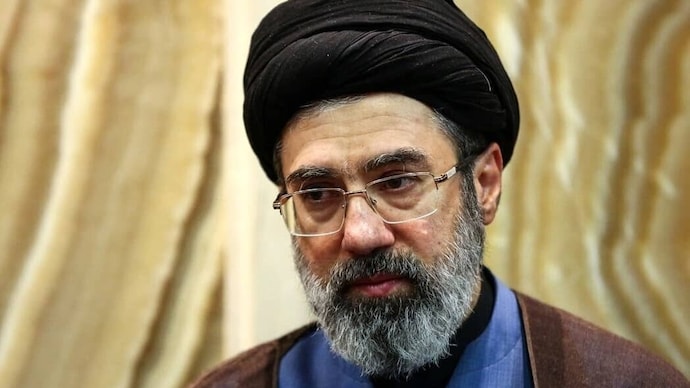
Iran's Supreme Leader Ayatollah Mojtaba Khamenei has vowed to avenge the killing of his father and predecessor, Ayatollah Ali Khamenei, declaring that retribution is "the demand of the nation" and would inevitably be carried out.
In his first public message since funeral ceremonies for Ayatollah Ali Khamenei began a week ago, Mojtaba issued a written statement broadcast on Iranian state television.
He pledged to avenge "the blood of the martyred leader" and all those killed during the recent conflict, while suggesting that the response would involve not only Iran but also supporters around the world.
"We pledge to avenge the blood of the martyred leader and all the martyrs of these two wars from the criminal and disgraced killers," the statement said. It added that vengeance "must certainly" take place and described it as the will of the Iranian people.
"Whether we are there or not, this will be accomplished, and soon every free person around the world will fulfill a part of this divine mission," the statement said.
MOJTABA STILL NOT APPEARING IN PERSON
Ayatollah Ali Khamenei was killed in a US-Israeli airstrike on February 28, at the outset of the four-month conflict between Iran and the United States and Israel. Mojtaba Khamenei, who reportedly sustained facial disfigurement and other injuries in the same strike, succeeded his father as Supreme Leader on March 8 with the backing of Iran's powerful Islamic Revolutionary Guard Corps (IRGC).
Despite assuming the country's highest office, Mojtaba has not appeared in public since the airstrike. No photographs, videos or audio recordings of him have been released, fuelling speculation about his health and prompting calls from some Iranians for him to make a public appearance, even if injured.
CEASEFIRE APPARENTLY 'OVER'
The statement comes amid renewed uncertainty over a fragile truce between Washington and Tehran. In recent days, both sides have exchanged fresh attacks, raising questions about the future of the ceasefire that had been aimed at ending months of hostilities. While Iran has maintained that the agreement could eventually deliver significant economic benefits, tensions remain high.
US President Donald Trump, despite declaring that the ceasefire was effectively "over", said on Friday that the United States and Iran had nevertheless agreed to continue diplomatic talks.
Ayatollah Ali Khamenei, who led Iran for 37 years, was buried on Friday at the country's holiest shrine following funeral ceremonies attended by large crowds, according to Iranian state media. His death has marked the beginning of a new and uncertain chapter in Iran's political and security landscape.
Iran's Supreme Leader Ayatollah Mojtaba Khamenei has vowed to avenge the killing of his father and predecessor, Ayatollah Ali Khamenei, declaring that retribution is "the demand of the nation" and would inevitably be carried out.
In his first public message since funeral ceremonies for Ayatollah Ali Khamenei began a week ago, Mojtaba issued a written statement broadcast on Iranian state television.
He pledged to avenge "the blood of the martyred leader" and all those killed during the recent conflict, while suggesting that the response would involve not only Iran but also supporters around the world.
"We pledge to avenge the blood of the martyred leader and all the martyrs of these two wars from the criminal and disgraced killers," the statement said. It added that vengeance "must certainly" take place and described it as the will of the Iranian people.
"Whether we are there or not, this will be accomplished, and soon every free person around the world will fulfill a part of this divine mission," the statement said.
MOJTABA STILL NOT APPEARING IN PERSON
Ayatollah Ali Khamenei was killed in a US-Israeli airstrike on February 28, at the outset of the four-month conflict between Iran and the United States and Israel. Mojtaba Khamenei, who reportedly sustained facial disfigurement and other injuries in the same strike, succeeded his father as Supreme Leader on March 8 with the backing of Iran's powerful Islamic Revolutionary Guard Corps (IRGC).
Despite assuming the country's highest office, Mojtaba has not appeared in public since the airstrike. No photographs, videos or audio recordings of him have been released, fuelling speculation about his health and prompting calls from some Iranians for him to make a public appearance, even if injured.
CEASEFIRE APPARENTLY 'OVER'
The statement comes amid renewed uncertainty over a fragile truce between Washington and Tehran. In recent days, both sides have exchanged fresh attacks, raising questions about the future of the ceasefire that had been aimed at ending months of hostilities. While Iran has maintained that the agreement could eventually deliver significant economic benefits, tensions remain high.
US President Donald Trump, despite declaring that the ceasefire was effectively "over", said on Friday that the United States and Iran had nevertheless agreed to continue diplomatic talks.
Ayatollah Ali Khamenei, who led Iran for 37 years, was buried on Friday at the country's holiest shrine following funeral ceremonies attended by large crowds, according to Iranian state media. His death has marked the beginning of a new and uncertain chapter in Iran's political and security landscape.

