Monsoon's mood swings hit India's farms: Kharif sowing drops 16% amid uneven rains
The pace of crop planting across India is revealing the broader impact of an uneven monsoon, with the weeks ahead likely to prove decisive for the kharif season.
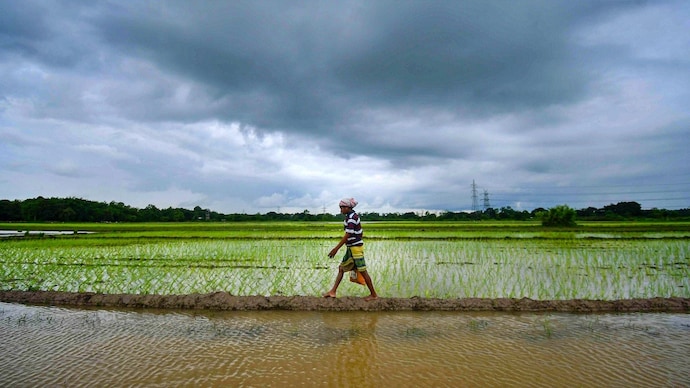
India's kharif sowing season has begun to lose momentum as the southwest monsoon slips back into a weak phase, with uneven rainfall delaying planting across several rain-fed farming regions despite a sharp improvement in the country's overall rain deficit.
According to the Ministry of Agriculture and Farmers' Welfare's latest weekly sowing data, farmers had sown kharif crops over 531.25 lakh hectares by around July 10, about 16% lower than the 632.69 lakh hectares sown during the corresponding period last year.
While the gap has narrowed from more than 20% a week earlier after the monsoon's revival, sowing remains behind schedule in several states, particularly for soybean, cotton, pulses and coarse cereals.
After widespread showers in early July reduced the seasonal rainfall deficit from nearly 40% at the end of June to around 14%, the monsoon weakened again.
The changing weather pattern, along with the existing rain deficits, has already affected kharif sowing.
AN UNEVEN MONSOON
Kharif crops are sown between June and July with the arrival of the southwest monsoon and harvested from September onwards.
They include rice, soybean, cotton, maize, pulses and groundnut, many of which rely heavily on seasonal rainfall rather than irrigation.
The recent revival was driven largely by heavy rain over central India, while eastern and northeastern states continue to record large deficits.
In many rain-fed regions, farmers are still waiting for adequate soil moisture to begin sowing or transplanting.
Even where heavy showers arrived, the return of dry weather has raised concerns.
Young seedlings require consistent moisture during the first few weeks after sowing, and prolonged dry spells can affect germination, weaken crop establishment and ultimately reduce yields.
July is the most critical month for kharif planting, making the current lull particularly significant.
MONSOON IS RESTING
Meteorologists attribute the ongoing slowdown to a monsoon break, a common feature of the rainy season when the monsoon trough shifts closer to the Himalayan foothills, reducing rainfall across much of the plains.
The IMD has forecast July rainfall at below 94% of the Long Period Average (LPA).
Furthermore, a developing El Nino in the Pacific Ocean could also influence rainfall later in the season.
With nearly half of India's cultivated land dependent on rainfall, the next active spell of the monsoon will be crucial for accelerating sowing and protecting crop yields during the remainder of the kharif season.
India's kharif sowing season has begun to lose momentum as the southwest monsoon slips back into a weak phase, with uneven rainfall delaying planting across several rain-fed farming regions despite a sharp improvement in the country's overall rain deficit.
According to the Ministry of Agriculture and Farmers' Welfare's latest weekly sowing data, farmers had sown kharif crops over 531.25 lakh hectares by around July 10, about 16% lower than the 632.69 lakh hectares sown during the corresponding period last year.
While the gap has narrowed from more than 20% a week earlier after the monsoon's revival, sowing remains behind schedule in several states, particularly for soybean, cotton, pulses and coarse cereals.
After widespread showers in early July reduced the seasonal rainfall deficit from nearly 40% at the end of June to around 14%, the monsoon weakened again.
The changing weather pattern, along with the existing rain deficits, has already affected kharif sowing.
AN UNEVEN MONSOON
Kharif crops are sown between June and July with the arrival of the southwest monsoon and harvested from September onwards.
They include rice, soybean, cotton, maize, pulses and groundnut, many of which rely heavily on seasonal rainfall rather than irrigation.
The recent revival was driven largely by heavy rain over central India, while eastern and northeastern states continue to record large deficits.
In many rain-fed regions, farmers are still waiting for adequate soil moisture to begin sowing or transplanting.
Even where heavy showers arrived, the return of dry weather has raised concerns.
Young seedlings require consistent moisture during the first few weeks after sowing, and prolonged dry spells can affect germination, weaken crop establishment and ultimately reduce yields.
July is the most critical month for kharif planting, making the current lull particularly significant.
MONSOON IS RESTING
Meteorologists attribute the ongoing slowdown to a monsoon break, a common feature of the rainy season when the monsoon trough shifts closer to the Himalayan foothills, reducing rainfall across much of the plains.
The IMD has forecast July rainfall at below 94% of the Long Period Average (LPA).
Furthermore, a developing El Nino in the Pacific Ocean could also influence rainfall later in the season.
With nearly half of India's cultivated land dependent on rainfall, the next active spell of the monsoon will be crucial for accelerating sowing and protecting crop yields during the remainder of the kharif season.

