Japan is making electricity from salty water and sewage. The science is real
Japan has switched on its first osmotic power plant in Fukuoka, generating electricity by mixing desalination brine with treated sewage water. Here is the science of blue energy, explained in the simplest terms.
Every second, wherever a river meets the sea, energy quietly slips away into the water. The energy simply dissolves as freshwater mixes with salt.
Japan has now found a way to catch some of it.
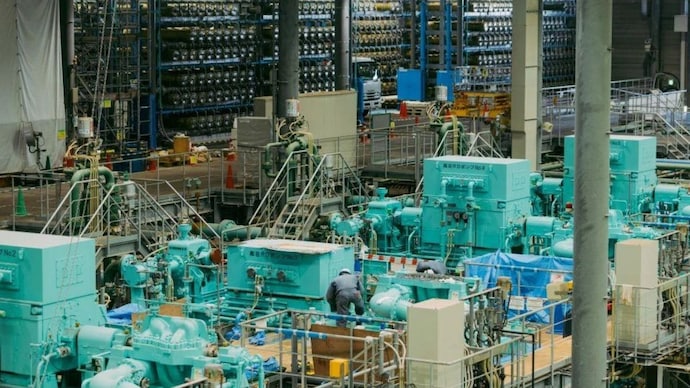
On August 5, 2025, the country switched on its first osmotic power plant at the Uminonakamichi Nata Seawater Desalination Centre, known as Mamizupia, in the coastal city of Fukuoka.
It is only the second facility of its kind in the world, after a small plant in Denmark. And it runs on two things most cities throw away: extra-salty water and treated sewage.
WHAT IS OSMOTIC POWER OR BLUE ENERGY?
The plant works on osmosis, the same process that helps plant roots pull water from soil and keeps the cells in your body hydrated.
When freshwater and saltwater sit on either side of a semi-permeable membrane, a thin barrier that lets water molecules through but blocks salt, water naturally flows towards the saltier side. Nature is trying to balance the two.
That flow carries energy. When freshwater and saltwater mix, they release what scientists call free energy, the same thermodynamic principle that makes batteries work.
Because this energy comes from the salinity difference between two waters, it is called salinity gradient energy, or simply blue energy.
HOW DOES JAPAN'S OSMOTIC POWER PLANT WORK?
Mamizupia uses a technique called pressure-retarded osmosis, or PRO.
Water crosses the membrane into the salty side, which is deliberately kept under pressure.
The incoming water swells the volume of this pressurised stream. That surging, pressurised water is then pushed through a turbine, which spins a generator, exactly like a miniature hydroelectric dam.
Neither is any fuel burned, nor carbon dioxide released during generation.
WHY DOES THE PLANT USE SEWAGE WATER AND BRINE?
Here lies the genius of Fukuoka.
Ordinary seawater is about 3.5 per cent salt. But Mamizupia is a desalination centre, a plant that turns seawater into drinking water for 2.5 million people.
That process leaves behind concentrated brine that is roughly 8 per cent salt, more than double the strength of the sea.
On the freshwater side, the plant uses treated water from a nearby sewage facility. The bigger the salt difference, the harder the water pushes, and the more electricity flows.
CAN OSMOTIC POWER REPLACE SOLAR AND WIND ENERGY?
Not yet. The plant produces about 8,80,000 kilowatt-hours a year, enough for roughly 300 Japanese households.
But unlike solar and wind, it works round the clock, in any weather, with a utilisation rate of about 90 per cent.
The hurdles are membrane fouling, where impurities clog the membrane surface, along with cost and pumping losses.
Yet researchers estimate the world's river mouths hold enormous untapped potential. Fukuoka has just proven the idea works outside the laboratory.
Every second, wherever a river meets the sea, energy quietly slips away into the water. The energy simply dissolves as freshwater mixes with salt.
Japan has now found a way to catch some of it.
On August 5, 2025, the country switched on its first osmotic power plant at the Uminonakamichi Nata Seawater Desalination Centre, known as Mamizupia, in the coastal city of Fukuoka.
It is only the second facility of its kind in the world, after a small plant in Denmark. And it runs on two things most cities throw away: extra-salty water and treated sewage.
WHAT IS OSMOTIC POWER OR BLUE ENERGY?
The plant works on osmosis, the same process that helps plant roots pull water from soil and keeps the cells in your body hydrated.
When freshwater and saltwater sit on either side of a semi-permeable membrane, a thin barrier that lets water molecules through but blocks salt, water naturally flows towards the saltier side. Nature is trying to balance the two.
That flow carries energy. When freshwater and saltwater mix, they release what scientists call free energy, the same thermodynamic principle that makes batteries work.
Because this energy comes from the salinity difference between two waters, it is called salinity gradient energy, or simply blue energy.
HOW DOES JAPAN'S OSMOTIC POWER PLANT WORK?
Mamizupia uses a technique called pressure-retarded osmosis, or PRO.
Water crosses the membrane into the salty side, which is deliberately kept under pressure.
The incoming water swells the volume of this pressurised stream. That surging, pressurised water is then pushed through a turbine, which spins a generator, exactly like a miniature hydroelectric dam.
Neither is any fuel burned, nor carbon dioxide released during generation.
WHY DOES THE PLANT USE SEWAGE WATER AND BRINE?
Here lies the genius of Fukuoka.
Ordinary seawater is about 3.5 per cent salt. But Mamizupia is a desalination centre, a plant that turns seawater into drinking water for 2.5 million people.
That process leaves behind concentrated brine that is roughly 8 per cent salt, more than double the strength of the sea.
On the freshwater side, the plant uses treated water from a nearby sewage facility. The bigger the salt difference, the harder the water pushes, and the more electricity flows.
CAN OSMOTIC POWER REPLACE SOLAR AND WIND ENERGY?
Not yet. The plant produces about 8,80,000 kilowatt-hours a year, enough for roughly 300 Japanese households.
But unlike solar and wind, it works round the clock, in any weather, with a utilisation rate of about 90 per cent.
The hurdles are membrane fouling, where impurities clog the membrane surface, along with cost and pumping losses.
Yet researchers estimate the world's river mouths hold enormous untapped potential. Fukuoka has just proven the idea works outside the laboratory.

