How is fake milk made? The science behind Maharashtra's synthetic milk racket
Maharashtra's FDA has busted a synthetic milk racket that turned detergent, palm oil, shampoo and cheap powder into fake milk sold as the real thing. Here is the simple science of how synthetic milk is made, how it fools dairy tests, and why it is dangerous to drink.
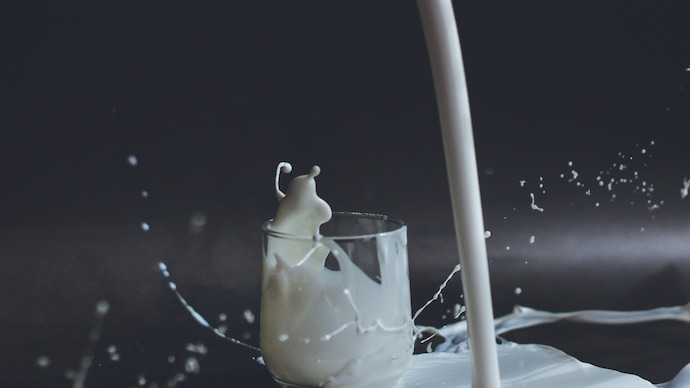
Pour a glass of milk and hold it to the light. It looks like the most honest thing in your kitchen. Now imagine that none of it came from a cow or any other animal.
That, investigators say, is what surfaced across Maharashtra this July. Not milk quietly watered down, the old village trick, but milk built from scratch out of palm oil, detergent, shampoo and cheap powder, then poured into the real thing.
The Food and Drug Administration (FDA), working with the Pune Rural Police, has arrested 13 people and booked 26, seizing adulterating chemicals worth about Rs 1.48 crore. The alleged network ran out of Manchar in Pune and stretched across several districts.
On the FDA’s own estimate, close to 2.3 crore litres of adulterated milk may already have reached the market over six months.
HOW IS SYNTHETIC MILK DIFFERENT FROM DILUTED MILK?
Synthetic milk is not milk with water added. It is a manufactured look-alike.
Real milk is mostly water, but floating in it are microscopic droplets of fat, each wrapped in a coat of protein that stops them from rising to the top.
A mixture like this, one substance suspended evenly through another, is called an emulsion.
The forger’s task is to recreate that emulsion without a cow, and make it convincing enough to walk through a dairy’s tests.
HOW IS FAKE MILK MADE FROM DETERGENT AND PALM OIL?
It begins with a problem. Palm oil is cheap, but oil and water refuse to blend. Drop oil into water and it simply floats.
To force it into a fine, milky suspension, you need a molecule with a split personality, one end that loves water and one that loves oil.
Chemists call it a surfactant. It surrounds each oil droplet and holds it in place.
The most powerful surfactants in any home are detergent and shampoo, which is exactly why FDA teams keep seizing them. The result froths, looks creamy and coats the glass. It is also not food.
HOW DOES FAKE MILK FOOL THE LACTOMETER TEST?
At a collection centre, milk first meets the lactometer, a float that measures density, or how heavy the liquid is for its size.
Pure milk sits in a narrowband. Water is lighter, so plain dilution is caught at once.
The forgers know this, so they add cheap skimmed milk powder, whey and a little sugar to push the density back into the safe range.
The fat test is tricked the same way. It cannot tell milk fat from palm oil, so added oil simply reads as richer milk.
The scam does not hide from the test. It feeds the test the number it wants.
WHY IS UREA SOMETIMES ADDED TO MILK?
Older rackets leaned on urea, a cheap chemical packed with nitrogen. Labs often judge protein by measuring nitrogen, since protein is the main thing in milk that carries it.
Urea holds plenty of nitrogen and no protein at all, so a pinch makes a fake sample read as high in protein.
The Maharashtra seizures centred on detergent, oil and powder rather than urea, but urea did turn up in February in a similar operation in Gujarat.
Scientists have developed infrared methods specifically to expose it.
HOW DO LABS DETECT ADULTERATED MILK?
The everyday tests measure milk in bulk, so a careful forger can satisfy all of them at once. To catch the fraud, scientists stop weighing the milk and start reading its molecules.
The main tool is infrared spectroscopy: shine infrared light through a sample and each chemical bond absorbs its own wavelength, leaving a pattern like a barcode.
Real milk has a known barcode; palm oil, detergent and urea add lines that should not be there.
Newer systems now pair this with machine learning to flag a bad sample in seconds.
HOW DOES ADULTERATED MILK TASTE DIFFERENT?
Real milk tastes mild, clean and faintly sweet, thanks to lactose, its natural sugar, with a smooth feel that comes from tiny fat droplets coating the mouth. Fake milk cannot copy this.
The detergents and alkalis leave a soapy, slightly bitter note that lingers on the tongue, while palm oil gives a greasy, waxy film instead of melting away.
The lactose sweetness is missing, so it can taste flat or oddly neutral.
Heating sharpens the clues, releasing a soapy or chemical smell and sometimes a yellowish tinge.
The difference shows up sharply in tea or coffee, where milk proteins normally soften the bitterness of tea tannins and coffee acids, so a fake version can taste harsh, thin or oddly flat instead of creamy.
Boiling can make matters worse, splitting the weak emulsion, so the milk curdles into flecks or leaves an oily film on the surface. One caution though. A well-made fake can fool the tongue, so taste is only a hint, never proof.
IS ADULTERATED MILK HARMFUL TO HEALTH?
Yes, and for most people, milk is meant to nourish.
Detergents irritate the gut and, over time, strain the liver and kidneys.
Caustic neutralisers burn the digestive tract. Excess urea overloads the kidneys.
Doctors warned during the crackdown that sustained consumption can damage these organs and can even be life-threatening.
HOW IS MAHARASHTRA STOPPING MILK ADULTERATION?
The state has gone beyond raids. The FDA is tightening the whole chain, pushing for traceability from collection point to shelf, cold storage and food-grade equipment, so a bad batch has nowhere to hide.
Milk is not merely a food product, Commissioner Tukaram Mundhe has said; adulterating it is playing with public health.
So pick up that glass again. The unsettling lesson from Maharashtra is that a liquid can be engineered to satisfy your eyes, your tongue and a dairy's instruments all at once, and still be a lie.
The reassurance is that the same science that builds the fake is what strips off its mask.
Pour a glass of milk and hold it to the light. It looks like the most honest thing in your kitchen. Now imagine that none of it came from a cow or any other animal.
That, investigators say, is what surfaced across Maharashtra this July. Not milk quietly watered down, the old village trick, but milk built from scratch out of palm oil, detergent, shampoo and cheap powder, then poured into the real thing.
The Food and Drug Administration (FDA), working with the Pune Rural Police, has arrested 13 people and booked 26, seizing adulterating chemicals worth about Rs 1.48 crore. The alleged network ran out of Manchar in Pune and stretched across several districts.
On the FDA’s own estimate, close to 2.3 crore litres of adulterated milk may already have reached the market over six months.
HOW IS SYNTHETIC MILK DIFFERENT FROM DILUTED MILK?
Synthetic milk is not milk with water added. It is a manufactured look-alike.
Real milk is mostly water, but floating in it are microscopic droplets of fat, each wrapped in a coat of protein that stops them from rising to the top.
A mixture like this, one substance suspended evenly through another, is called an emulsion.
The forger’s task is to recreate that emulsion without a cow, and make it convincing enough to walk through a dairy’s tests.
HOW IS FAKE MILK MADE FROM DETERGENT AND PALM OIL?
It begins with a problem. Palm oil is cheap, but oil and water refuse to blend. Drop oil into water and it simply floats.
To force it into a fine, milky suspension, you need a molecule with a split personality, one end that loves water and one that loves oil.
Chemists call it a surfactant. It surrounds each oil droplet and holds it in place.
The most powerful surfactants in any home are detergent and shampoo, which is exactly why FDA teams keep seizing them. The result froths, looks creamy and coats the glass. It is also not food.
HOW DOES FAKE MILK FOOL THE LACTOMETER TEST?
At a collection centre, milk first meets the lactometer, a float that measures density, or how heavy the liquid is for its size.
Pure milk sits in a narrowband. Water is lighter, so plain dilution is caught at once.
The forgers know this, so they add cheap skimmed milk powder, whey and a little sugar to push the density back into the safe range.
The fat test is tricked the same way. It cannot tell milk fat from palm oil, so added oil simply reads as richer milk.
The scam does not hide from the test. It feeds the test the number it wants.
WHY IS UREA SOMETIMES ADDED TO MILK?
Older rackets leaned on urea, a cheap chemical packed with nitrogen. Labs often judge protein by measuring nitrogen, since protein is the main thing in milk that carries it.
Urea holds plenty of nitrogen and no protein at all, so a pinch makes a fake sample read as high in protein.
The Maharashtra seizures centred on detergent, oil and powder rather than urea, but urea did turn up in February in a similar operation in Gujarat.
Scientists have developed infrared methods specifically to expose it.
HOW DO LABS DETECT ADULTERATED MILK?
The everyday tests measure milk in bulk, so a careful forger can satisfy all of them at once. To catch the fraud, scientists stop weighing the milk and start reading its molecules.
The main tool is infrared spectroscopy: shine infrared light through a sample and each chemical bond absorbs its own wavelength, leaving a pattern like a barcode.
Real milk has a known barcode; palm oil, detergent and urea add lines that should not be there.
Newer systems now pair this with machine learning to flag a bad sample in seconds.
HOW DOES ADULTERATED MILK TASTE DIFFERENT?
Real milk tastes mild, clean and faintly sweet, thanks to lactose, its natural sugar, with a smooth feel that comes from tiny fat droplets coating the mouth. Fake milk cannot copy this.
The detergents and alkalis leave a soapy, slightly bitter note that lingers on the tongue, while palm oil gives a greasy, waxy film instead of melting away.
The lactose sweetness is missing, so it can taste flat or oddly neutral.
Heating sharpens the clues, releasing a soapy or chemical smell and sometimes a yellowish tinge.
The difference shows up sharply in tea or coffee, where milk proteins normally soften the bitterness of tea tannins and coffee acids, so a fake version can taste harsh, thin or oddly flat instead of creamy.
Boiling can make matters worse, splitting the weak emulsion, so the milk curdles into flecks or leaves an oily film on the surface. One caution though. A well-made fake can fool the tongue, so taste is only a hint, never proof.
IS ADULTERATED MILK HARMFUL TO HEALTH?
Yes, and for most people, milk is meant to nourish.
Detergents irritate the gut and, over time, strain the liver and kidneys.
Caustic neutralisers burn the digestive tract. Excess urea overloads the kidneys.
Doctors warned during the crackdown that sustained consumption can damage these organs and can even be life-threatening.
HOW IS MAHARASHTRA STOPPING MILK ADULTERATION?
The state has gone beyond raids. The FDA is tightening the whole chain, pushing for traceability from collection point to shelf, cold storage and food-grade equipment, so a bad batch has nowhere to hide.
Milk is not merely a food product, Commissioner Tukaram Mundhe has said; adulterating it is playing with public health.
So pick up that glass again. The unsettling lesson from Maharashtra is that a liquid can be engineered to satisfy your eyes, your tongue and a dairy's instruments all at once, and still be a lie.
The reassurance is that the same science that builds the fake is what strips off its mask.
Pour a glass of milk and hold it to the light. It looks like the most honest thing in your kitchen. Now imagine that none of it came from a cow or any other animal.
That, investigators say, is what surfaced across Maharashtra this July. Not milk quietly watered down, the old village trick, but milk built from scratch out of palm oil, detergent, shampoo and cheap powder, then poured into the real thing.
The Food and Drug Administration (FDA), working with the Pune Rural Police, has arrested 13 people and booked 26, seizing adulterating chemicals worth about Rs 1.48 crore. The alleged network ran out of Manchar in Pune and stretched across several districts.
On the FDA’s own estimate, close to 2.3 crore litres of adulterated milk may already have reached the market over six months.
HOW IS SYNTHETIC MILK DIFFERENT FROM DILUTED MILK?
Synthetic milk is not milk with water added. It is a manufactured look-alike.
Real milk is mostly water, but floating in it are microscopic droplets of fat, each wrapped in a coat of protein that stops them from rising to the top.
A mixture like this, one substance suspended evenly through another, is called an emulsion.
The forger’s task is to recreate that emulsion without a cow, and make it convincing enough to walk through a dairy’s tests.
HOW IS FAKE MILK MADE FROM DETERGENT AND PALM OIL?
It begins with a problem. Palm oil is cheap, but oil and water refuse to blend. Drop oil into water and it simply floats.
To force it into a fine, milky suspension, you need a molecule with a split personality, one end that loves water and one that loves oil.
Chemists call it a surfactant. It surrounds each oil droplet and holds it in place.
The most powerful surfactants in any home are detergent and shampoo, which is exactly why FDA teams keep seizing them. The result froths, looks creamy and coats the glass. It is also not food.
HOW DOES FAKE MILK FOOL THE LACTOMETER TEST?
At a collection centre, milk first meets the lactometer, a float that measures density, or how heavy the liquid is for its size.
Pure milk sits in a narrowband. Water is lighter, so plain dilution is caught at once.
The forgers know this, so they add cheap skimmed milk powder, whey and a little sugar to push the density back into the safe range.
The fat test is tricked the same way. It cannot tell milk fat from palm oil, so added oil simply reads as richer milk.
The scam does not hide from the test. It feeds the test the number it wants.
WHY IS UREA SOMETIMES ADDED TO MILK?
Older rackets leaned on urea, a cheap chemical packed with nitrogen. Labs often judge protein by measuring nitrogen, since protein is the main thing in milk that carries it.
Urea holds plenty of nitrogen and no protein at all, so a pinch makes a fake sample read as high in protein.
The Maharashtra seizures centred on detergent, oil and powder rather than urea, but urea did turn up in February in a similar operation in Gujarat.
Scientists have developed infrared methods specifically to expose it.
HOW DO LABS DETECT ADULTERATED MILK?
The everyday tests measure milk in bulk, so a careful forger can satisfy all of them at once. To catch the fraud, scientists stop weighing the milk and start reading its molecules.
The main tool is infrared spectroscopy: shine infrared light through a sample and each chemical bond absorbs its own wavelength, leaving a pattern like a barcode.
Real milk has a known barcode; palm oil, detergent and urea add lines that should not be there.
Newer systems now pair this with machine learning to flag a bad sample in seconds.
HOW DOES ADULTERATED MILK TASTE DIFFERENT?
Real milk tastes mild, clean and faintly sweet, thanks to lactose, its natural sugar, with a smooth feel that comes from tiny fat droplets coating the mouth. Fake milk cannot copy this.
The detergents and alkalis leave a soapy, slightly bitter note that lingers on the tongue, while palm oil gives a greasy, waxy film instead of melting away.
The lactose sweetness is missing, so it can taste flat or oddly neutral.
Heating sharpens the clues, releasing a soapy or chemical smell and sometimes a yellowish tinge.
The difference shows up sharply in tea or coffee, where milk proteins normally soften the bitterness of tea tannins and coffee acids, so a fake version can taste harsh, thin or oddly flat instead of creamy.
Boiling can make matters worse, splitting the weak emulsion, so the milk curdles into flecks or leaves an oily film on the surface. One caution though. A well-made fake can fool the tongue, so taste is only a hint, never proof.
IS ADULTERATED MILK HARMFUL TO HEALTH?
Yes, and for most people, milk is meant to nourish.
Detergents irritate the gut and, over time, strain the liver and kidneys.
Caustic neutralisers burn the digestive tract. Excess urea overloads the kidneys.
Doctors warned during the crackdown that sustained consumption can damage these organs and can even be life-threatening.
HOW IS MAHARASHTRA STOPPING MILK ADULTERATION?
The state has gone beyond raids. The FDA is tightening the whole chain, pushing for traceability from collection point to shelf, cold storage and food-grade equipment, so a bad batch has nowhere to hide.
Milk is not merely a food product, Commissioner Tukaram Mundhe has said; adulterating it is playing with public health.
So pick up that glass again. The unsettling lesson from Maharashtra is that a liquid can be engineered to satisfy your eyes, your tongue and a dairy's instruments all at once, and still be a lie.
The reassurance is that the same science that builds the fake is what strips off its mask.

