Humid heat to return across India this week, feels-like temp to near 50°C
India is bracing for a fresh spell of oppressive humid heat this week as a break in the monsoon lets sunshine and trapped moisture combine to push heat index values close to 50 degrees Celsius in several cities.
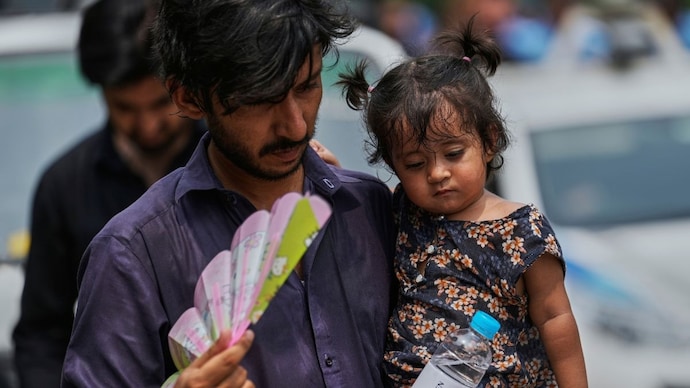
If you have stepped outside this weekend and felt far hotter than your phone's weather app suggested, you were not imagining things. Several Indian cities are currently registering "feels like" temperatures nudging 50 degrees Celsius, even though the actual air temperature is a comparatively modest 32 to 37 degrees.
The culprit is not a classic heatwave, but something meteorologists call a monsoon break, and it is set to keep things sticky through this week.
WHY DOES 36 DEGREES FEEL LIKE NEARLY 50?
The answer lies in humidity, not just heat. Our bodies cool down mainly by sweating, and that only works if the sweat can evaporate. When the air is already loaded with moisture, evaporation slows down, so the body cannot shed heat efficiently.
Scientists combine air temperature and humidity into a single figure called the heat index, or apparent temperature, to describe how conditions actually feel.
In Bhubaneswar, an air temperature of 36 degrees with 63 per cent humidity translates into a heat index of 49.9 degrees.
Chennai and Lucknow are not far behind.
WHAT IS A MONSOON BREAK, AND WHY IS IT HAPPENING NOW?
The southwest monsoon covered all of India by July 9, well ahead of schedule, and brought heavy rain that eased the season's rainfall deficit considerably.
But around July 10, the monsoon trough shifted north towards the Himalayan foothills, letting dry winds take over central, western and parts of peninsular India.
According to the India Meteorological Department, subdued rainfall is likely over central and south peninsular India for the next several days.
Crucially, the moisture already sitting in the soil and atmosphere does not vanish. Skies clear, sunshine intensifies, and that trapped humidity combines with stronger heating to push up the heat index sharply.
WHICH CITIES ARE WORST AFFECTED?
Coastal and eastern cities are suffering most, because sea breezes keep pumping in moisture. Mumbai's actual temperature is a relatively cool 32 degrees, yet 70 per cent humidity drags its heat index up to 40.4 degrees.
Northern cities such as Delhi and Sri Ganganagar are also uncomfortable, with heat index values around 45 to 46 degrees.
IS THIS AN OFFICIAL HEATWAVE?
Not quite. The IMD's extended range outlook for the week of July 9 to 15 does not forecast classic heatwave conditions, but does flag above normal maximum temperatures in parts of northwest and northeast India, alongside a nationally below-normal rainfall outlook for July.
In plain terms, it is humid discomfort rather than dry, blistering heat, but doctors say it can be just as risky, particularly for the elderly, children and outdoor workers. Staying hydrated and avoiding peak afternoon exertion remains the safest advice until the monsoon regains its footing.
If you have stepped outside this weekend and felt far hotter than your phone's weather app suggested, you were not imagining things. Several Indian cities are currently registering "feels like" temperatures nudging 50 degrees Celsius, even though the actual air temperature is a comparatively modest 32 to 37 degrees.
The culprit is not a classic heatwave, but something meteorologists call a monsoon break, and it is set to keep things sticky through this week.
WHY DOES 36 DEGREES FEEL LIKE NEARLY 50?
The answer lies in humidity, not just heat. Our bodies cool down mainly by sweating, and that only works if the sweat can evaporate. When the air is already loaded with moisture, evaporation slows down, so the body cannot shed heat efficiently.
Scientists combine air temperature and humidity into a single figure called the heat index, or apparent temperature, to describe how conditions actually feel.
In Bhubaneswar, an air temperature of 36 degrees with 63 per cent humidity translates into a heat index of 49.9 degrees.
Chennai and Lucknow are not far behind.
WHAT IS A MONSOON BREAK, AND WHY IS IT HAPPENING NOW?
The southwest monsoon covered all of India by July 9, well ahead of schedule, and brought heavy rain that eased the season's rainfall deficit considerably.
But around July 10, the monsoon trough shifted north towards the Himalayan foothills, letting dry winds take over central, western and parts of peninsular India.
According to the India Meteorological Department, subdued rainfall is likely over central and south peninsular India for the next several days.
Crucially, the moisture already sitting in the soil and atmosphere does not vanish. Skies clear, sunshine intensifies, and that trapped humidity combines with stronger heating to push up the heat index sharply.
WHICH CITIES ARE WORST AFFECTED?
Coastal and eastern cities are suffering most, because sea breezes keep pumping in moisture. Mumbai's actual temperature is a relatively cool 32 degrees, yet 70 per cent humidity drags its heat index up to 40.4 degrees.
Northern cities such as Delhi and Sri Ganganagar are also uncomfortable, with heat index values around 45 to 46 degrees.
IS THIS AN OFFICIAL HEATWAVE?
Not quite. The IMD's extended range outlook for the week of July 9 to 15 does not forecast classic heatwave conditions, but does flag above normal maximum temperatures in parts of northwest and northeast India, alongside a nationally below-normal rainfall outlook for July.
In plain terms, it is humid discomfort rather than dry, blistering heat, but doctors say it can be just as risky, particularly for the elderly, children and outdoor workers. Staying hydrated and avoiding peak afternoon exertion remains the safest advice until the monsoon regains its footing.

