0-6: India lose No.1 T20I ranking after UK tour ends with a stinker in Southampton
India return from the tour of UK without winning a single match. First a 0-2 series loss against Ireland, and then an abject surrender of 0-4 against England, this is one of the lowest moments of the Indian cricket team in the past few years.
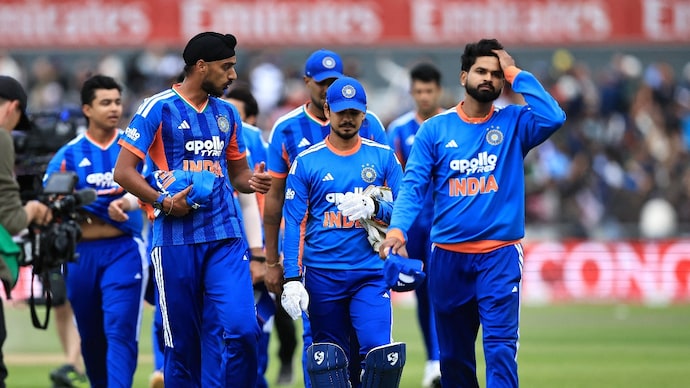
0-6. Shreyas Iyer's India return from the tour of United Kingdom without a single win. Playing the final T20I in Southampton, the final nail in the coffin was hammered in by England as they snatched away the title of No.1 T20I side from the world champions with a bullish 56-run win.
India's reign as the world's best T20I side lasted merely two weeks after their T20 World Cup triumph, as they capitulated across the tours of Ireland and England. The final T20I was a difficult watch as England romped to 257 for 3, and then restricting India to just 201 runs in the second innings. Jos Buttler smashed a thundering 131, while captain Harry Brook's breathtaking assault saw him finish unbeaten on 95 off just 45 balls.
Once England posted their highest-ever T20I total against India, it was difficult to imagine the visitors, who had struggled with the bat throughout the tour, pulling off the chase. Sanju Samson, recalled in place of Vaibhav Sooryavanshi, began brightly with 27 off 14 balls, but once again failed to capitalise. India once again lost both openers inside the Powerplay, a familiar collapse that all but sealed their fate.
Brief counter-attacks from Ishan Kishan (56 off 35), Shreyas Iyer (38 off 16) and Tilak Varma (53 off 25) kept India alive for a while, but the visitors eventually slumped to a 56-run defeat.
ENGLAND MILES AHEAD
England looked like a team that had figured India out long before the final T20I.
After Prasidh Krishna removed Phil Salt early, Harry Brook and Jos Buttler dismantled India's bowling with a record 233-run partnership, the highest stand for any wicket in England's T20I history. Brook raced to a 19-ball fifty before Buttler shifted gears spectacularly, blasting a 51-ball to leave India without answers.
The duo hit eight sixes each, level with the entirety of the Indian team today.
Brook repeatedly made room against the seamers, carving them over extra cover whenever they searched for yorkers. Against spin, he danced down the track and refused to let Axar Patel settle. Buttler, meanwhile, rolled back the years with effortless power, punishing anything remotely off the line as England piled on 257.
Prince Yadav conceded 60 runs in four overs, Axar Patel leaked 63 without taking a wicket, while debutant Suryansh Shedge was thrown into the attack before being targeted mercilessly. By the halfway mark, the contest had already slipped away.
INDIA NEVER FOUND THEIR FEET
The final match summed up India's tour. There was no settled batting order. No settled bowling attack. No clear tactical identity.
Sanju Samson was dropped after three games, only to return for the series finale. Fifteen-year-old Vaibhav Sooryavanshi was backed briefly before being left out again. Tilak Varma batted across multiple positions despite thriving at No.3. Axar Patel floated through the order, while Shivam Dube's role changed from game to game.
The bowling attack suffered from injuries, but also from constant chopping and changing. Harshit Rana broke down after just five matches following his return from a four-month injury layoff. Varun Chakravarthy was also ruled out during the England series, leaving India scrambling for combinations until the very end.
Rather than building rhythm, India spent the entire tour searching for it.
LATE TO THE STADIUM, LATE TO THE TOUR
India even arrived late to the Rose Bowl on Saturday after getting caught in a traffic jam in Southampton, delaying the toss by 45 minutes and the start of play by half an hour.
While that delay was beyond anyone's control, it felt symbolic of the tour itself.
In Ireland, Shreyas Iyer admitted that India had failed to assess the conditions and even the ground dimensions quickly enough. England exposed a different weakness altogether. On pitches that rewarded smart batting rather than blind aggression, India rarely looked prepared.
Their batters continued to struggle against the short ball. Their bowlers rarely executed consistent lengths. Tactical adjustments came only after matches had begun slipping away.
England, on the other hand, looked like a side that understood exactly how to exploit both the conditions and India's shortcomings.
QUESTIONS FOR GAMBHIR
The scoreline of the tour tells only part of the story.
India now return from the United Kingdom without winning a single match, losing 0-2 to Ireland before being swept 0-4 by England. Shreyas Iyer remains winless after two T20I series as captain, while India have surrendered the No.1 ranking less than a fortnight after lifting the T20 World Cup.
The bigger concern, however, is not the results themselves but how they arrived.
The aggressive blueprint that brought success at home did not work overseas. The team management struggled to identify a settled XI, persisted with constant changes, and never appeared to find a tactical solution once England began exposing India's flaws.
The World Cup winners arrived in the United Kingdom looking like the benchmark of T20 cricket. They leave having been thoroughly outplayed.
0-6. Shreyas Iyer's India return from the tour of United Kingdom without a single win. Playing the final T20I in Southampton, the final nail in the coffin was hammered in by England as they snatched away the title of No.1 T20I side from the world champions with a bullish 56-run win.
India's reign as the world's best T20I side lasted merely two weeks after their T20 World Cup triumph, as they capitulated across the tours of Ireland and England. The final T20I was a difficult watch as England romped to 257 for 3, and then restricting India to just 201 runs in the second innings. Jos Buttler smashed a thundering 131, while captain Harry Brook's breathtaking assault saw him finish unbeaten on 95 off just 45 balls.
Once England posted their highest-ever T20I total against India, it was difficult to imagine the visitors, who had struggled with the bat throughout the tour, pulling off the chase. Sanju Samson, recalled in place of Vaibhav Sooryavanshi, began brightly with 27 off 14 balls, but once again failed to capitalise. India once again lost both openers inside the Powerplay, a familiar collapse that all but sealed their fate.
Brief counter-attacks from Ishan Kishan (56 off 35), Shreyas Iyer (38 off 16) and Tilak Varma (53 off 25) kept India alive for a while, but the visitors eventually slumped to a 56-run defeat.
ENGLAND MILES AHEAD
England looked like a team that had figured India out long before the final T20I.
After Prasidh Krishna removed Phil Salt early, Harry Brook and Jos Buttler dismantled India's bowling with a record 233-run partnership, the highest stand for any wicket in England's T20I history. Brook raced to a 19-ball fifty before Buttler shifted gears spectacularly, blasting a 51-ball to leave India without answers.
The duo hit eight sixes each, level with the entirety of the Indian team today.
Brook repeatedly made room against the seamers, carving them over extra cover whenever they searched for yorkers. Against spin, he danced down the track and refused to let Axar Patel settle. Buttler, meanwhile, rolled back the years with effortless power, punishing anything remotely off the line as England piled on 257.
Prince Yadav conceded 60 runs in four overs, Axar Patel leaked 63 without taking a wicket, while debutant Suryansh Shedge was thrown into the attack before being targeted mercilessly. By the halfway mark, the contest had already slipped away.
INDIA NEVER FOUND THEIR FEET
The final match summed up India's tour. There was no settled batting order. No settled bowling attack. No clear tactical identity.
Sanju Samson was dropped after three games, only to return for the series finale. Fifteen-year-old Vaibhav Sooryavanshi was backed briefly before being left out again. Tilak Varma batted across multiple positions despite thriving at No.3. Axar Patel floated through the order, while Shivam Dube's role changed from game to game.
The bowling attack suffered from injuries, but also from constant chopping and changing. Harshit Rana broke down after just five matches following his return from a four-month injury layoff. Varun Chakravarthy was also ruled out during the England series, leaving India scrambling for combinations until the very end.
Rather than building rhythm, India spent the entire tour searching for it.
LATE TO THE STADIUM, LATE TO THE TOUR
India even arrived late to the Rose Bowl on Saturday after getting caught in a traffic jam in Southampton, delaying the toss by 45 minutes and the start of play by half an hour.
While that delay was beyond anyone's control, it felt symbolic of the tour itself.
In Ireland, Shreyas Iyer admitted that India had failed to assess the conditions and even the ground dimensions quickly enough. England exposed a different weakness altogether. On pitches that rewarded smart batting rather than blind aggression, India rarely looked prepared.
Their batters continued to struggle against the short ball. Their bowlers rarely executed consistent lengths. Tactical adjustments came only after matches had begun slipping away.
England, on the other hand, looked like a side that understood exactly how to exploit both the conditions and India's shortcomings.
QUESTIONS FOR GAMBHIR
The scoreline of the tour tells only part of the story.
India now return from the United Kingdom without winning a single match, losing 0-2 to Ireland before being swept 0-4 by England. Shreyas Iyer remains winless after two T20I series as captain, while India have surrendered the No.1 ranking less than a fortnight after lifting the T20 World Cup.
The bigger concern, however, is not the results themselves but how they arrived.
The aggressive blueprint that brought success at home did not work overseas. The team management struggled to identify a settled XI, persisted with constant changes, and never appeared to find a tactical solution once England began exposing India's flaws.
The World Cup winners arrived in the United Kingdom looking like the benchmark of T20 cricket. They leave having been thoroughly outplayed.

