Why India's govt websites are stuck in the 1990s
From booking Tatkal train tickets and filing RTIs to accessing EPF claims and court records, millions in India rely on government websites every day. Yet many users say these portals remain slow, glitchy and difficult to navigate. We tested some of these websites and spoke to users and experts to understand why.
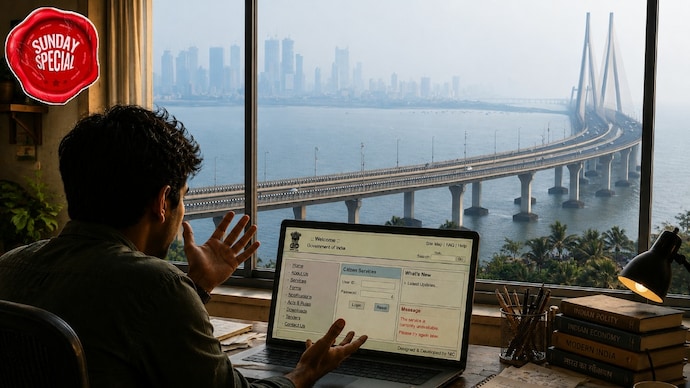
"We are experiencing a high load. Please try again later."
The message flashed on Ranjan Kumar's phone for the third consecutive day, and just days before an exam that could shape his future. It was April 20, and the New Delhi-based civil services aspirant was trying to book a Tatkal ticket on the IRCTC app to travel to Patna for the Bihar Public Service Commission (BPSC)'s Assistant Education Development Officer examination.
A Tatkal train ticket was Kumar's best bet, as the BPSC had released the exam centres just 10 days earlier. Kumar was no stranger to navigating government recruitment portals, having spent years uploading the same photographs, signatures, certificates and personal details in different formats, file sizes and resolutions. But this time, the system let him down.
He never managed to book a ticket, and he couldn't appear for the exam.
"As if battling the cumbersome exam portals several times a month isn't enough, we aspirants face another digital hurdle while trying to book a train to get to the exam centres," Kumar told India Today Digital. But what Kumar experiences is neither unique nor limited to the government websites he uses.
Social media is awash with complaints about Indian government websites being slow, clunky, user-unfriendly and stuck in another era.
Like Kumar, employees trying to withdraw their Provident Fund (PF) savings, journalists seeking court or police records, and citizens filing RTIs, have all complained of similar frustrations in dealing with government websites. They are the front-door to public services and are the primary touchpoints between citizens and the state. In cases such as visa applications, these portals become the first point of contact between the Indian government and people from around the world.
While public services going online have eliminated countless queues and reduced paperwork, sub-par websites mar the user experience with endless spinning loading icons, unexplained and unclear error messages, and webpages that crash just when they are needed. That's what the people and stakeholders, India Today Digital spoke to, said.
The Indian Railways is the country's biggest transporter, ferrying 23 million passengers every day. Obviously, millions end up using its ticketing website managed by the IRCTC. The booking woes on IRCTC have become a familiar refrain on social media, despite the platform improving significantly over the past few years.
The collective agony over Tatkal bookings on IRCTC and also the Indian Railway's new offering, RailOne, could qualify as a meme genre in its own right. We also tested RailOne. While its design has been widely mocked online as "AI slop", we examined whether its functionality fares any better.
The spotlight has turned to India's government websites after The Economist questioned in June why a country celebrated globally for its software engineers and digital public infrastructure continues to struggle with the usability of its official portals. The criticism by The Rconomist triggered reactions online. Many said the report's contents rang true. Others pointed to successes such as UPI, Aadhaar, DigiLocker and CoWIN, arguing that the London-based outlet painted an unfair picture of India.
This debate prompted India Today Digital to ask what the everyday experience of ordinary users is. We spoke to people across professions and states, who told us what they liked and disliked about the portals they used. They rated them too. We also used some of the websites and spoke to experts to understand where India's digital governance succeeds, where it stumbles, and what steps are needed to fix the problems being faced by people.
BAD GOVT WEBSITES: LESS OF TECH, MORE OF ACCOUNTABILITY ISSUE?
The situation is such that a student hacked into the websites of IIT Kanpur and IIT Madras after being denied admission.
Journalist and digital rights activist Nikhil Pahwa told India Today Digital that government websites in India suffer from the same structural problems that plague the country's public infrastructure.
Bengaluru-based software engineering leader Shantanu Goel said that it's a problem, less one of technology than of accountability. "The biggest structural reason is fragmented accountability for the end-to-end citizen experience," Goel, who previously worked at Google and Qualcomm, told India Today Digital. Goel clarified that his observations reflected his "personal professional experience" and there was "not any insider knowledge of government projects".
"There is often no empowered 'service owner' responsible for the entire journey — from discovery and form submission to payment, status tracking and grievance resolution," Goel said.
RTI, DIGILOCKER TEST PATIENCE, SHOW UX GAP IN DIGITAL INDIA
The frustrations people described to us, and those echoed on social media about central and state government websites, mirrored India Today Digital's own experience of using several of these portals.
On July 2, while filing a Right to Information (RTI) application with the Delhi Development Authority (DDA), where we sought details of Delhi's footpaths and cycling infrastructure, the first thing that caught our attention was a field asking applicants to specify whether they were an Indian citizen or a non-citizen. That was puzzling, because the same portal clearly states that only Indian citizens can file RTI applications. If only Indian citizens are eligible, why ask applicants to choose between the two?
Then came a hurdle while submitting the application. The portal repeatedly rejected the request without explaining why. The same page kept reopening after every attempt. It was only on the third try that we realised the culprit was an apostrophe in the 200-word RTI query. Apparently, the portal does not accept certain special characters such as apostrophes.
It took around five minutes of trial and error to identify the issue, remove the character and proceed. The payment gateway worked normally, but relief was short-lived.
Immediately after the payment, instead of displaying a confirmation page, the website opened a blank white screen. There was no indication whether the RTI application had been successfully submitted. After buffering for a while, the portal displayed the message, "The Page You are referring to cannot be served. Try later. In case of any query, contact the Administrator of the Website."
Thankfully, I received an e-mail that said the application had been received.
Just a few minutes later, DigiLocker presented a different yet similar problem.
After logging in using a mobile number, the next step asked for Aadhaar-linking. The portal, however, displayed that the Aadhaar number had already been linked to another account. There was no option to check which account it was linked to, so one could recover the account or delink the Aadhaar number.
For a digitally literate user, such issues are frustrating. For someone less familiar with online government services, they can become a dead end.
Shantanu Goel said government portals continue to rely heavily on PDFs, rigid document uploads and strict file-size requirements that create unnecessary friction, particularly for smartphone users.
'DIGILOCKER, EPFO WEBSITE, UMANG TEST PATIENCE; REDITT BECAME TROUBLESHOOTER'
Earlier, we told you about civil services aspirant Ranjan Kumar, who missed his exam in Patna after failing to book a Tatkal ticket. In the course of our reporting, we also came across Rakshitha, whose experience echoed Kumar's, but in a different way. Rakshita, a 22-year-old UGC NET aspirant from Karnataka, almost missed her paper after repeated DigiLocker verification failures. Following the National Testing Agency's introduction of Aadhaar authentication for UGC NET registration, she was unable to complete the verification process.
"Until the last day of the application process, my Aadhaar authentication through DigiLocker simply wouldn't work. I was panicking because I thought I would miss the opportunity to appear for the exam, and the issue was entirely technical," she told India Today Digital.
Fortunately, she was eventually able to complete her registration after another applicant on Reddit suggested she use her PAN card instead.
A similar story plays out on the portal of the Employees' Provident Fund Organisation (EPFO), says Chaitanya Shri, a 28-year-old engineer from Uttar Pradesh's Noida. He says he often helps friends and acquaintances withdraw their Provident Fund savings.
"The EPFO website generally works well, but I've often faced difficulties while helping others authenticate and submit their PF claims. The claim process itself is quite complicated, and the website has been one of the biggest hurdles," said Chaitanya Shri.
"The biggest problem used to come at the final stage. After completing the entire procedure and clicking the last button, the website would sometimes crash. In other cases, the claim wouldn't get submitted, and the page would just keep buffering," he added.
Incidentally, the EPFO on July 8 rolled out its new centralised digital platform.
Chaitanya Shri, however, also said the EPFO platform has also improved over time. After using the new platform, he says there were a few things which needed to be addressed.
"The claim process has improved over the last few months and navigation on the redesigned EPFO website is better," Chaitanya Shri said. "But the new website is still cluttered. The widgets are confusing, there is too much content, and when I initially tried using it, the site crashed several times. It still looks and feels like a typical government website," he added.
The government's UMANG app, designed as a one-stop platform for multiple public services, still leaves Chaitanya Shri unconvinced.
Shantanu Goel, however, cited UMANG as one of the better government digital services because it aggregates multiple services in one place, though he says the recent EPFO migration had affected that experience.
Goel added that many government portals remain "too desktop-centric" despite India being a smartphone-first country. Long forms copied from paper applications, PDF-heavy workflows, rigid upload requirements, and CAPTCHA or session timeouts make services unnecessarily difficult to complete on phones.
Since we're talking about both mobile and desktop government platforms, let's turn to one that has long been a punching bag for users.
Recently, RailOne was launched for smartphones and desktops as a unified platform on top of IRCTC. It brought reserved and unreserved ticketing, parcel services, food ordering and more under what the Railways called a "one-stop solution for all passenger needs".
What has been the verdict on the much-touted RailOne app, a month after its launch? Here's what users are saying.
IS RAILONE BETTER THAN IRCTC FOR BOOKING TRAIN TICKETS?
RailOne appears to have nailed it in terms of first impressions, at least visually. But if social media chatter is any indication, the user experience tells a different story.
Across X and Reddit threads over the past month, many people praised the app's cleaner interface, smoother navigation and modern design compared to the older IRCTC Rail Connect. But the fact that it sits atop the old booking infrastructure was a recurring theme. "And that bites the most when one books a Tatkal ticket," said Ranjan Kumar.
"RailOne UI feels smoother to use but with hardly any improvement in backend. It's more like a BMW body panel on a Maruti car," he said.
"The servers are the issue, not the app," he said. Several people on Reddit reported payment failures where money was debited but tickets were not booked, delayed refunds, lack of in-app customer support, and persistent loading delays before the CAPTCHA page during bookings. Basically, the same old issues that marred the IRCTC app.
Also, some called the platform an "AI slop".
The platforms are different. The users are different. Yet the frustrations are strikingly similar. So why do the same problems keep surfacing across government websites, regardless of the state or agency behind them?
WHY DOES THIS KEEP HAPPENING? WHY ARE INDIAN GOVT WEBSITES BAD?
While the recent controversy and criticisms of government websites was triggered by The Economist, people who work on and study India's digital ecosystem say the underlying problems are hardly new.
Nikhil Pahwa, founder and editor of MediaNama, says the biggest challenge is not a dearth of good techies in India, which is an IT powerhouse. He says it is the sheer scale at which government platforms function. "When the government implements a platform, they have to do it at population scale," Pahwa told India Today Digital.
"Every site has to be built to be able to handle the load at population scale," he said. According to Pahwa, the problem begins much before a website goes live.
"Government departments and officials are usually not competent enough to either get something built that works at that scale, or they're not able to be in a position to assess whether something will work at that scale," Pahwa said, arguing that the government's digital services procurement process compounds the issue.
"Most contracts are given under L1, and so you get what you pay for. You choose the lowest bidder, and you get the lowest quality because they don't have the ability to basically judge quality also," he said, drawing a comparison with India's physical infrastructure.
Goel similarly argued that procurement often rewards the "lowest compliant bid", and usability of the product is measured only at launch.
"The Indian government's website and technology problem is basically the same problem that you have with all government contracts. There's nothing unique. Lack of competence. Just like physical infrastructure, it's now digital infrastructure as well," he said.
"If these are the same people, the bureaucracy that gets horrible physical infrastructure done, the same bureaucracy also gets bad quality digital infrastructure done," Goel said.
Meanwhile, Pahwa flagged the possibility of corruption, saying there is a "likelihood of corruption" in government technology contracts, much like in public works projects. Though he added, "I can't say for sure because I don't know."
Interestingly, Pahwa believes one of India's most criticised government websites — the IRCTC — still performs better than many others. "For all its problems, the IRCTC website is one of the better-run websites that the government has," Pahwa said, adding that the government should create a robust digital ecosystem and environment that others (including private players) can build upon.
WHAT CAN THE GOVERNMENT DO TO BETTER USER EXPERIENCE OF ITS WEBSITES?
Pahwa believes the government should focus less on building every digital interface itself. He said, "The government needs to create enabling frameworks to allow others to build technology to service people in this country".
He argued that depending on a single government portal for a certain service creates a single point of failure. "Anything that is dependent on government infrastructure, on a government website, becomes a single point of failure. What you need is distributed infrastructure." He, then, pointed to examples where multiple private applications already use common public infrastructure.
Goel told India Today Digital that departments should also appoint dedicated "service owners", tie vendor payments and performance reviews to usability metrics rather than launches alone, and consistently implement the government's own UX4G and GIGW design guidelines.
"Today, I can use WhatsApp to buy a metro ticket. Maybe I'd like to be able to use Google Maps to buy a metro ticket. If I could only use a metro corporation's official website or app, it would collapse," Pahwa explains.
According to him, competition naturally improves the product, in turn, improving the user experience, because companies risk losing customers if their products fail.
To sum up, while India's digital public infrastructure has transformed how citizens interact with the state, for many other people, the quality of digital governance is judged by the experience of using government websites.
A country that proudly calls itself an IT powerhouse, the true measure of digital governance is not just how many services are available online, but whether they are reliable when citizens need them the most.
"We are experiencing a high load. Please try again later."
The message flashed on Ranjan Kumar's phone for the third consecutive day, and just days before an exam that could shape his future. It was April 20, and the New Delhi-based civil services aspirant was trying to book a Tatkal ticket on the IRCTC app to travel to Patna for the Bihar Public Service Commission (BPSC)'s Assistant Education Development Officer examination.
A Tatkal train ticket was Kumar's best bet, as the BPSC had released the exam centres just 10 days earlier. Kumar was no stranger to navigating government recruitment portals, having spent years uploading the same photographs, signatures, certificates and personal details in different formats, file sizes and resolutions. But this time, the system let him down.
He never managed to book a ticket, and he couldn't appear for the exam.
"As if battling the cumbersome exam portals several times a month isn't enough, we aspirants face another digital hurdle while trying to book a train to get to the exam centres," Kumar told India Today Digital. But what Kumar experiences is neither unique nor limited to the government websites he uses.
Social media is awash with complaints about Indian government websites being slow, clunky, user-unfriendly and stuck in another era.
Like Kumar, employees trying to withdraw their Provident Fund (PF) savings, journalists seeking court or police records, and citizens filing RTIs, have all complained of similar frustrations in dealing with government websites. They are the front-door to public services and are the primary touchpoints between citizens and the state. In cases such as visa applications, these portals become the first point of contact between the Indian government and people from around the world.
While public services going online have eliminated countless queues and reduced paperwork, sub-par websites mar the user experience with endless spinning loading icons, unexplained and unclear error messages, and webpages that crash just when they are needed. That's what the people and stakeholders, India Today Digital spoke to, said.
The Indian Railways is the country's biggest transporter, ferrying 23 million passengers every day. Obviously, millions end up using its ticketing website managed by the IRCTC. The booking woes on IRCTC have become a familiar refrain on social media, despite the platform improving significantly over the past few years.
The collective agony over Tatkal bookings on IRCTC and also the Indian Railway's new offering, RailOne, could qualify as a meme genre in its own right. We also tested RailOne. While its design has been widely mocked online as "AI slop", we examined whether its functionality fares any better.
The spotlight has turned to India's government websites after The Economist questioned in June why a country celebrated globally for its software engineers and digital public infrastructure continues to struggle with the usability of its official portals. The criticism by The Rconomist triggered reactions online. Many said the report's contents rang true. Others pointed to successes such as UPI, Aadhaar, DigiLocker and CoWIN, arguing that the London-based outlet painted an unfair picture of India.
This debate prompted India Today Digital to ask what the everyday experience of ordinary users is. We spoke to people across professions and states, who told us what they liked and disliked about the portals they used. They rated them too. We also used some of the websites and spoke to experts to understand where India's digital governance succeeds, where it stumbles, and what steps are needed to fix the problems being faced by people.
BAD GOVT WEBSITES: LESS OF TECH, MORE OF ACCOUNTABILITY ISSUE?
The situation is such that a student hacked into the websites of IIT Kanpur and IIT Madras after being denied admission.
Journalist and digital rights activist Nikhil Pahwa told India Today Digital that government websites in India suffer from the same structural problems that plague the country's public infrastructure.
Bengaluru-based software engineering leader Shantanu Goel said that it's a problem, less one of technology than of accountability. "The biggest structural reason is fragmented accountability for the end-to-end citizen experience," Goel, who previously worked at Google and Qualcomm, told India Today Digital. Goel clarified that his observations reflected his "personal professional experience" and there was "not any insider knowledge of government projects".
"There is often no empowered 'service owner' responsible for the entire journey — from discovery and form submission to payment, status tracking and grievance resolution," Goel said.
RTI, DIGILOCKER TEST PATIENCE, SHOW UX GAP IN DIGITAL INDIA
The frustrations people described to us, and those echoed on social media about central and state government websites, mirrored India Today Digital's own experience of using several of these portals.
On July 2, while filing a Right to Information (RTI) application with the Delhi Development Authority (DDA), where we sought details of Delhi's footpaths and cycling infrastructure, the first thing that caught our attention was a field asking applicants to specify whether they were an Indian citizen or a non-citizen. That was puzzling, because the same portal clearly states that only Indian citizens can file RTI applications. If only Indian citizens are eligible, why ask applicants to choose between the two?
Then came a hurdle while submitting the application. The portal repeatedly rejected the request without explaining why. The same page kept reopening after every attempt. It was only on the third try that we realised the culprit was an apostrophe in the 200-word RTI query. Apparently, the portal does not accept certain special characters such as apostrophes.
It took around five minutes of trial and error to identify the issue, remove the character and proceed. The payment gateway worked normally, but relief was short-lived.
Immediately after the payment, instead of displaying a confirmation page, the website opened a blank white screen. There was no indication whether the RTI application had been successfully submitted. After buffering for a while, the portal displayed the message, "The Page You are referring to cannot be served. Try later. In case of any query, contact the Administrator of the Website."
Thankfully, I received an e-mail that said the application had been received.
Just a few minutes later, DigiLocker presented a different yet similar problem.
After logging in using a mobile number, the next step asked for Aadhaar-linking. The portal, however, displayed that the Aadhaar number had already been linked to another account. There was no option to check which account it was linked to, so one could recover the account or delink the Aadhaar number.
For a digitally literate user, such issues are frustrating. For someone less familiar with online government services, they can become a dead end.
Shantanu Goel said government portals continue to rely heavily on PDFs, rigid document uploads and strict file-size requirements that create unnecessary friction, particularly for smartphone users.
'DIGILOCKER, EPFO WEBSITE, UMANG TEST PATIENCE; REDITT BECAME TROUBLESHOOTER'
Earlier, we told you about civil services aspirant Ranjan Kumar, who missed his exam in Patna after failing to book a Tatkal ticket. In the course of our reporting, we also came across Rakshitha, whose experience echoed Kumar's, but in a different way. Rakshita, a 22-year-old UGC NET aspirant from Karnataka, almost missed her paper after repeated DigiLocker verification failures. Following the National Testing Agency's introduction of Aadhaar authentication for UGC NET registration, she was unable to complete the verification process.
"Until the last day of the application process, my Aadhaar authentication through DigiLocker simply wouldn't work. I was panicking because I thought I would miss the opportunity to appear for the exam, and the issue was entirely technical," she told India Today Digital.
Fortunately, she was eventually able to complete her registration after another applicant on Reddit suggested she use her PAN card instead.
A similar story plays out on the portal of the Employees' Provident Fund Organisation (EPFO), says Chaitanya Shri, a 28-year-old engineer from Uttar Pradesh's Noida. He says he often helps friends and acquaintances withdraw their Provident Fund savings.
"The EPFO website generally works well, but I've often faced difficulties while helping others authenticate and submit their PF claims. The claim process itself is quite complicated, and the website has been one of the biggest hurdles," said Chaitanya Shri.
"The biggest problem used to come at the final stage. After completing the entire procedure and clicking the last button, the website would sometimes crash. In other cases, the claim wouldn't get submitted, and the page would just keep buffering," he added.
Incidentally, the EPFO on July 8 rolled out its new centralised digital platform.
Chaitanya Shri, however, also said the EPFO platform has also improved over time. After using the new platform, he says there were a few things which needed to be addressed.
"The claim process has improved over the last few months and navigation on the redesigned EPFO website is better," Chaitanya Shri said. "But the new website is still cluttered. The widgets are confusing, there is too much content, and when I initially tried using it, the site crashed several times. It still looks and feels like a typical government website," he added.
The government's UMANG app, designed as a one-stop platform for multiple public services, still leaves Chaitanya Shri unconvinced.
Shantanu Goel, however, cited UMANG as one of the better government digital services because it aggregates multiple services in one place, though he says the recent EPFO migration had affected that experience.
Goel added that many government portals remain "too desktop-centric" despite India being a smartphone-first country. Long forms copied from paper applications, PDF-heavy workflows, rigid upload requirements, and CAPTCHA or session timeouts make services unnecessarily difficult to complete on phones.
Since we're talking about both mobile and desktop government platforms, let's turn to one that has long been a punching bag for users.
Recently, RailOne was launched for smartphones and desktops as a unified platform on top of IRCTC. It brought reserved and unreserved ticketing, parcel services, food ordering and more under what the Railways called a "one-stop solution for all passenger needs".
What has been the verdict on the much-touted RailOne app, a month after its launch? Here's what users are saying.
IS RAILONE BETTER THAN IRCTC FOR BOOKING TRAIN TICKETS?
RailOne appears to have nailed it in terms of first impressions, at least visually. But if social media chatter is any indication, the user experience tells a different story.
Across X and Reddit threads over the past month, many people praised the app's cleaner interface, smoother navigation and modern design compared to the older IRCTC Rail Connect. But the fact that it sits atop the old booking infrastructure was a recurring theme. "And that bites the most when one books a Tatkal ticket," said Ranjan Kumar.
"RailOne UI feels smoother to use but with hardly any improvement in backend. It's more like a BMW body panel on a Maruti car," he said.
"The servers are the issue, not the app," he said. Several people on Reddit reported payment failures where money was debited but tickets were not booked, delayed refunds, lack of in-app customer support, and persistent loading delays before the CAPTCHA page during bookings. Basically, the same old issues that marred the IRCTC app.
Also, some called the platform an "AI slop".
The platforms are different. The users are different. Yet the frustrations are strikingly similar. So why do the same problems keep surfacing across government websites, regardless of the state or agency behind them?
WHY DOES THIS KEEP HAPPENING? WHY ARE INDIAN GOVT WEBSITES BAD?
While the recent controversy and criticisms of government websites was triggered by The Economist, people who work on and study India's digital ecosystem say the underlying problems are hardly new.
Nikhil Pahwa, founder and editor of MediaNama, says the biggest challenge is not a dearth of good techies in India, which is an IT powerhouse. He says it is the sheer scale at which government platforms function. "When the government implements a platform, they have to do it at population scale," Pahwa told India Today Digital.
"Every site has to be built to be able to handle the load at population scale," he said. According to Pahwa, the problem begins much before a website goes live.
"Government departments and officials are usually not competent enough to either get something built that works at that scale, or they're not able to be in a position to assess whether something will work at that scale," Pahwa said, arguing that the government's digital services procurement process compounds the issue.
"Most contracts are given under L1, and so you get what you pay for. You choose the lowest bidder, and you get the lowest quality because they don't have the ability to basically judge quality also," he said, drawing a comparison with India's physical infrastructure.
Goel similarly argued that procurement often rewards the "lowest compliant bid", and usability of the product is measured only at launch.
"The Indian government's website and technology problem is basically the same problem that you have with all government contracts. There's nothing unique. Lack of competence. Just like physical infrastructure, it's now digital infrastructure as well," he said.
"If these are the same people, the bureaucracy that gets horrible physical infrastructure done, the same bureaucracy also gets bad quality digital infrastructure done," Goel said.
Meanwhile, Pahwa flagged the possibility of corruption, saying there is a "likelihood of corruption" in government technology contracts, much like in public works projects. Though he added, "I can't say for sure because I don't know."
Interestingly, Pahwa believes one of India's most criticised government websites — the IRCTC — still performs better than many others. "For all its problems, the IRCTC website is one of the better-run websites that the government has," Pahwa said, adding that the government should create a robust digital ecosystem and environment that others (including private players) can build upon.
WHAT CAN THE GOVERNMENT DO TO BETTER USER EXPERIENCE OF ITS WEBSITES?
Pahwa believes the government should focus less on building every digital interface itself. He said, "The government needs to create enabling frameworks to allow others to build technology to service people in this country".
He argued that depending on a single government portal for a certain service creates a single point of failure. "Anything that is dependent on government infrastructure, on a government website, becomes a single point of failure. What you need is distributed infrastructure." He, then, pointed to examples where multiple private applications already use common public infrastructure.
Goel told India Today Digital that departments should also appoint dedicated "service owners", tie vendor payments and performance reviews to usability metrics rather than launches alone, and consistently implement the government's own UX4G and GIGW design guidelines.
"Today, I can use WhatsApp to buy a metro ticket. Maybe I'd like to be able to use Google Maps to buy a metro ticket. If I could only use a metro corporation's official website or app, it would collapse," Pahwa explains.
According to him, competition naturally improves the product, in turn, improving the user experience, because companies risk losing customers if their products fail.
To sum up, while India's digital public infrastructure has transformed how citizens interact with the state, for many other people, the quality of digital governance is judged by the experience of using government websites.
A country that proudly calls itself an IT powerhouse, the true measure of digital governance is not just how many services are available online, but whether they are reliable when citizens need them the most.
"We are experiencing a high load. Please try again later."
The message flashed on Ranjan Kumar's phone for the third consecutive day, and just days before an exam that could shape his future. It was April 20, and the New Delhi-based civil services aspirant was trying to book a Tatkal ticket on the IRCTC app to travel to Patna for the Bihar Public Service Commission (BPSC)'s Assistant Education Development Officer examination.
A Tatkal train ticket was Kumar's best bet, as the BPSC had released the exam centres just 10 days earlier. Kumar was no stranger to navigating government recruitment portals, having spent years uploading the same photographs, signatures, certificates and personal details in different formats, file sizes and resolutions. But this time, the system let him down.
He never managed to book a ticket, and he couldn't appear for the exam.
"As if battling the cumbersome exam portals several times a month isn't enough, we aspirants face another digital hurdle while trying to book a train to get to the exam centres," Kumar told India Today Digital. But what Kumar experiences is neither unique nor limited to the government websites he uses.
Social media is awash with complaints about Indian government websites being slow, clunky, user-unfriendly and stuck in another era.
Like Kumar, employees trying to withdraw their Provident Fund (PF) savings, journalists seeking court or police records, and citizens filing RTIs, have all complained of similar frustrations in dealing with government websites. They are the front-door to public services and are the primary touchpoints between citizens and the state. In cases such as visa applications, these portals become the first point of contact between the Indian government and people from around the world.
While public services going online have eliminated countless queues and reduced paperwork, sub-par websites mar the user experience with endless spinning loading icons, unexplained and unclear error messages, and webpages that crash just when they are needed. That's what the people and stakeholders, India Today Digital spoke to, said.
The Indian Railways is the country's biggest transporter, ferrying 23 million passengers every day. Obviously, millions end up using its ticketing website managed by the IRCTC. The booking woes on IRCTC have become a familiar refrain on social media, despite the platform improving significantly over the past few years.
The collective agony over Tatkal bookings on IRCTC and also the Indian Railway's new offering, RailOne, could qualify as a meme genre in its own right. We also tested RailOne. While its design has been widely mocked online as "AI slop", we examined whether its functionality fares any better.
The spotlight has turned to India's government websites after The Economist questioned in June why a country celebrated globally for its software engineers and digital public infrastructure continues to struggle with the usability of its official portals. The criticism by The Rconomist triggered reactions online. Many said the report's contents rang true. Others pointed to successes such as UPI, Aadhaar, DigiLocker and CoWIN, arguing that the London-based outlet painted an unfair picture of India.
This debate prompted India Today Digital to ask what the everyday experience of ordinary users is. We spoke to people across professions and states, who told us what they liked and disliked about the portals they used. They rated them too. We also used some of the websites and spoke to experts to understand where India's digital governance succeeds, where it stumbles, and what steps are needed to fix the problems being faced by people.
BAD GOVT WEBSITES: LESS OF TECH, MORE OF ACCOUNTABILITY ISSUE?
The situation is such that a student hacked into the websites of IIT Kanpur and IIT Madras after being denied admission.
Journalist and digital rights activist Nikhil Pahwa told India Today Digital that government websites in India suffer from the same structural problems that plague the country's public infrastructure.
Bengaluru-based software engineering leader Shantanu Goel said that it's a problem, less one of technology than of accountability. "The biggest structural reason is fragmented accountability for the end-to-end citizen experience," Goel, who previously worked at Google and Qualcomm, told India Today Digital. Goel clarified that his observations reflected his "personal professional experience" and there was "not any insider knowledge of government projects".
"There is often no empowered 'service owner' responsible for the entire journey — from discovery and form submission to payment, status tracking and grievance resolution," Goel said.
RTI, DIGILOCKER TEST PATIENCE, SHOW UX GAP IN DIGITAL INDIA
The frustrations people described to us, and those echoed on social media about central and state government websites, mirrored India Today Digital's own experience of using several of these portals.
On July 2, while filing a Right to Information (RTI) application with the Delhi Development Authority (DDA), where we sought details of Delhi's footpaths and cycling infrastructure, the first thing that caught our attention was a field asking applicants to specify whether they were an Indian citizen or a non-citizen. That was puzzling, because the same portal clearly states that only Indian citizens can file RTI applications. If only Indian citizens are eligible, why ask applicants to choose between the two?
Then came a hurdle while submitting the application. The portal repeatedly rejected the request without explaining why. The same page kept reopening after every attempt. It was only on the third try that we realised the culprit was an apostrophe in the 200-word RTI query. Apparently, the portal does not accept certain special characters such as apostrophes.
It took around five minutes of trial and error to identify the issue, remove the character and proceed. The payment gateway worked normally, but relief was short-lived.
Immediately after the payment, instead of displaying a confirmation page, the website opened a blank white screen. There was no indication whether the RTI application had been successfully submitted. After buffering for a while, the portal displayed the message, "The Page You are referring to cannot be served. Try later. In case of any query, contact the Administrator of the Website."
Thankfully, I received an e-mail that said the application had been received.
Just a few minutes later, DigiLocker presented a different yet similar problem.
After logging in using a mobile number, the next step asked for Aadhaar-linking. The portal, however, displayed that the Aadhaar number had already been linked to another account. There was no option to check which account it was linked to, so one could recover the account or delink the Aadhaar number.
For a digitally literate user, such issues are frustrating. For someone less familiar with online government services, they can become a dead end.
Shantanu Goel said government portals continue to rely heavily on PDFs, rigid document uploads and strict file-size requirements that create unnecessary friction, particularly for smartphone users.
'DIGILOCKER, EPFO WEBSITE, UMANG TEST PATIENCE; REDITT BECAME TROUBLESHOOTER'
Earlier, we told you about civil services aspirant Ranjan Kumar, who missed his exam in Patna after failing to book a Tatkal ticket. In the course of our reporting, we also came across Rakshitha, whose experience echoed Kumar's, but in a different way. Rakshita, a 22-year-old UGC NET aspirant from Karnataka, almost missed her paper after repeated DigiLocker verification failures. Following the National Testing Agency's introduction of Aadhaar authentication for UGC NET registration, she was unable to complete the verification process.
"Until the last day of the application process, my Aadhaar authentication through DigiLocker simply wouldn't work. I was panicking because I thought I would miss the opportunity to appear for the exam, and the issue was entirely technical," she told India Today Digital.
Fortunately, she was eventually able to complete her registration after another applicant on Reddit suggested she use her PAN card instead.
A similar story plays out on the portal of the Employees' Provident Fund Organisation (EPFO), says Chaitanya Shri, a 28-year-old engineer from Uttar Pradesh's Noida. He says he often helps friends and acquaintances withdraw their Provident Fund savings.
"The EPFO website generally works well, but I've often faced difficulties while helping others authenticate and submit their PF claims. The claim process itself is quite complicated, and the website has been one of the biggest hurdles," said Chaitanya Shri.
"The biggest problem used to come at the final stage. After completing the entire procedure and clicking the last button, the website would sometimes crash. In other cases, the claim wouldn't get submitted, and the page would just keep buffering," he added.
Incidentally, the EPFO on July 8 rolled out its new centralised digital platform.
Chaitanya Shri, however, also said the EPFO platform has also improved over time. After using the new platform, he says there were a few things which needed to be addressed.
"The claim process has improved over the last few months and navigation on the redesigned EPFO website is better," Chaitanya Shri said. "But the new website is still cluttered. The widgets are confusing, there is too much content, and when I initially tried using it, the site crashed several times. It still looks and feels like a typical government website," he added.
The government's UMANG app, designed as a one-stop platform for multiple public services, still leaves Chaitanya Shri unconvinced.
Shantanu Goel, however, cited UMANG as one of the better government digital services because it aggregates multiple services in one place, though he says the recent EPFO migration had affected that experience.
Goel added that many government portals remain "too desktop-centric" despite India being a smartphone-first country. Long forms copied from paper applications, PDF-heavy workflows, rigid upload requirements, and CAPTCHA or session timeouts make services unnecessarily difficult to complete on phones.
Since we're talking about both mobile and desktop government platforms, let's turn to one that has long been a punching bag for users.
Recently, RailOne was launched for smartphones and desktops as a unified platform on top of IRCTC. It brought reserved and unreserved ticketing, parcel services, food ordering and more under what the Railways called a "one-stop solution for all passenger needs".
What has been the verdict on the much-touted RailOne app, a month after its launch? Here's what users are saying.
IS RAILONE BETTER THAN IRCTC FOR BOOKING TRAIN TICKETS?
RailOne appears to have nailed it in terms of first impressions, at least visually. But if social media chatter is any indication, the user experience tells a different story.
Across X and Reddit threads over the past month, many people praised the app's cleaner interface, smoother navigation and modern design compared to the older IRCTC Rail Connect. But the fact that it sits atop the old booking infrastructure was a recurring theme. "And that bites the most when one books a Tatkal ticket," said Ranjan Kumar.
"RailOne UI feels smoother to use but with hardly any improvement in backend. It's more like a BMW body panel on a Maruti car," he said.
"The servers are the issue, not the app," he said. Several people on Reddit reported payment failures where money was debited but tickets were not booked, delayed refunds, lack of in-app customer support, and persistent loading delays before the CAPTCHA page during bookings. Basically, the same old issues that marred the IRCTC app.
Also, some called the platform an "AI slop".
The platforms are different. The users are different. Yet the frustrations are strikingly similar. So why do the same problems keep surfacing across government websites, regardless of the state or agency behind them?
WHY DOES THIS KEEP HAPPENING? WHY ARE INDIAN GOVT WEBSITES BAD?
While the recent controversy and criticisms of government websites was triggered by The Economist, people who work on and study India's digital ecosystem say the underlying problems are hardly new.
Nikhil Pahwa, founder and editor of MediaNama, says the biggest challenge is not a dearth of good techies in India, which is an IT powerhouse. He says it is the sheer scale at which government platforms function. "When the government implements a platform, they have to do it at population scale," Pahwa told India Today Digital.
"Every site has to be built to be able to handle the load at population scale," he said. According to Pahwa, the problem begins much before a website goes live.
"Government departments and officials are usually not competent enough to either get something built that works at that scale, or they're not able to be in a position to assess whether something will work at that scale," Pahwa said, arguing that the government's digital services procurement process compounds the issue.
"Most contracts are given under L1, and so you get what you pay for. You choose the lowest bidder, and you get the lowest quality because they don't have the ability to basically judge quality also," he said, drawing a comparison with India's physical infrastructure.
Goel similarly argued that procurement often rewards the "lowest compliant bid", and usability of the product is measured only at launch.
"The Indian government's website and technology problem is basically the same problem that you have with all government contracts. There's nothing unique. Lack of competence. Just like physical infrastructure, it's now digital infrastructure as well," he said.
"If these are the same people, the bureaucracy that gets horrible physical infrastructure done, the same bureaucracy also gets bad quality digital infrastructure done," Goel said.
Meanwhile, Pahwa flagged the possibility of corruption, saying there is a "likelihood of corruption" in government technology contracts, much like in public works projects. Though he added, "I can't say for sure because I don't know."
Interestingly, Pahwa believes one of India's most criticised government websites — the IRCTC — still performs better than many others. "For all its problems, the IRCTC website is one of the better-run websites that the government has," Pahwa said, adding that the government should create a robust digital ecosystem and environment that others (including private players) can build upon.
WHAT CAN THE GOVERNMENT DO TO BETTER USER EXPERIENCE OF ITS WEBSITES?
Pahwa believes the government should focus less on building every digital interface itself. He said, "The government needs to create enabling frameworks to allow others to build technology to service people in this country".
He argued that depending on a single government portal for a certain service creates a single point of failure. "Anything that is dependent on government infrastructure, on a government website, becomes a single point of failure. What you need is distributed infrastructure." He, then, pointed to examples where multiple private applications already use common public infrastructure.
Goel told India Today Digital that departments should also appoint dedicated "service owners", tie vendor payments and performance reviews to usability metrics rather than launches alone, and consistently implement the government's own UX4G and GIGW design guidelines.
"Today, I can use WhatsApp to buy a metro ticket. Maybe I'd like to be able to use Google Maps to buy a metro ticket. If I could only use a metro corporation's official website or app, it would collapse," Pahwa explains.
According to him, competition naturally improves the product, in turn, improving the user experience, because companies risk losing customers if their products fail.
To sum up, while India's digital public infrastructure has transformed how citizens interact with the state, for many other people, the quality of digital governance is judged by the experience of using government websites.
A country that proudly calls itself an IT powerhouse, the true measure of digital governance is not just how many services are available online, but whether they are reliable when citizens need them the most.

