OpenAI takes on Claude Cowork with ChatGPT Work, AI agent that can do the work for you
OpenAI has launched a new AI agent called ChatGPT Work, which will compete against Anthropic's Claude Cowork. OpenAI says that ChatGPT Work can carry out tasks for you on its own across different apps, and it is powered by the new GPT-5.6 model. Here are all the details.
Earlier this year, Anthropic launched Claude Cowork that changed the way many saw AI tools. Claude Cowork was able to do a lot of tasks that were previously done manually. The tool even led to fears of a SaaSpocalypse with stocks of Indian IT companies like TCS and Infosys taking a hit. And now, OpenAI may finally have an answer to Anthropic’s tool with ChatGPT Work. Not only does the AI startup claim that ChatGPT Work can carry out tasks for you, but it is also built on its most advanced AI model – GPT-5.6.
OpenAI announced the release of ChatGPT Work on Thursday, alongside the public release of GPT-5.6 AI models. ChatGPT Work is an AI agent inside ChatGPT that is designed to carry out workplace tasks across apps, files and workflows.
The tool, powered by GPT-5.6 and built with OpenAI’s Codex technology. The company says that ChatGPT Work can gather context from connected services and produce finished work. This includes documents, spreadsheets, presentations, reports, web pages and websites.
What is ChatGPT Work?
OpenAI says that ChatGPT Work can do more than answer questions. It can break a large task into smaller steps, work across the web, desktop and mobile, use templates and reference files. The AI agent can also keep working when you may be away.
You can also create tasks for the AI agent via your smartphone, allowing you to make progress even on the move, similar to functionality available with Claude. You can then pick up where you left off on your desktop. On desktop, ChatGPT Work can also use local files and apps.
ChatGPT Work connects to tools such as Slack, Microsoft Teams, Google Drive, SharePoint, email, calendars, CRM systems and project trackers through plugins. It can decide which connected app to use based on a prompt, or users can direct it with prompts.
The agent can schedule recurring work, including checking Slack updates, reviewing dashboards, monitoring customer feedback and updating presentations when feedback arrives by email.
OpenAI said ChatGPT Work will use the same usage-based pricing model as Codex, with enterprise and education administrators able to set spending controls through the Admin Console.
This comes at a time when OpenAI and Anthropic are competing to gain more enterprise users that have become the main drivers for revenue at AI companies.
OpenAI releases GPT-5.6
Apart from ChatGPT Work, the company has finally released GPT-5.6 models to the general public. The three models – Sol, Terra, and Luna – were previously available to a select group of partners after the US government requested an immediate release. OpenAI CEO Sam Altman has called GPT-5.6 to be the company’s most powerful model yet.
While Sol is the most powerful model in the GPT-5.6 family, Terra is said to be more efficient while also delivering the performance of GPT-5.5. On the other hand, Luna is positioned as the most cost-effective model.
In results shared by OpenAI, GPT-5.6 Sol narrowly outperforms Anthropic's Claude Mythos 5 in the Terminal-Bench 2.1 coding benchmark.
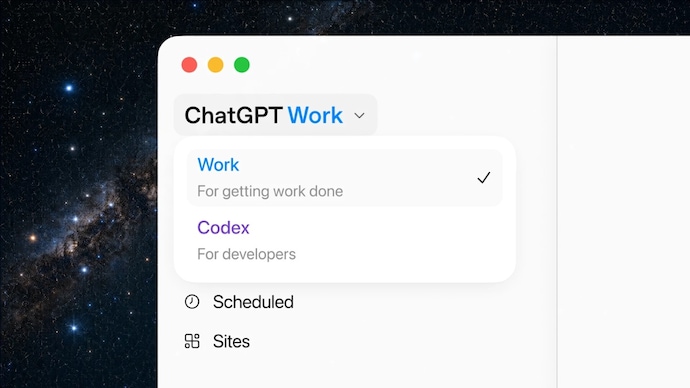
OpenAI is also folding the standalone Codex app into the new ChatGPT desktop app, allowing developers to use the coding agent alongside wider work tasks.
The updated desktop app is now available globally for Windows and macOS, with Work and Codex available across all plans, including the free tier. On web and mobile, ChatGPT Work is rolling out first to Pro, Enterprise and Edu users, with Plus and Business access to follow in the next few days.
Earlier this year, Anthropic launched Claude Cowork that changed the way many saw AI tools. Claude Cowork was able to do a lot of tasks that were previously done manually. The tool even led to fears of a SaaSpocalypse with stocks of Indian IT companies like TCS and Infosys taking a hit. And now, OpenAI may finally have an answer to Anthropic’s tool with ChatGPT Work. Not only does the AI startup claim that ChatGPT Work can carry out tasks for you, but it is also built on its most advanced AI model – GPT-5.6.
OpenAI announced the release of ChatGPT Work on Thursday, alongside the public release of GPT-5.6 AI models. ChatGPT Work is an AI agent inside ChatGPT that is designed to carry out workplace tasks across apps, files and workflows.
The tool, powered by GPT-5.6 and built with OpenAI’s Codex technology. The company says that ChatGPT Work can gather context from connected services and produce finished work. This includes documents, spreadsheets, presentations, reports, web pages and websites.
What is ChatGPT Work?
OpenAI says that ChatGPT Work can do more than answer questions. It can break a large task into smaller steps, work across the web, desktop and mobile, use templates and reference files. The AI agent can also keep working when you may be away.
You can also create tasks for the AI agent via your smartphone, allowing you to make progress even on the move, similar to functionality available with Claude. You can then pick up where you left off on your desktop. On desktop, ChatGPT Work can also use local files and apps.
ChatGPT Work connects to tools such as Slack, Microsoft Teams, Google Drive, SharePoint, email, calendars, CRM systems and project trackers through plugins. It can decide which connected app to use based on a prompt, or users can direct it with prompts.
The agent can schedule recurring work, including checking Slack updates, reviewing dashboards, monitoring customer feedback and updating presentations when feedback arrives by email.
OpenAI said ChatGPT Work will use the same usage-based pricing model as Codex, with enterprise and education administrators able to set spending controls through the Admin Console.
This comes at a time when OpenAI and Anthropic are competing to gain more enterprise users that have become the main drivers for revenue at AI companies.
OpenAI releases GPT-5.6
Apart from ChatGPT Work, the company has finally released GPT-5.6 models to the general public. The three models – Sol, Terra, and Luna – were previously available to a select group of partners after the US government requested an immediate release. OpenAI CEO Sam Altman has called GPT-5.6 to be the company’s most powerful model yet.
While Sol is the most powerful model in the GPT-5.6 family, Terra is said to be more efficient while also delivering the performance of GPT-5.5. On the other hand, Luna is positioned as the most cost-effective model.
In results shared by OpenAI, GPT-5.6 Sol narrowly outperforms Anthropic's Claude Mythos 5 in the Terminal-Bench 2.1 coding benchmark.
OpenAI is also folding the standalone Codex app into the new ChatGPT desktop app, allowing developers to use the coding agent alongside wider work tasks.
The updated desktop app is now available globally for Windows and macOS, with Work and Codex available across all plans, including the free tier. On web and mobile, ChatGPT Work is rolling out first to Pro, Enterprise and Edu users, with Plus and Business access to follow in the next few days.

