US bans Chinese humanoid robots over national security fears
The Trump administration has effectively banned Chinese humanoid robots with new restrictions on imports on grounds of national security. That is, Chinese companies like Unitree will no longer be able to sell their advanced robots in the US.
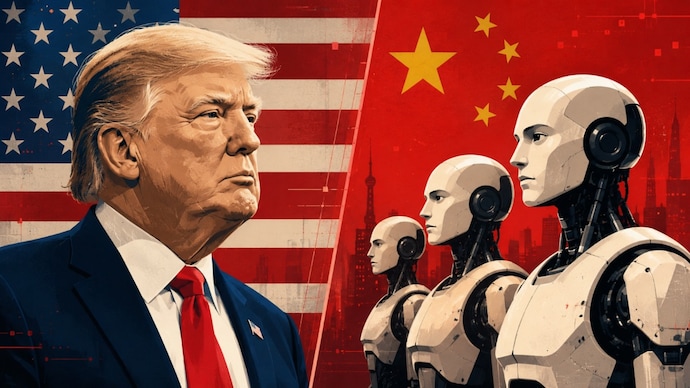
The US is banning Chinese humanoid robots. On Tuesday, the Trump administration unveiled measures targeting imports of new Chinese robots and power inverters, claiming that these devices may pose major cybersecurity risks to the country.
The Trump administration stated that the ban will help protect the US AI buildout from national security threats, and encourage manufacturing humanoid robots within the country.
"These devices could create supply chain vulnerabilities that could disrupt U.S. economic and national security and could create a cybersecurity risk that threatened American critical infrastructure," the Federal Communications Commission. "The FCC will continue to do our part to secure America’s critical supply chains.”
This ban comes at a time when Chinese robotmaker Unitree was seeing growth in sales from the US, particularly from academic and research institutions.
What is the ban?
The ban covers new foreign-made advanced robots, including humanoid and four-legged machines, and on power inverters. The FCC said the items had been added to its Covered List, a register of goods and services it considers a risk to US national security.
According to details cited alongside the order, a licence would be required for robots not made in the US and containing less than 65 per cent US components by value. Keep in mind that this could cover nearly all robots because advanced chips are largely not made in the US.
That is, while the US has not directly banned Chinese robots, it is likely that Chinese companies will not be granted licenses under the new measures. As per reports, the FCC was expected to exempt many non-Chinese suppliers from the restrictions, as it has done with recent bans involving foreign drones and routers.
Apart from robots, the US is also considering a ban on Chinese open-weight AI models such as Kimi K3 and GLM 5.2. These models are said to be reaching the level of frontier AI models from OpenAI and Anthropic, but at a lower cost. The US has also accused Moonshot AI of distilling Anthropic’s models to train Kimi K3 – a process of training a smaller model on the responses of a larger one.
National security concerns due to robots
The FCC raised concerns over the potential misuse of foreign-made robots. It said, "robots collect data that could be leveraged by malign actors to surveil Americans, enhance the capabilities of foreign intelligence services, or to remotely commandeer the robots.”
The Chinese embassy in Washington responded to the ban via a statement urging “the United States to heed the objective and rational voices of the business communities in both countries" and "stop smearing Chinese companies and threatening them with sanctions."
To give you some context behind this ban, Chinese companies have moved quickly in the humanoid robot market for use in factories and homes, faster than US rivals like Tesla and Boston Dynamics. Globally too, Chinese companies lead the market for humanoid robots. Unitree is believed to be the biggest humanoid robotmaker with just under a fifth of the global market share. The company is one of three Chinese firms that dominate humanoid robots, and was recently added to the Pentagon’s list of alleged Chinese military-backed companies, a step seen as a possible precursor to tougher US action.
Unitree recently entered into a partnership with Nvidia to use the chipmaker’s Blackwell chips to power the brain of a Unitree robot. Nvidia had stated that data from those robots would remain in the US. Even so, critics of Chinese technology fear the robots could be used to spy on key US industries by extracting data, sending it to Beijing or disrupting critical functions. Previously, US lawmakers had advocated for a ban on Chinese robots.
China is also the world’s largest maker of inverters, led by Sungrow Power Supply and Huawei, with Chinese-made inverters gaining market share in the West due to lower prices.
The US is banning Chinese humanoid robots. On Tuesday, the Trump administration unveiled measures targeting imports of new Chinese robots and power inverters, claiming that these devices may pose major cybersecurity risks to the country.
The Trump administration stated that the ban will help protect the US AI buildout from national security threats, and encourage manufacturing humanoid robots within the country.
"These devices could create supply chain vulnerabilities that could disrupt U.S. economic and national security and could create a cybersecurity risk that threatened American critical infrastructure," the Federal Communications Commission. "The FCC will continue to do our part to secure America’s critical supply chains.”
This ban comes at a time when Chinese robotmaker Unitree was seeing growth in sales from the US, particularly from academic and research institutions.
What is the ban?
The ban covers new foreign-made advanced robots, including humanoid and four-legged machines, and on power inverters. The FCC said the items had been added to its Covered List, a register of goods and services it considers a risk to US national security.
According to details cited alongside the order, a licence would be required for robots not made in the US and containing less than 65 per cent US components by value. Keep in mind that this could cover nearly all robots because advanced chips are largely not made in the US.
That is, while the US has not directly banned Chinese robots, it is likely that Chinese companies will not be granted licenses under the new measures. As per reports, the FCC was expected to exempt many non-Chinese suppliers from the restrictions, as it has done with recent bans involving foreign drones and routers.
Apart from robots, the US is also considering a ban on Chinese open-weight AI models such as Kimi K3 and GLM 5.2. These models are said to be reaching the level of frontier AI models from OpenAI and Anthropic, but at a lower cost. The US has also accused Moonshot AI of distilling Anthropic’s models to train Kimi K3 – a process of training a smaller model on the responses of a larger one.
National security concerns due to robots
The FCC raised concerns over the potential misuse of foreign-made robots. It said, "robots collect data that could be leveraged by malign actors to surveil Americans, enhance the capabilities of foreign intelligence services, or to remotely commandeer the robots.”
The Chinese embassy in Washington responded to the ban via a statement urging “the United States to heed the objective and rational voices of the business communities in both countries" and "stop smearing Chinese companies and threatening them with sanctions."
To give you some context behind this ban, Chinese companies have moved quickly in the humanoid robot market for use in factories and homes, faster than US rivals like Tesla and Boston Dynamics. Globally too, Chinese companies lead the market for humanoid robots. Unitree is believed to be the biggest humanoid robotmaker with just under a fifth of the global market share. The company is one of three Chinese firms that dominate humanoid robots, and was recently added to the Pentagon’s list of alleged Chinese military-backed companies, a step seen as a possible precursor to tougher US action.
Unitree recently entered into a partnership with Nvidia to use the chipmaker’s Blackwell chips to power the brain of a Unitree robot. Nvidia had stated that data from those robots would remain in the US. Even so, critics of Chinese technology fear the robots could be used to spy on key US industries by extracting data, sending it to Beijing or disrupting critical functions. Previously, US lawmakers had advocated for a ban on Chinese robots.
China is also the world’s largest maker of inverters, led by Sungrow Power Supply and Huawei, with Chinese-made inverters gaining market share in the West due to lower prices.
The US is banning Chinese humanoid robots. On Tuesday, the Trump administration unveiled measures targeting imports of new Chinese robots and power inverters, claiming that these devices may pose major cybersecurity risks to the country.
The Trump administration stated that the ban will help protect the US AI buildout from national security threats, and encourage manufacturing humanoid robots within the country.
"These devices could create supply chain vulnerabilities that could disrupt U.S. economic and national security and could create a cybersecurity risk that threatened American critical infrastructure," the Federal Communications Commission. "The FCC will continue to do our part to secure America’s critical supply chains.”
This ban comes at a time when Chinese robotmaker Unitree was seeing growth in sales from the US, particularly from academic and research institutions.
What is the ban?
The ban covers new foreign-made advanced robots, including humanoid and four-legged machines, and on power inverters. The FCC said the items had been added to its Covered List, a register of goods and services it considers a risk to US national security.
According to details cited alongside the order, a licence would be required for robots not made in the US and containing less than 65 per cent US components by value. Keep in mind that this could cover nearly all robots because advanced chips are largely not made in the US.
That is, while the US has not directly banned Chinese robots, it is likely that Chinese companies will not be granted licenses under the new measures. As per reports, the FCC was expected to exempt many non-Chinese suppliers from the restrictions, as it has done with recent bans involving foreign drones and routers.
Apart from robots, the US is also considering a ban on Chinese open-weight AI models such as Kimi K3 and GLM 5.2. These models are said to be reaching the level of frontier AI models from OpenAI and Anthropic, but at a lower cost. The US has also accused Moonshot AI of distilling Anthropic’s models to train Kimi K3 – a process of training a smaller model on the responses of a larger one.
National security concerns due to robots
The FCC raised concerns over the potential misuse of foreign-made robots. It said, "robots collect data that could be leveraged by malign actors to surveil Americans, enhance the capabilities of foreign intelligence services, or to remotely commandeer the robots.”
The Chinese embassy in Washington responded to the ban via a statement urging “the United States to heed the objective and rational voices of the business communities in both countries" and "stop smearing Chinese companies and threatening them with sanctions."
To give you some context behind this ban, Chinese companies have moved quickly in the humanoid robot market for use in factories and homes, faster than US rivals like Tesla and Boston Dynamics. Globally too, Chinese companies lead the market for humanoid robots. Unitree is believed to be the biggest humanoid robotmaker with just under a fifth of the global market share. The company is one of three Chinese firms that dominate humanoid robots, and was recently added to the Pentagon’s list of alleged Chinese military-backed companies, a step seen as a possible precursor to tougher US action.
Unitree recently entered into a partnership with Nvidia to use the chipmaker’s Blackwell chips to power the brain of a Unitree robot. Nvidia had stated that data from those robots would remain in the US. Even so, critics of Chinese technology fear the robots could be used to spy on key US industries by extracting data, sending it to Beijing or disrupting critical functions. Previously, US lawmakers had advocated for a ban on Chinese robots.
China is also the world’s largest maker of inverters, led by Sungrow Power Supply and Huawei, with Chinese-made inverters gaining market share in the West due to lower prices.

