Khamenei's funeral a show of strength, world leaders attend as Mojtaba stays away
For now, attention remains fixed on Tehran, as the state projects unity around a leader it portrays as having guided Iran through war, isolation, and crisis. Ayatollah Ali Khamenei's death has become the centrepiece of a highly symbolic political farewell.
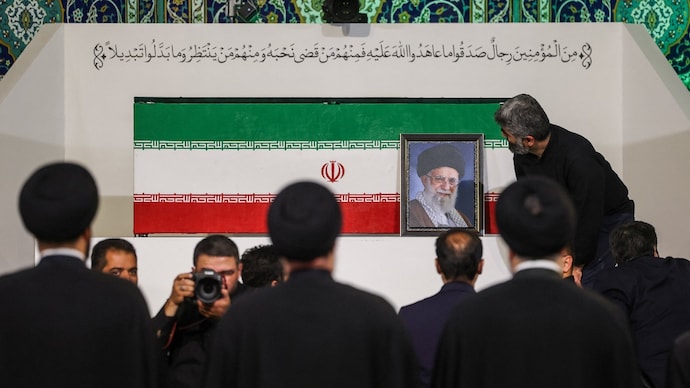
Tehran wore a somber look as a week-long funeral procession for Ayatollah Ali Khamenei began on Friday, four months after a joint US-Israel airstrike killed him, along with several members of his family, including his daughter, son-in-law, infant granddaughter and daughter-in-law.
Khamenei, who served as Iran’s Supreme Leader from 1989 until February 28 this year, is set to be buried with state honours in Mashhad on July 9 (Thursday), after his body is taken through Qom, Najaf and Kerbala, which are major Shiite religious centres in Iran and Iraq.
Hours after the coffins of the late leader and his family were displayed, they were placed in state at Tehran’s Great Prayer Hall, where politicians and mourners gathered to pay their final respects.
Iran's own political leaders — the president, parliament speaker, foreign minister and others — were seen weeping in front of the coffin, even as a group of generals stood saluting in front of the coffin. Among them was the new Revolutionary Guards head Ahmad Vahidi, having not appeared in public since his appointment for fear of assassination.
EMOTIONAL FAREWELL FOR KHAMENEI
The grand spectacle, which the Iranian establishment has turned into a show of strength amid earlier protests and renewed regional tensions, saw grieving supporters swaying, weeping and beating their chests in mourning.
At the same time, the state ensured that the funeral carried unmistakable political symbolism. The coffins, placed on a white stepped dais beneath an ornate arched backdrop, were flanked by national and black mourning flags, reinforcing both religious and state imagery.
A black turban — worn by clerics claiming descent from the Prophet Muhammad — was placed on the coffin alongside a folded chequered scarf, a symbol in Iran associated with revolutionary ideals and solidarity with Palestinians.
The symbolism was deliberate and layered. Khamenei was not only a political figure and a torchbearer of the Islamic Revolution, but also a top spiritual authority in Shiite Islam.
Under Iran’s theocratic system, he was both head of state and, in ideological terms, the representative on earth of Shiite Islam’s 12th Imam, believed to have disappeared in the ninth century.
His death in an enemy strike feeds into a powerful Shiite tradition of martyrdom and mourning, where grief is expressed through public processions, chest-beating and ritual lamentation.
Even before the funeral began, the symbolism had been building. Black mourning flags that have hung across city streets since his death reference the seventh-century martyrdom of Imam Hossein, Shiite Islam’s third Imam.
MOJTABA'S ABSENCE RAISES QUESTIONS
Notably, Khamenei’s son, Mojtaba, did not participate in the public ceremonies, citing security concerns. While the threat may be credible given fears of further targeting of Iranian leadership, his absence has also fuelled speculation about his condition and political role within the system.
Speaking to India Today before departing for Tehran from New Delhi’s Indira Gandhi International Airport, Ayatollah Hakim Elahi said the decision was driven entirely by security considerations as Iran prepares for a week of ceremonies under heightened tensions with Israel.
Mojtaba, who is widely seen as having assumed the Supreme Leader’s responsibilities after his father’s death in the airstrike, was reportedly injured in the attack.
Since then, he has not been seen in public, with his engagements limited to recorded statements broadcast by state television.
DIPLOMATIC PRESENCE AT FUNERAL
The funeral has also turned into a gathering of regional and international figures from countries considered close to Tehran, including Pakistan and India.
While Iran had invited Prime Minister Narendra Modi, the Indian government sent Bihar Governor Syed Atta Hasnain and Minister of State for External Affairs Pabitra Margherita to represent it at the ceremonies. Both leaders attended the ceremony and conveyed their condolences to Khamenei’s family.
An interfaith delegation, led by Congress leader Salman Khurshid and ex-Jammu and Kashmir CM Mehbooba Mufti, also paid tribute to the late leader and his family.
Pakistan, which has played a mediating role in regional tensions involving Iran and the US, was represented by Prime Minister Shehbaz Sharif and Army Chief Asim Munir, who joined in offering prayers for the deceased.
A poignant moment was witnessed when a visibly emotional Pezeshkian received the Pakistani leaders, alongside Foreign Minister Syed Abbas Araghchi and Parliament Speaker Mohammad Bagher Ghalibaf.
Leaders from Russia and China, the longstanding partners of Iran through years of sanctions, are also expected to attend the ceremonies.
In another symbolic gesture underscoring Tehran’s regional alliances, members of the family of late Hezbollah leader Hassan Nasrallah also paid their respects.
THE POLITICAL MESSAGING
Under Islamic tradition, burials are typically conducted within 24 hours of death. However, the funeral was delayed due to security concerns during the conflict period and was rescheduled after last month’s interim truce.
After a large procession in central Tehran on Monday, the remains will be taken to Qom on Tuesday, the centre of Iran’s Shiite religious hierarchy, for further ceremonies.
On Wednesday, rites will be held in Iraq’s holy cities of Najaf and Kerbala, with participation from figures linked to Iran’s regional Shiite network. The final burial will take place in Mashhad on Thursday, near the shrine of Imam Reza, a central figure in Shiite Islam.
While the week-long ceremonies reflect public grief among supporters, they are also being closely stage-managed to reinforce the late leader’s legacy at a time of reported internal strains and external pressure.
Analysts say that despite the scale of the procession, underlying support for the clerical establishment has weakened under economic stress and long-standing sanctions.
For now, however, attention remains fixed on Tehran, as the state projects unity around a leader it portrays as having guided Iran through war, isolation, and crisis. Khamenei's death has become the centrepiece of a highly symbolic political farewell.
Tehran wore a somber look as a week-long funeral procession for Ayatollah Ali Khamenei began on Friday, four months after a joint US-Israel airstrike killed him, along with several members of his family, including his daughter, son-in-law, infant granddaughter and daughter-in-law.
Khamenei, who served as Iran’s Supreme Leader from 1989 until February 28 this year, is set to be buried with state honours in Mashhad on July 9 (Thursday), after his body is taken through Qom, Najaf and Kerbala, which are major Shiite religious centres in Iran and Iraq.
Hours after the coffins of the late leader and his family were displayed, they were placed in state at Tehran’s Great Prayer Hall, where politicians and mourners gathered to pay their final respects.
Iran's own political leaders — the president, parliament speaker, foreign minister and others — were seen weeping in front of the coffin, even as a group of generals stood saluting in front of the coffin. Among them was the new Revolutionary Guards head Ahmad Vahidi, having not appeared in public since his appointment for fear of assassination.
EMOTIONAL FAREWELL FOR KHAMENEI
The grand spectacle, which the Iranian establishment has turned into a show of strength amid earlier protests and renewed regional tensions, saw grieving supporters swaying, weeping and beating their chests in mourning.
At the same time, the state ensured that the funeral carried unmistakable political symbolism. The coffins, placed on a white stepped dais beneath an ornate arched backdrop, were flanked by national and black mourning flags, reinforcing both religious and state imagery.
A black turban — worn by clerics claiming descent from the Prophet Muhammad — was placed on the coffin alongside a folded chequered scarf, a symbol in Iran associated with revolutionary ideals and solidarity with Palestinians.
The symbolism was deliberate and layered. Khamenei was not only a political figure and a torchbearer of the Islamic Revolution, but also a top spiritual authority in Shiite Islam.
Under Iran’s theocratic system, he was both head of state and, in ideological terms, the representative on earth of Shiite Islam’s 12th Imam, believed to have disappeared in the ninth century.
His death in an enemy strike feeds into a powerful Shiite tradition of martyrdom and mourning, where grief is expressed through public processions, chest-beating and ritual lamentation.
Even before the funeral began, the symbolism had been building. Black mourning flags that have hung across city streets since his death reference the seventh-century martyrdom of Imam Hossein, Shiite Islam’s third Imam.
MOJTABA'S ABSENCE RAISES QUESTIONS
Notably, Khamenei’s son, Mojtaba, did not participate in the public ceremonies, citing security concerns. While the threat may be credible given fears of further targeting of Iranian leadership, his absence has also fuelled speculation about his condition and political role within the system.
Speaking to India Today before departing for Tehran from New Delhi’s Indira Gandhi International Airport, Ayatollah Hakim Elahi said the decision was driven entirely by security considerations as Iran prepares for a week of ceremonies under heightened tensions with Israel.
Mojtaba, who is widely seen as having assumed the Supreme Leader’s responsibilities after his father’s death in the airstrike, was reportedly injured in the attack.
Since then, he has not been seen in public, with his engagements limited to recorded statements broadcast by state television.
DIPLOMATIC PRESENCE AT FUNERAL
The funeral has also turned into a gathering of regional and international figures from countries considered close to Tehran, including Pakistan and India.
While Iran had invited Prime Minister Narendra Modi, the Indian government sent Bihar Governor Syed Atta Hasnain and Minister of State for External Affairs Pabitra Margherita to represent it at the ceremonies. Both leaders attended the ceremony and conveyed their condolences to Khamenei’s family.
An interfaith delegation, led by Congress leader Salman Khurshid and ex-Jammu and Kashmir CM Mehbooba Mufti, also paid tribute to the late leader and his family.
Pakistan, which has played a mediating role in regional tensions involving Iran and the US, was represented by Prime Minister Shehbaz Sharif and Army Chief Asim Munir, who joined in offering prayers for the deceased.
A poignant moment was witnessed when a visibly emotional Pezeshkian received the Pakistani leaders, alongside Foreign Minister Syed Abbas Araghchi and Parliament Speaker Mohammad Bagher Ghalibaf.
Leaders from Russia and China, the longstanding partners of Iran through years of sanctions, are also expected to attend the ceremonies.
In another symbolic gesture underscoring Tehran’s regional alliances, members of the family of late Hezbollah leader Hassan Nasrallah also paid their respects.
THE POLITICAL MESSAGING
Under Islamic tradition, burials are typically conducted within 24 hours of death. However, the funeral was delayed due to security concerns during the conflict period and was rescheduled after last month’s interim truce.
After a large procession in central Tehran on Monday, the remains will be taken to Qom on Tuesday, the centre of Iran’s Shiite religious hierarchy, for further ceremonies.
On Wednesday, rites will be held in Iraq’s holy cities of Najaf and Kerbala, with participation from figures linked to Iran’s regional Shiite network. The final burial will take place in Mashhad on Thursday, near the shrine of Imam Reza, a central figure in Shiite Islam.
While the week-long ceremonies reflect public grief among supporters, they are also being closely stage-managed to reinforce the late leader’s legacy at a time of reported internal strains and external pressure.
Analysts say that despite the scale of the procession, underlying support for the clerical establishment has weakened under economic stress and long-standing sanctions.
For now, however, attention remains fixed on Tehran, as the state projects unity around a leader it portrays as having guided Iran through war, isolation, and crisis. Khamenei's death has become the centrepiece of a highly symbolic political farewell.

