Iran's Revolutionary Guards ready to change nuclear doctrine if Mojtaba orders
IRGC spokesperson Brigadier General Hossein Mohebbi made the remarks on Saturday, stressing that any change would depend on a decision by Iran’s leadership.

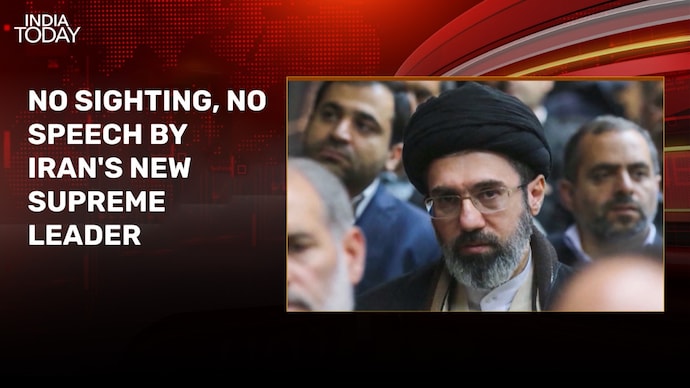
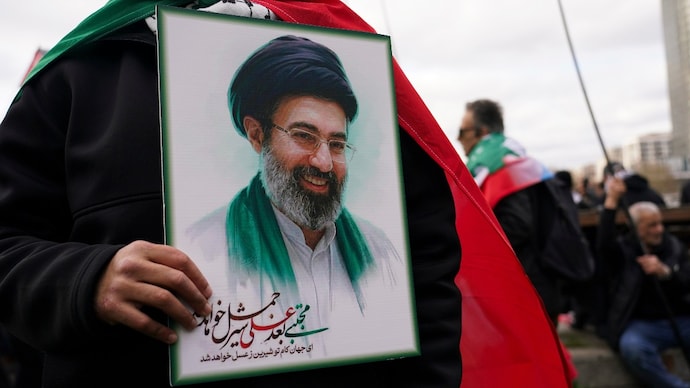
Mojtaba Khamenei was born on 8 September 1969 in Mashhad, Iran, and is the second son of Ali Khamenei, who served as Iran’s Supreme Leader for decades until his death in 2026. Mojtaba studied Islamic theology in the seminaries of Qom, one of the most important centers of Shia scholarship, and trained under clerics such as Mohammad-Taqi Mesbah-Yazdi.
Over the years, he gained a reputation as a powerful behind-the-scenes figure in Iranian politics despite holding few formal public roles.
He developed close ties with the Islamic Revolutionary Guard Corps after joining in 1987 and was reportedly influential within the Basij, particularly during periods of political unrest. Analysts have often linked him to key political decisions, including responses to protests and discussions around leadership succession. Following the assassination of Ali Khamenei in early 2026 amid regional tensions, Mojtaba Khamenei was elected Supreme Leader on 8 March 2026 by the Assembly of Experts.
His elevation from a largely shadowy political role to Iran’s highest authority has sparked debate among observers, with some viewing it as a dynastic shift in the country’s leadership despite theological and political concerns.
On News Track, anchor Maria Shakeel examines the political fallout of the US midterm elections, where the Democratic takeover of both houses of Congress follows widespread voter discontent over the war in Iran.
The United States has initiated fresh outreach to Iran as the US midterm elections approach, with Vice President JD Vance reaching out to former Iranian armed forces chief Mohsen Rezaee. Rezaee, a hardline leader close to Mojtaba Khamenei, serves as a senior official on Iran's Supreme National Security Council. The outreach marks a significant diplomatic shift after past discussions failed to halt hostilities and escalating regional tensions. Observers note a multi-pronged approach by the Trump administration, attempting diplomatic engagement while US diplomatic staff in the Gulf region is being drawn down. Meanwhile, threats of potential military action persist, with Donald Trump previously warning of a possible second phase of Operation Epic Fury following the midterm elections. As US taxpayers bear an estimated 47-billion-dollar cost for the conflict, the outreach tests whether direct negotiations can avert fresh strikes or if the conflict will witness further escalation.
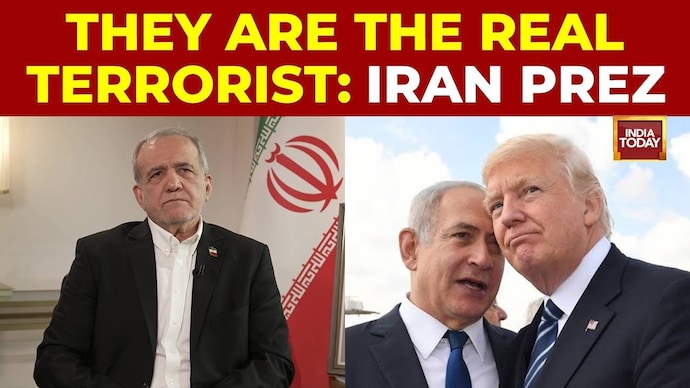
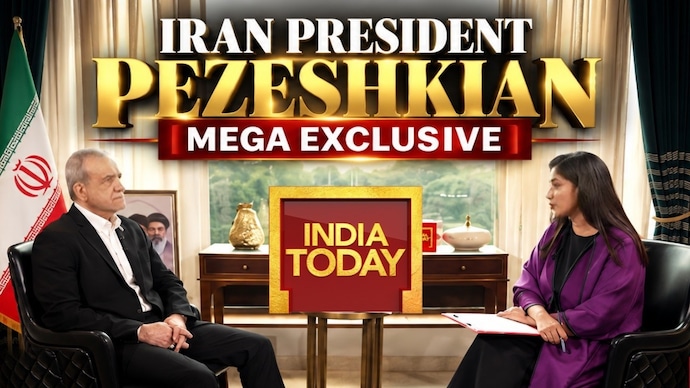
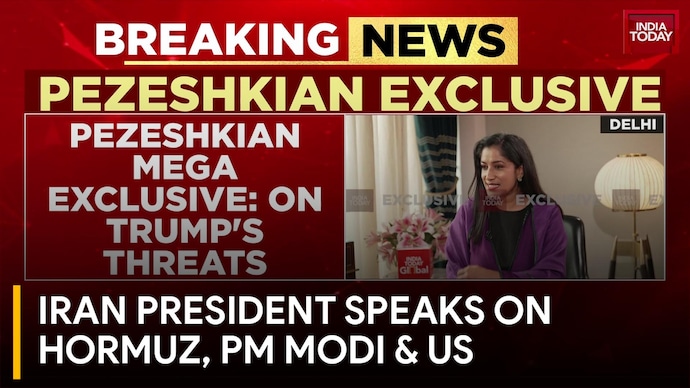
In an exclusive interview with India Today on the sidelines of the BRICS summit, Iranian President Masoud Pezeshkian condemned the United States and Israel over ongoing regional military actions, stating, "They are the real terrorists in the world." Pezeshkian accused Washington of committing state terrorism, attempting to topple Iran's government, and inciting division among Middle Eastern nations to exploit energy resources and sell weapons. Addressing speculation regarding Iran's leadership, Pezeshkian dismissed rumors concerning Supreme Leader Mojtaba Khamenei, confirming that "he is alive" and actively carrying out his constitutional responsibilities. He further noted that the United States disseminates misinformation because it cannot locate the Supreme Leader's precise whereabouts. Concluding on governance and diplomatic talks, Pezeshkian reaffirmed that the Supreme Leader remains the ultimate authority who retains the final decision-making power in Iran.
During his visit to India for the BRICS summit, Iranian President Dr. Masoud Pezeshkian addressed key geopolitical developments, bilateral relations, and regional connectivity in an exclusive interaction. Pezeshkian highlighted deep-rooted cultural ties between Iran and India while emphasizing expanded cooperation on Chabahar Port to strengthen regional trade networks. He outlined the role of the BRICS bloc in challenging unilateral sanctions, promoting a multipolar economic order, and reducing reliance on the US dollar. Addressing tensions involving the United States and Israel, Pezeshkian stated that Iran is defending itself against aggression, accusing foreign entities of state terrorism, striking regional infrastructure, and enforcing economic blockades. On nuclear policy, Pezeshkian denied allegations regarding nuclear weapons, reaffirmed Iran's compliance with the Non-Proliferation Treaty (NPT), and criticized international double standards regarding Israel's nuclear program. Furthermore, he noted diplomatic engagements with regional partners like Oman concerning maritime security in the Strait of Hormuz and asserted that external pressures will fail to weaken the nation.
An interviewee addressed widespread speculation regarding the supreme leader, confirming that the leader remains alive and continues his duties. The guest criticized targeted assassinations of commanders, scientists, and civilians across Syria, Lebanon, Gaza, Iraq, Qatar, and Iran. The speaker condemned these actions by the United States and Israel as state terrorism, stating that entire families, buildings, bridges, and factories are destroyed under the pretext of counter-terrorism operations.
In an interview with India Today, Iranian President Masoud Pezeshkian addressed questions regarding Supreme Leader Mojtaba Khamenei, stating that he is alive and performing his duties. Pezeshkian dismissed speculations, asserting that foreign adversaries spread rumours because they cannot locate the Supreme Leader. He condemned the actions of the United States and Israel across the region, accusing them of carrying out assassinations and targeting leaders, scientists, and infrastructure. Pezeshkian also discussed bilateral relations between Iran and India, noting that ties with the Prime Minister of India are strengthening continuously based on deep-rooted historical and cultural connections.
In an exclusive interaction on the sidelines of the BRICS summit in New Delhi, Iranian President Masoud Pezeshkian addressed key global and regional issues, including the ongoing West Asia conflict, Iran's position on nuclear enrichment, and relations with the United States and Israel. The discussion highlighted the status of the Strait of Hormuz blockade, maritime security, the safety of Indian seafarers, and assurances extended to India following a bilateral meeting with Prime Minister Narendra Modi. President Pezeshkian also addressed internal economic, strategic, and military conditions in Iran, along with questions surrounding the status and role of the supreme leader. The interaction elaborated on the wider geopolitical fallout affecting the Gulf region, sanctions, and international maritime corridors including Bab-el-Mandeb.
Chinese President Xi Jinping is arriving in New Delhi for the BRICS Summit 2026, marking his first visit to Indian soil in seven years. His aircraft, CA-11 from Beijing, entered Indian airspace en route to Palam Air Force Station amid multi-layered security cordons across the national capital. A high-stakes bilateral meeting is scheduled between Prime Minister Narendra Modi and President Xi this evening to address bilateral ties and regional issues. Meanwhile, India Today secures an exclusive interview with Iranian President Masoud Pezeshkian on his first visit to India, where he addresses Iran's plan of action amidst sanctions, Western tensions, and the West Asia conflict. The summit brings together top world leaders in New Delhi, including Russian President Vladimir Putin, as India hosts major diplomatic engagements at Bharat Mandapam.
India Today is set to air an exclusive interview with Iranian President Masoud Pezeshkian, conducted by Geeta Mohan, addressing the escalating conflict in West Asia, Western sanctions, and control over the Strait of Hormuz. The interview touches on the disruption to global trade routes and crude oil prices surpassing one hundred and eight dollars per barrel. President Pezeshkian responds to threats from the United States, questions regarding Mojtaba Khamenei, and attacks on regional bases. The discussion also highlights bilateral ties with India following Pezeshkian's meeting with Prime Minister Narendra Modi on the sidelines of the BRICS summit, where leaders discussed the role of BRICS in countering unilateralism and the influence of the United States dollar.
The death of Iran's Supreme Leader Ayatollah Ali Khamenei has marked a historic turning point for the Islamic Republic. In this special report from Tehran, India Today brings exclusive on-ground coverage of Khamenei's massive state funeral, attended by millions of mourners and delegations from nearly 100 countries
One year after the Pahalgam terror attack, India has fundamentally shifted its anti-terror doctrine from reactive measures to preemptive action.
In an exclusive interview with India Today, Dr Abdul Majid Hakeem Ilahi, the representative of Iran's Supreme Leader in India, discussed the recent ceasefire between Iran and the United States.
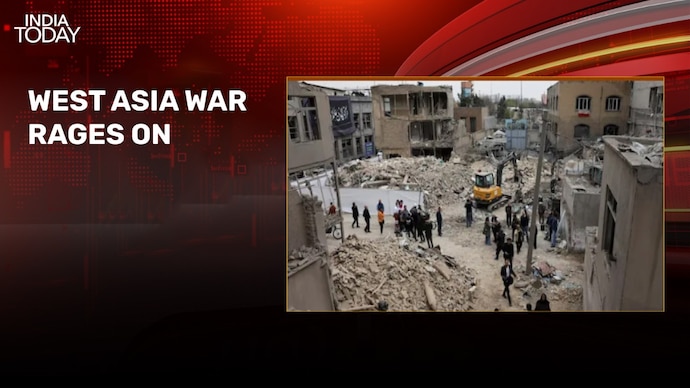
Iran has intensified strikes on territories associated with America and Israel, launching what it calls the 92nd wave of attacks.
In an exclusive interview with India Today, military analyst Tom Cooper said that US President Donald Trump has no independent plan for the Iran war and is 'essentially following orders' or recommendations from Israel.
The West Asia conflict has escalated following a threat from US President Donald Trump to Iran, stating that a failure to immediately open the Strait of Hormuz will result in the obliteration of its electric generating plants, oil wells, and Kharg Island.
On Day 25 of the West Asia war, Israeli forces launched airstrikes on Tehran, causing power outages across the Iranian capital.
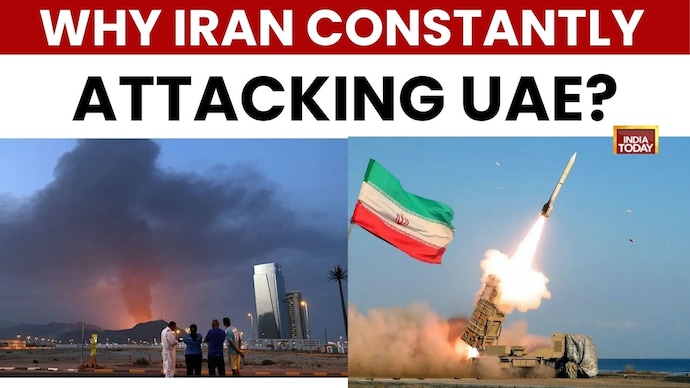
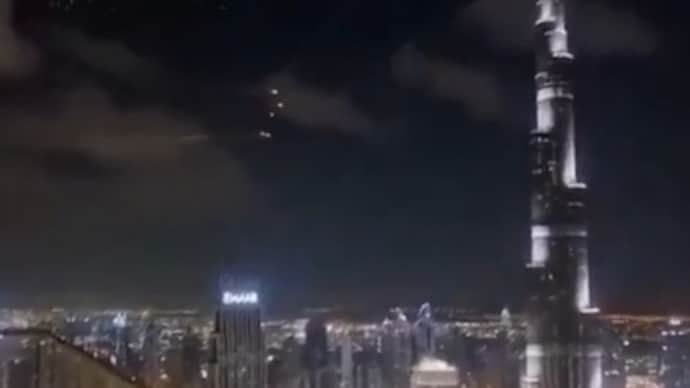
India Today Explains examines the escalating West Asia conflict, focusing on Iran's relentless attacks on the United Arab Emirates. According to the UAE's defence ministry, more than 1,700 missiles and drones have been launched towards the country, with over 90 per cent intercepted by air defences, fighter jets, and helicopters. Dubai, long marketed as a conflict-proof safe haven, has been significantly impacted, with alerts warning residents to seek shelter. Iran justifies the strikes citing the UAE's strategic alignment with Washington and its partnership with Israel following the 2020 Abraham Accords. The programme details the UAE's multi-layered air defence system, including the THAAD system, Patriot PAC-3, and Pantsir-S1. It also explores potential Gulf nation retaliation strategies and Iran's decentralised 'Mosaic strategy' that allows operations to continue despite leadership eliminations. The conflict threatens Dubai's tourism industry, which generates around 30 billion dollars annually, and risks destabilising the entire region.
In this episode of India Today Explains, we examine the West Asia war, focusing on Iran's escalating attacks on the United Arab Emirates. Since the conflict began, more than 1,700 missiles and drones have been launched towards the UAE.
Israeli Prime Minister Benjamin Netanyahu held a midnight press conference addressing speculation about his death, declaring 'I am alive'. While, Iran's new Supreme Leader, Mojtaba Khamenei, remains unseen nearly 20 days after his father Ayatollah Ali Khamenei was killed in an Israeli strike on February 28.
The Islamic Republic of Iran Broadcasting (IRIB), Iran's state media, has released what appears to be an undated video of the Supreme Leader Mojtaba Khamenei. In the video, the supreme leader can be seen teaching religious science to a bunch of pupils who are listening attentively. The IRIB said that the video of the newly-appointed Supreme Leader was published for the first time. Mojtaba took over as the Supreme Leader after his father Ayatollah Ali Khamenei, who was 86, was killed in an Israeli-American strike on February 28.