The ethanol fact: India is trying to do with a jolt what Brazil achieved in decades
India's sprint to achieve 20% ethanol-blended petrol five years ahead of schedule has left people scrambling. While ministers keep citing the example of Brazil, the country took several decades to replace pure petrol while transitioning to flex-fuel vehicles. Here's the lesson from Brazil's transition.
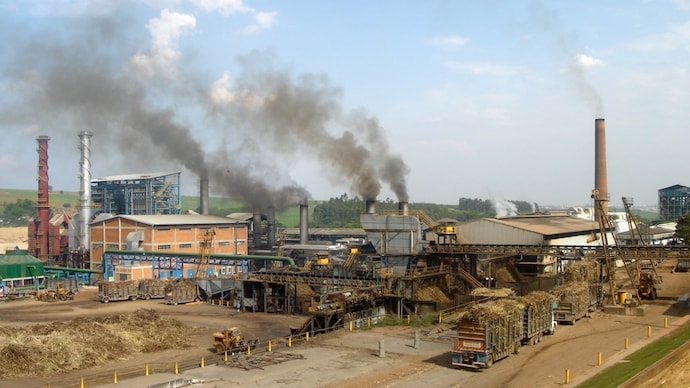
The government's decision on the mandatory sale of petrol blended with 20% ethanol, or E20, is seeing protests from vehicle owners over reported drop in fuel average and wear and tear. The Centre has rejected the criticisms, repeatedly citing the example of Brazil, a country that has successfully implemented ethanol-blended petrol. More than an example, Brazil holds an invaluable lesson for India.
Minister of Road Transport and Highways, Nitin Gadkari, who has been at the forefront of the ethanol-blended petrol policy, has been counting Brazil among the countries that have been using ethanol for decades.
"I recall that when I was sent as India's ambassador to Brazil in January 2006, Brazil already had 20% biofuel blending, and you could, even on a given date, fill up your tank with more. Today, Brazil is going from 27% biofuel base blending to 32%," Hardep Singh Puri, Minister of Petroleum and Natural Gas, told CNN News 18.
However, just as the city of Rome wasn't built in a day, Brazil's ethanol switch didn't happen in a day. It wasn't rushed, and was a gradual shift that happened over decades. India, however, has advanced the E20 mandate from 2030 to 2025 despite 80% of vehicles being incompatible with the higher blending of ethanol.
Protesters are saying that they aren't against India's Ethanol Blended Petrol programme. Rather, their problem is how it is being rolled out. They say that suitable fuel should be provided for their E10 vehicles.
Concerns over ethanol-blended petrol are reflected in public opinion. A recent CVoter survey found that 55.1% of respondents said they would not prefer using E20 petrol in their vehicles. Among NDA supporters, 52.5% opposed using E20.
Brazil's experience is particularly significant. Rather than rapidly replacing pure petrol, it gradually built an ecosystem of ethanol-compatible vehicles, fuel infrastructure and consumer choice over four decades before making E27 the standard blend, while also allowing motorists to choose pure ethanol (E100) through the widespread adoption of flex-fuel vehicles.
Here's a look at how Brazil switched to ethanol-based fuel and how drivers there get to choose between variants for economy and mileage.
BRAZIL'S SLOW AND STEADY APPROACH TO ETHANOL BLENDING
Brazil's experiment with ethanol-blended fuel dates back to 1931, when a government decree mandated that all imported petrol contain 5% ethanol by volume. However, the programme gained real momentum after the 1973 global oil crisis, which exposed the country's heavy dependence on imported fuel.
In 1975, the government launched the National Alcohol Programme (Pro-Alcool) to replace a portion of petrol consumption with ethanol produced from Brazilian sugarcane. The initiative capitalised on the country's vast sugar industry, low global sugar prices and idle distillation capacity. Initially focused on blending anhydrous ethanol with petrol, the programme soon expanded to dedicated ethanol-powered vehicles. In 1979, Fiat launched the Fiat 147, the world's first mass-produced car designed to run on 100% hydrous ethanol (E100).
The government simultaneously increased the mandatory ethanol content in petrol—from 10% to as high as 22% between 1976 and 1992—while backing the industry through guaranteed purchases by Petrobras (Brazil's state-owned oil firm), subsidised loans and regulated fuel prices. These measures spurred rapid adoption, with nearly three-quarters of new passenger cars produced in Brazil powered by ethanol by the mid-1980s.
The programme faltered in the late 1980s thanks to falling oil prices, rising sugar prices and nationwide ethanol shortages. But the industry staged a comeback in 2003 with the introduction of flex-fuel vehicles, which could run on any blend of petrol and ethanol. The technology revived ethanol demand and cemented Brazil's position as the global leader in biofuels. Mandatory blending has continued to rise over the years, reaching 27% ethanol (E27) in regular petrol by 2015.
HOW BRAZIL'S AUTOMOBILE INDUSTRY ADAPTED TO RUN ON ETHANOL
Brazil's automobile industry evolved alongside the country's ethanol programme. Subsidiaries of global manufacturers, including Fiat, Volkswagen, Ford, General Motors and Dodge, quickly adapted their vehicles to run not only on ethanol-blended petrol but also on pure hydrous ethanol (E100).
The breakthrough came in 1979 with the launch of the Fiat 147, the world's first mass-produced E100 passenger car, supported by a growing nationwide network of ethanol pumps.
Carmakers redesigned conventional petrol engines by increasing compression ratios, recalibrating fuel injection, replacing corrosion-prone components, fitting colder spark plugs and adding auxiliary cold-start systems.
HOW FLEX-FUEL CARS GIVE BRAZILIANS FREEDOM TO CHOOSE FUEL
The strategy proved highly successful, with vehicles capable of either running on ethanol-blended fuel or fully ethanol, accounting for nearly 75% of Brazil's passenger car production within six years of the introduction of the Fiat 147.
The market for cars capable of running on pure ethanol collapsed in the late 1980s after ethanol shortages and falling oil prices drove consumers back to petrol. The industry's revival came in 2003 with the launch of the Volkswagen Gol 1.6 Total Flex, the world's first commercially successful flex-fuel car capable of running on any combination of petrol and ethanol, including E100.
Powered by Brazilian-developed engine management software, the vehicle automatically adjusted ignition timing and fuel injection based on the ethanol-petrol mix in the tank, eliminating the need for drivers to choose a specific fuel. They can now run their vehicles on a range of fuels, choosing between economy and mileage.
The innovation transformed Brazil's automotive market. Flex-fuel vehicles accounted for 22% of new car sales in 2004, 73% in 2005 and more than 90% by the end of the decade. By allowing motorists to switch between fuels based on price rather than vehicle compatibility, flex-fuel technology restored confidence in ethanol and cemented its place in Brazil's transport sector.
Today, pure petrol (E0) has largely disappeared from Brazil's retail fuel market. Fuel pumps typically offer motorists either petrol blended with 27% ethanol (E27) or pure hydrous ethanol (E100). Although the E100 delivers lower fuel economy because of ethanol's lower energy content, it is usually priced lower than E27, allowing drivers to choose the more economical option.
Since virtually every new passenger vehicle sold in Brazil is flex-fuel, motorists can fill up with either fuel, without worrying about engine compatibility.
WHAT LESSONS CAN INDIA LEARN FROM THE BRAZIL EXPERIENCE
Perhaps the biggest lesson New Delhi can draw from Braslia's ethanol transition is that Brazil treated it as a decades-long evolution.
Although the country began steadily increasing ethanol blending in the 1970s, it took more than four decades to completely phase out pure petrol (E0), with regular fuel reaching E27 only in 2015. The gradual rollout gave carmakers time to redesign engines, fuel retailers time to build suitable storage and dispensing infrastructure, and consumers time to adapt to the new fuel ecosystem.
India's transition, in contrast, has taken place at breakneck speed. The country achieved its 20% ethanol blending (E20) target in 2025, five years ahead of schedule, and is now preparing for even higher blends. Unlike Brazil, India's fuel retail network is still adapting and most vehicles on its roads are yet to be optimised for E20.
Another notable feature of the Brazilian model is consumer choice. Even today, motorists can decide between regular E27 petrol and pure hydrous ethanol (E100), depending on prevailing fuel prices. Flex-fuel vehicles in Brazil automatically adjust to any blend, allowing drivers to prioritise either lower running costs or better fuel economy. That flexibility helped sustain public acceptance of ethanol while reducing dependence on imported oil.
This was acknowledged by Nitin Gadkari. "Brazil has had flex-fuel engines since 1970, where consumers have the choice to choose their ethanol blends up to 100 per cent ethanol," Gadkari was quoted as saying by The New Indian Express.
Despite this, in India, the majority of motorists continue to drive vehicles designed for E0 or E10 petrol, while fuel stations now only have E20 on tap. This means that, unlike their Brazilian counterparts, Indian counterparts have no choice but to fuel up on E20 despite lingering fears that the fuel would damage their vehicles.
For Brazil, it took four decades to reach the stage where every vehicle was flex-fuel powered, and gave drivers the freedom to choose between fuels. In India's case, the jump was sudden though it implemented 5% ethanol blending in 2006. India mandated E10 in 2022 and E20 from April 2025.
Around 80% of the vehicles on Indian roads weren't E20 compatible in April 2024, according to a report by Context of the Thomson Reuters Foundation. It was only in March 2023 that E20-compatible vehicles officially went on sale in India.
Brazil offered tax breaks and subsidies to build public support, and by 2003 it had vehicles that could run on any petrol-ethanol mix, according to the International Energy Agency. The Niti Aayog in 2021 advised a similar gradual rollout of ethanol blending in India. It had warned on consumer acceptance and recommended tax breaks and price cuts to offset ethanol's lower energy content, according to Context.
Both Puri and Gadkari have cited Brazil's highly successful transition to ethanol-powered transport to defend India's own ethanol rollout. Yet Brazil's success did not happen overnight. It was the result of a decades-long process that gave carmakers and consumers time to adapt while preserving motorists' freedom to choose the type of fuel they wanted. India would do well to pay heed to these two factors if it wants to replicate Brazil's success.
The government's decision on the mandatory sale of petrol blended with 20% ethanol, or E20, is seeing protests from vehicle owners over reported drop in fuel average and wear and tear. The Centre has rejected the criticisms, repeatedly citing the example of Brazil, a country that has successfully implemented ethanol-blended petrol. More than an example, Brazil holds an invaluable lesson for India.
Minister of Road Transport and Highways, Nitin Gadkari, who has been at the forefront of the ethanol-blended petrol policy, has been counting Brazil among the countries that have been using ethanol for decades.
"I recall that when I was sent as India's ambassador to Brazil in January 2006, Brazil already had 20% biofuel blending, and you could, even on a given date, fill up your tank with more. Today, Brazil is going from 27% biofuel base blending to 32%," Hardep Singh Puri, Minister of Petroleum and Natural Gas, told CNN News 18.
However, just as the city of Rome wasn't built in a day, Brazil's ethanol switch didn't happen in a day. It wasn't rushed, and was a gradual shift that happened over decades. India, however, has advanced the E20 mandate from 2030 to 2025 despite 80% of vehicles being incompatible with the higher blending of ethanol.
Protesters are saying that they aren't against India's Ethanol Blended Petrol programme. Rather, their problem is how it is being rolled out. They say that suitable fuel should be provided for their E10 vehicles.
Concerns over ethanol-blended petrol are reflected in public opinion. A recent CVoter survey found that 55.1% of respondents said they would not prefer using E20 petrol in their vehicles. Among NDA supporters, 52.5% opposed using E20.
Brazil's experience is particularly significant. Rather than rapidly replacing pure petrol, it gradually built an ecosystem of ethanol-compatible vehicles, fuel infrastructure and consumer choice over four decades before making E27 the standard blend, while also allowing motorists to choose pure ethanol (E100) through the widespread adoption of flex-fuel vehicles.
Here's a look at how Brazil switched to ethanol-based fuel and how drivers there get to choose between variants for economy and mileage.
BRAZIL'S SLOW AND STEADY APPROACH TO ETHANOL BLENDING
Brazil's experiment with ethanol-blended fuel dates back to 1931, when a government decree mandated that all imported petrol contain 5% ethanol by volume. However, the programme gained real momentum after the 1973 global oil crisis, which exposed the country's heavy dependence on imported fuel.
In 1975, the government launched the National Alcohol Programme (Pro-Alcool) to replace a portion of petrol consumption with ethanol produced from Brazilian sugarcane. The initiative capitalised on the country's vast sugar industry, low global sugar prices and idle distillation capacity. Initially focused on blending anhydrous ethanol with petrol, the programme soon expanded to dedicated ethanol-powered vehicles. In 1979, Fiat launched the Fiat 147, the world's first mass-produced car designed to run on 100% hydrous ethanol (E100).
The government simultaneously increased the mandatory ethanol content in petrol—from 10% to as high as 22% between 1976 and 1992—while backing the industry through guaranteed purchases by Petrobras (Brazil's state-owned oil firm), subsidised loans and regulated fuel prices. These measures spurred rapid adoption, with nearly three-quarters of new passenger cars produced in Brazil powered by ethanol by the mid-1980s.
The programme faltered in the late 1980s thanks to falling oil prices, rising sugar prices and nationwide ethanol shortages. But the industry staged a comeback in 2003 with the introduction of flex-fuel vehicles, which could run on any blend of petrol and ethanol. The technology revived ethanol demand and cemented Brazil's position as the global leader in biofuels. Mandatory blending has continued to rise over the years, reaching 27% ethanol (E27) in regular petrol by 2015.
HOW BRAZIL'S AUTOMOBILE INDUSTRY ADAPTED TO RUN ON ETHANOL
Brazil's automobile industry evolved alongside the country's ethanol programme. Subsidiaries of global manufacturers, including Fiat, Volkswagen, Ford, General Motors and Dodge, quickly adapted their vehicles to run not only on ethanol-blended petrol but also on pure hydrous ethanol (E100).
The breakthrough came in 1979 with the launch of the Fiat 147, the world's first mass-produced E100 passenger car, supported by a growing nationwide network of ethanol pumps.
Carmakers redesigned conventional petrol engines by increasing compression ratios, recalibrating fuel injection, replacing corrosion-prone components, fitting colder spark plugs and adding auxiliary cold-start systems.
HOW FLEX-FUEL CARS GIVE BRAZILIANS FREEDOM TO CHOOSE FUEL
The strategy proved highly successful, with vehicles capable of either running on ethanol-blended fuel or fully ethanol, accounting for nearly 75% of Brazil's passenger car production within six years of the introduction of the Fiat 147.
The market for cars capable of running on pure ethanol collapsed in the late 1980s after ethanol shortages and falling oil prices drove consumers back to petrol. The industry's revival came in 2003 with the launch of the Volkswagen Gol 1.6 Total Flex, the world's first commercially successful flex-fuel car capable of running on any combination of petrol and ethanol, including E100.
Powered by Brazilian-developed engine management software, the vehicle automatically adjusted ignition timing and fuel injection based on the ethanol-petrol mix in the tank, eliminating the need for drivers to choose a specific fuel. They can now run their vehicles on a range of fuels, choosing between economy and mileage.
The innovation transformed Brazil's automotive market. Flex-fuel vehicles accounted for 22% of new car sales in 2004, 73% in 2005 and more than 90% by the end of the decade. By allowing motorists to switch between fuels based on price rather than vehicle compatibility, flex-fuel technology restored confidence in ethanol and cemented its place in Brazil's transport sector.
Today, pure petrol (E0) has largely disappeared from Brazil's retail fuel market. Fuel pumps typically offer motorists either petrol blended with 27% ethanol (E27) or pure hydrous ethanol (E100). Although the E100 delivers lower fuel economy because of ethanol's lower energy content, it is usually priced lower than E27, allowing drivers to choose the more economical option.
Since virtually every new passenger vehicle sold in Brazil is flex-fuel, motorists can fill up with either fuel, without worrying about engine compatibility.
WHAT LESSONS CAN INDIA LEARN FROM THE BRAZIL EXPERIENCE
Perhaps the biggest lesson New Delhi can draw from Braslia's ethanol transition is that Brazil treated it as a decades-long evolution.
Although the country began steadily increasing ethanol blending in the 1970s, it took more than four decades to completely phase out pure petrol (E0), with regular fuel reaching E27 only in 2015. The gradual rollout gave carmakers time to redesign engines, fuel retailers time to build suitable storage and dispensing infrastructure, and consumers time to adapt to the new fuel ecosystem.
India's transition, in contrast, has taken place at breakneck speed. The country achieved its 20% ethanol blending (E20) target in 2025, five years ahead of schedule, and is now preparing for even higher blends. Unlike Brazil, India's fuel retail network is still adapting and most vehicles on its roads are yet to be optimised for E20.
Another notable feature of the Brazilian model is consumer choice. Even today, motorists can decide between regular E27 petrol and pure hydrous ethanol (E100), depending on prevailing fuel prices. Flex-fuel vehicles in Brazil automatically adjust to any blend, allowing drivers to prioritise either lower running costs or better fuel economy. That flexibility helped sustain public acceptance of ethanol while reducing dependence on imported oil.
This was acknowledged by Nitin Gadkari. "Brazil has had flex-fuel engines since 1970, where consumers have the choice to choose their ethanol blends up to 100 per cent ethanol," Gadkari was quoted as saying by The New Indian Express.
Despite this, in India, the majority of motorists continue to drive vehicles designed for E0 or E10 petrol, while fuel stations now only have E20 on tap. This means that, unlike their Brazilian counterparts, Indian counterparts have no choice but to fuel up on E20 despite lingering fears that the fuel would damage their vehicles.
For Brazil, it took four decades to reach the stage where every vehicle was flex-fuel powered, and gave drivers the freedom to choose between fuels. In India's case, the jump was sudden though it implemented 5% ethanol blending in 2006. India mandated E10 in 2022 and E20 from April 2025.
Around 80% of the vehicles on Indian roads weren't E20 compatible in April 2024, according to a report by Context of the Thomson Reuters Foundation. It was only in March 2023 that E20-compatible vehicles officially went on sale in India.
Brazil offered tax breaks and subsidies to build public support, and by 2003 it had vehicles that could run on any petrol-ethanol mix, according to the International Energy Agency. The Niti Aayog in 2021 advised a similar gradual rollout of ethanol blending in India. It had warned on consumer acceptance and recommended tax breaks and price cuts to offset ethanol's lower energy content, according to Context.
Both Puri and Gadkari have cited Brazil's highly successful transition to ethanol-powered transport to defend India's own ethanol rollout. Yet Brazil's success did not happen overnight. It was the result of a decades-long process that gave carmakers and consumers time to adapt while preserving motorists' freedom to choose the type of fuel they wanted. India would do well to pay heed to these two factors if it wants to replicate Brazil's success.

