Iran closes Strait of Hormuz after firing warning shot at vessel
Iran's IRGC Navy said it has temporarily closed the Strait of Hormuz until further notice after firing warning shots at a vessel it accused of using an unapproved route, according to state media.
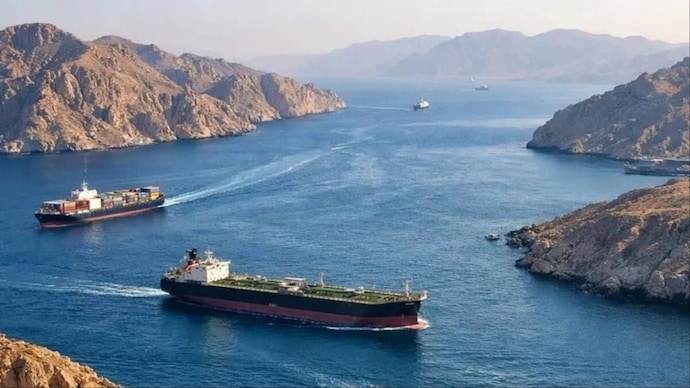
Iran on Sunday said it had closed the Strait of Hormuz after a vessel travelled on an "unapproved route" and was struck, warning that any retaliation over the incident would draw a "severe response."
The Navy of Iran's Islamic Revolutionary Guard Corps (IRGC) said in a statement that "a vessel that had jeopardized maritime security by switching off its systems was struck and brought to a halt," but did not identify the ship or provide further details.
The IRGC said several ships attempted to pass through the strategic waterway using an "unauthorised route" and ignored repeated warnings to alter their course.
The force announced that the Strait of Hormuz would remain closed "until further notice" and until "the end of US interference in this region."
The IRGC also warned that any acts of aggression against Iran "will be met with a severe response, and new enemy bases in the region will be targeted."
The announcement came after senior US officials told reporters on Friday that Washington was demanding Iran publicly declare it would stop attacks on ships in the Strait of Hormuz and guarantee that all shipping lanes would remain open without tolls.
On Friday, US President Donald Trump said the United States and Iran had agreed to continue talks despite an escalation in hostilities during the week. He also declared that the ceasefire was over.
A senior Iranian source told Reuters that Iran, the United States, Qatar and Pakistan had agreed to negotiate through talks that mediators were attempting to arrange for Saturday while Iranian Foreign Minister Abbas Araqchi was in Oman.
It was not immediately clear whether those efforts succeeded.
Araqchi and Omani Foreign Minister Sayyid Badr Albusaidi met in Oman to exchange "views on appropriate mechanisms for the safe passage of ships through the Strait of Hormuz," according to a statement from the Iranian foreign ministry.
Oman's state news agency later reported that Omani and Iranian negotiators would continue discussions "at the technical and political levels."
Oman has been helping mediate efforts to end the conflict that has destabilised the Gulf and pushed global energy prices higher since the United States and Israel launched airstrikes on Iran on February 28.
Before the conflict, about one-fifth of the world's oil supply transited through the Strait of Hormuz. Iran's effective blockade of the waterway has since driven energy prices higher and fuelled global inflation.
CNN reported on Saturday that Oman had drafted a proposal for navigation through the Strait of Hormuz. According to the report, the proposal would allow free navigation through the southern corridor in Omani territorial waters, while vessels using the northern corridor through Iranian territorial waters would require prior approval from Iran. CNN said the proposal did not include tolls.
The White House and the US State Department did not immediately respond to requests for comment on the CNN report.
QATARI MEDIATORS HELD TALKS IN TEHRAN
Three Qatari and Saudi commercial tankers came under fire earlier in the week, prompting the United States to strike Iranian sites. Iran responded with attacks on US military sites in Gulf states.
Araqchi accused the United States of violating the ceasefire agreement after Washington revoked the license authorizing the sale of Iranian crude on Tuesday following the attacks on the vessels.
"There can only be mutual compliance," Araqchi wrote on X on Friday.
Although Iran has not claimed responsibility for the attacks on the ships, analysts say Tehran uses such actions to gain leverage during negotiations.
The latest escalation has raised further uncertainty over the future of an interim agreement aimed at ending the conflict while pushing oil prices higher, a politically sensitive issue for Trump ahead of the November congressional elections.
"The Islamic Republic of Iran has asked us to continue 'talks.' We have agreed to do so, but the United States has stated to them, in no uncertain terms, that the Cease Fire is OVER!" Trump wrote on his Truth Social platform on Friday.
IRAN VOWS REVENGE FOR FORMER SUPREME LEADER'S KILLING
Iran's new supreme leader, Ayatollah Mojtaba Khamenei, issued a written statement on Saturday threatening revenge for the death of his predecessor and father, Ayatollah Ali Khamenei, who was killed on February 28.
The statement, released to coincide with funeral ceremonies for the former leader held on Thursday, declared that revenge would be carried out regardless of future developments in Iran.
"We pledge to avenge the blood of the martyred leader and all the martyrs," the message said.
Iran on Sunday said it had closed the Strait of Hormuz after a vessel travelled on an "unapproved route" and was struck, warning that any retaliation over the incident would draw a "severe response."
The Navy of Iran's Islamic Revolutionary Guard Corps (IRGC) said in a statement that "a vessel that had jeopardized maritime security by switching off its systems was struck and brought to a halt," but did not identify the ship or provide further details.
The IRGC said several ships attempted to pass through the strategic waterway using an "unauthorised route" and ignored repeated warnings to alter their course.
The force announced that the Strait of Hormuz would remain closed "until further notice" and until "the end of US interference in this region."
The IRGC also warned that any acts of aggression against Iran "will be met with a severe response, and new enemy bases in the region will be targeted."
The announcement came after senior US officials told reporters on Friday that Washington was demanding Iran publicly declare it would stop attacks on ships in the Strait of Hormuz and guarantee that all shipping lanes would remain open without tolls.
On Friday, US President Donald Trump said the United States and Iran had agreed to continue talks despite an escalation in hostilities during the week. He also declared that the ceasefire was over.
A senior Iranian source told Reuters that Iran, the United States, Qatar and Pakistan had agreed to negotiate through talks that mediators were attempting to arrange for Saturday while Iranian Foreign Minister Abbas Araqchi was in Oman.
It was not immediately clear whether those efforts succeeded.
Araqchi and Omani Foreign Minister Sayyid Badr Albusaidi met in Oman to exchange "views on appropriate mechanisms for the safe passage of ships through the Strait of Hormuz," according to a statement from the Iranian foreign ministry.
Oman's state news agency later reported that Omani and Iranian negotiators would continue discussions "at the technical and political levels."
Oman has been helping mediate efforts to end the conflict that has destabilised the Gulf and pushed global energy prices higher since the United States and Israel launched airstrikes on Iran on February 28.
Before the conflict, about one-fifth of the world's oil supply transited through the Strait of Hormuz. Iran's effective blockade of the waterway has since driven energy prices higher and fuelled global inflation.
CNN reported on Saturday that Oman had drafted a proposal for navigation through the Strait of Hormuz. According to the report, the proposal would allow free navigation through the southern corridor in Omani territorial waters, while vessels using the northern corridor through Iranian territorial waters would require prior approval from Iran. CNN said the proposal did not include tolls.
The White House and the US State Department did not immediately respond to requests for comment on the CNN report.
QATARI MEDIATORS HELD TALKS IN TEHRAN
Three Qatari and Saudi commercial tankers came under fire earlier in the week, prompting the United States to strike Iranian sites. Iran responded with attacks on US military sites in Gulf states.
Araqchi accused the United States of violating the ceasefire agreement after Washington revoked the license authorizing the sale of Iranian crude on Tuesday following the attacks on the vessels.
"There can only be mutual compliance," Araqchi wrote on X on Friday.
Although Iran has not claimed responsibility for the attacks on the ships, analysts say Tehran uses such actions to gain leverage during negotiations.
The latest escalation has raised further uncertainty over the future of an interim agreement aimed at ending the conflict while pushing oil prices higher, a politically sensitive issue for Trump ahead of the November congressional elections.
"The Islamic Republic of Iran has asked us to continue 'talks.' We have agreed to do so, but the United States has stated to them, in no uncertain terms, that the Cease Fire is OVER!" Trump wrote on his Truth Social platform on Friday.
IRAN VOWS REVENGE FOR FORMER SUPREME LEADER'S KILLING
Iran's new supreme leader, Ayatollah Mojtaba Khamenei, issued a written statement on Saturday threatening revenge for the death of his predecessor and father, Ayatollah Ali Khamenei, who was killed on February 28.
The statement, released to coincide with funeral ceremonies for the former leader held on Thursday, declared that revenge would be carried out regardless of future developments in Iran.
"We pledge to avenge the blood of the martyred leader and all the martyrs," the message said.

