Rehabilitation row, self-immolations: Nepal's Balen Shah govt faces growing anger
Protests in Kathmandu have intensified over proper settlement and rehabilitation for families displaced during recent eviction drives and the death of Ganesh Nepali.
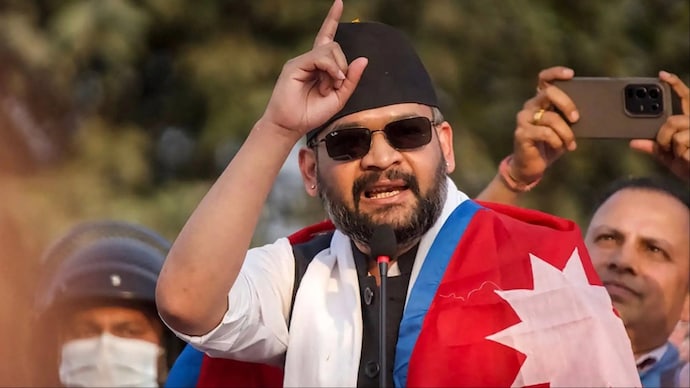
Public anger is mounting against Nepal Prime Minister Balendra "Balen" Shah as protests over the eviction of landless squatters, a series of self-immolation cases and growing frustration among young people converge into one of the biggest political challenges of his tenure.
What began as criticism over the government's eviction drive has now widened into broader questions over unemployment, governance and the treatment of vulnerable families. Opposition parties and civil society groups have also stepped up their criticism, saying the government has failed to respond to a deepening public crisis.
PROTESTS OVER REHABILITATION
According to local media, hundreds of landless squatters and activists gathered at Maitighar in Kathmandu on Sunday, demanding proper settlement and rehabilitation for families displaced during recent eviction drives.
The protest, organised by the United National Squatters' Front, brought together displaced families and rights activists, who accused the government of demolishing homes without providing adequate alternatives.
Demonstrators also demanded the unconditional release of activists detained during the movement.
The latest protest came days after police detained three youth activists, including Majid Ansari and Sarishma Thapa, at a holding centre in Kirtipur following a dispute over the management of displaced families.
Police said the activists obstructed officers during a rescue operation after heavy rain flooded the temporary shelter.
The confrontation followed severe flooding at the holding centre, where displaced families were left standing in knee-deep water after torrential rain exposed major flaws in the facility's drainage system.
GANESH NEPALI CASE FUELS OUTRAGE
Public anger intensified after the death of 25-year-old app-based driver Ganesh Nepali, who died from severe burns after setting himself on fire following a confrontation with Kathmandu Metropolitan police over a parking dispute.
The incident triggered protests across the capital, with demonstrators demanding accountability and questioning the government's response.
After nearly 24 hours of negotiations, the government, Kathmandu Metropolitan City and Nepali's family reached a nine-point agreement on Sunday.
Under the deal, authorities will form an independent probe committee led by a former judge, suspend the metropolitan police personnel involved pending the investigation and begin the process of declaring him as a martyr based on the committee's findings.
According to The Kathmandu Post, the agreement also promises a job for Nepali's wife, education support for their daughter, financial assistance to the family and health insurance, while the metropolitan city will bear funeral-related expenses.
SELF-IMMOLATIONS DEEPEN CONCERNS
His death came amid a disturbing rise in self-immolation attempts across the country.
Over the past few days, three people have set themselves on fire. Two have died from their injuries, while another remains in hospital with critical burns.
Although authorities say the cases are unrelated, the incidents have reignited concerns over youth unemployment, mental health and growing frustration.
The debate has also revived memories of the 2023 self-immolation of Prem Prasad Acharya. At the time, Balen Shah, then Kathmandu mayor, described the incident as the "ultimate failure of the state."
His critics now say the same standard should apply to his own government.
PRESSURE BUILDS ON BALEN SHAH
Balen Shah entered national politics as a symbol of change. After winning the Kathmandu mayoral election in 2022, he built a reputation for taking on corruption, improving city management and challenging Nepal's traditional political establishment.
His popularity, particularly among younger voters, helped propel him to national office after his party secured a decisive victory in this year's general election. Shah defeated former Prime Minister KP Sharma Oli and became Nepal's youngest prime minister, raising hopes for a new style of leadership.
But those expectations are now being tested.
Youth groups, including Gen-Z of Nepal, have accused the government of failing to create jobs or improve economic opportunities. Opposition parties have echoed those concerns, saying many young people who once viewed Shah as a symbol of hope are becoming increasingly frustrated with his administration.
Public anger is mounting against Nepal Prime Minister Balendra "Balen" Shah as protests over the eviction of landless squatters, a series of self-immolation cases and growing frustration among young people converge into one of the biggest political challenges of his tenure.
What began as criticism over the government's eviction drive has now widened into broader questions over unemployment, governance and the treatment of vulnerable families. Opposition parties and civil society groups have also stepped up their criticism, saying the government has failed to respond to a deepening public crisis.
PROTESTS OVER REHABILITATION
According to local media, hundreds of landless squatters and activists gathered at Maitighar in Kathmandu on Sunday, demanding proper settlement and rehabilitation for families displaced during recent eviction drives.
The protest, organised by the United National Squatters' Front, brought together displaced families and rights activists, who accused the government of demolishing homes without providing adequate alternatives.
Demonstrators also demanded the unconditional release of activists detained during the movement.
The latest protest came days after police detained three youth activists, including Majid Ansari and Sarishma Thapa, at a holding centre in Kirtipur following a dispute over the management of displaced families.
Police said the activists obstructed officers during a rescue operation after heavy rain flooded the temporary shelter.
The confrontation followed severe flooding at the holding centre, where displaced families were left standing in knee-deep water after torrential rain exposed major flaws in the facility's drainage system.
GANESH NEPALI CASE FUELS OUTRAGE
Public anger intensified after the death of 25-year-old app-based driver Ganesh Nepali, who died from severe burns after setting himself on fire following a confrontation with Kathmandu Metropolitan police over a parking dispute.
The incident triggered protests across the capital, with demonstrators demanding accountability and questioning the government's response.
After nearly 24 hours of negotiations, the government, Kathmandu Metropolitan City and Nepali's family reached a nine-point agreement on Sunday.
Under the deal, authorities will form an independent probe committee led by a former judge, suspend the metropolitan police personnel involved pending the investigation and begin the process of declaring him as a martyr based on the committee's findings.
According to The Kathmandu Post, the agreement also promises a job for Nepali's wife, education support for their daughter, financial assistance to the family and health insurance, while the metropolitan city will bear funeral-related expenses.
SELF-IMMOLATIONS DEEPEN CONCERNS
His death came amid a disturbing rise in self-immolation attempts across the country.
Over the past few days, three people have set themselves on fire. Two have died from their injuries, while another remains in hospital with critical burns.
Although authorities say the cases are unrelated, the incidents have reignited concerns over youth unemployment, mental health and growing frustration.
The debate has also revived memories of the 2023 self-immolation of Prem Prasad Acharya. At the time, Balen Shah, then Kathmandu mayor, described the incident as the "ultimate failure of the state."
His critics now say the same standard should apply to his own government.
PRESSURE BUILDS ON BALEN SHAH
Balen Shah entered national politics as a symbol of change. After winning the Kathmandu mayoral election in 2022, he built a reputation for taking on corruption, improving city management and challenging Nepal's traditional political establishment.
His popularity, particularly among younger voters, helped propel him to national office after his party secured a decisive victory in this year's general election. Shah defeated former Prime Minister KP Sharma Oli and became Nepal's youngest prime minister, raising hopes for a new style of leadership.
But those expectations are now being tested.
Youth groups, including Gen-Z of Nepal, have accused the government of failing to create jobs or improve economic opportunities. Opposition parties have echoed those concerns, saying many young people who once viewed Shah as a symbol of hope are becoming increasingly frustrated with his administration.

