Trump says US-Saudi nuclear deal hinges on Saudi Arabia joining Abraham Accords
Donald Trump's remarks come after the US and Saudi Arabia reached an agreement on civil nuclear cooperation that would allow the kingdom to develop nuclear reactors using US technology and enrich uranium.
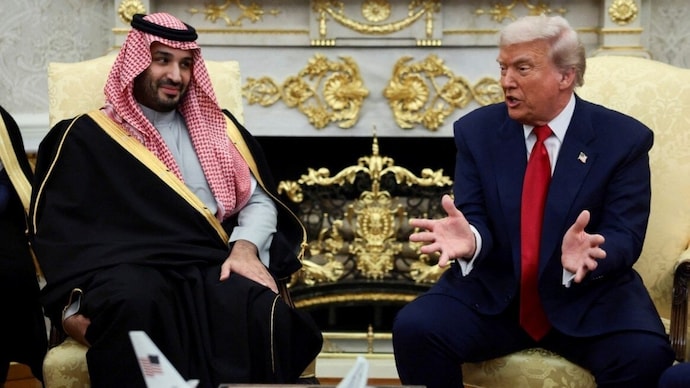
A day after the United States and Saudi Arabia unveiled a landmark civil nuclear agreement, President Donald Trump reshaped the narrative around the deal by making it conditional on Riyadh joining the Abraham Accords. In a post on Truth Social on Thursday, Trump said the proposed agreement would allow only civilian nuclear activities and ruled out uranium enrichment under the arrangement.
"The Civil Nuclear Deal... will be approved, but is totally subject to Saudi Arabia joining the very respected and successful Abraham Accords," Trump wrote. "The United States is not opposed to Civil (Non-Enriched) Nuclear Facilities."
Trump's remarks come just a day after Washington and Riyadh announced a major civil nuclear cooperation agreement. The pact, signed by US Energy Secretary Chris Wright and Saudi Energy Minister Prince Abdulaziz bin Salman, now heads to the US Congress for approval.
In doing so, Trump has connected the nuclear deal to a major sticking point in Middle East diplomacy. Saudi Arabia has long insisted that normalising ties with Israel depends on a credible roadmap to Palestinian statehood.
The agreement, known as a 123 Agreement, is expected to pave the way for the construction of AP1000 nuclear reactors in Saudi Arabia using American technology. The project could be worth tens of billions of dollars over the next three decades.
SAUDI POSITION REMAINS UNCHANGED
Trump's latest statement also appears to tighten the political conditions surrounding the deal.
Saudi Arabia has consistently maintained that it will not establish formal diplomatic relations with Israel unless there is a credible roadmap towards the creation of an independent Palestinian state. That position has remained unchanged despite repeated US efforts to expand the Abraham Accords.
The White House sees Saudi participation as the biggest remaining prize in the regional normalisation initiative launched during Trump's first term.
NUCLEAR DEAL DRAWS SCRUTINY
A civil nuclear agreement between Washington and Riyadh has been under discussion since Trump's first administration and continued under former President Joe Biden, but previous efforts stalled over non-proliferation concerns.
Unlike proposals considered during the Biden administration, the current agreement does not require Saudi Arabia to adopt the International Atomic Energy Agency's Additional Protocol, which permits inspectors to carry out short-notice inspections at undeclared nuclear sites.
The Trump administration has argued that the deal complies with the US Atomic Energy Act and includes strong non-proliferation safeguards. Saudi Arabia, meanwhile, says the partnership will help diversify its energy mix and meet the highest international standards for nuclear safety and security.
The deal must now pass a 90-session-day congressional review. Unless lawmakers block it, the agreement will take effect.
However, it has already sparked criticism from arms control experts and several Democratic lawmakers, who argue that allowing Saudi Arabia to develop advanced nuclear capabilities could increase the risk of nuclear proliferation and fuel an arms race in the Middle East.
WHAT ARE THE ABRAHAM ACCORDS?
The Abraham Accords are a series of US-brokered agreements launched in 2020 that normalised diplomatic relations between Israel and several Arab countries, including the United Arab Emirates, Bahrain, Morocco and Sudan.
The accords marked a major shift in regional diplomacy by establishing formal political, economic and security ties with Israel. Successive US administrations have sought to expand the framework, with Saudi Arabia widely viewed as the most significant country yet to join.
A day after the United States and Saudi Arabia unveiled a landmark civil nuclear agreement, President Donald Trump reshaped the narrative around the deal by making it conditional on Riyadh joining the Abraham Accords. In a post on Truth Social on Thursday, Trump said the proposed agreement would allow only civilian nuclear activities and ruled out uranium enrichment under the arrangement.
"The Civil Nuclear Deal... will be approved, but is totally subject to Saudi Arabia joining the very respected and successful Abraham Accords," Trump wrote. "The United States is not opposed to Civil (Non-Enriched) Nuclear Facilities."
Trump's remarks come just a day after Washington and Riyadh announced a major civil nuclear cooperation agreement. The pact, signed by US Energy Secretary Chris Wright and Saudi Energy Minister Prince Abdulaziz bin Salman, now heads to the US Congress for approval.
In doing so, Trump has connected the nuclear deal to a major sticking point in Middle East diplomacy. Saudi Arabia has long insisted that normalising ties with Israel depends on a credible roadmap to Palestinian statehood.
The agreement, known as a 123 Agreement, is expected to pave the way for the construction of AP1000 nuclear reactors in Saudi Arabia using American technology. The project could be worth tens of billions of dollars over the next three decades.
SAUDI POSITION REMAINS UNCHANGED
Trump's latest statement also appears to tighten the political conditions surrounding the deal.
Saudi Arabia has consistently maintained that it will not establish formal diplomatic relations with Israel unless there is a credible roadmap towards the creation of an independent Palestinian state. That position has remained unchanged despite repeated US efforts to expand the Abraham Accords.
The White House sees Saudi participation as the biggest remaining prize in the regional normalisation initiative launched during Trump's first term.
NUCLEAR DEAL DRAWS SCRUTINY
A civil nuclear agreement between Washington and Riyadh has been under discussion since Trump's first administration and continued under former President Joe Biden, but previous efforts stalled over non-proliferation concerns.
Unlike proposals considered during the Biden administration, the current agreement does not require Saudi Arabia to adopt the International Atomic Energy Agency's Additional Protocol, which permits inspectors to carry out short-notice inspections at undeclared nuclear sites.
The Trump administration has argued that the deal complies with the US Atomic Energy Act and includes strong non-proliferation safeguards. Saudi Arabia, meanwhile, says the partnership will help diversify its energy mix and meet the highest international standards for nuclear safety and security.
The deal must now pass a 90-session-day congressional review. Unless lawmakers block it, the agreement will take effect.
However, it has already sparked criticism from arms control experts and several Democratic lawmakers, who argue that allowing Saudi Arabia to develop advanced nuclear capabilities could increase the risk of nuclear proliferation and fuel an arms race in the Middle East.
WHAT ARE THE ABRAHAM ACCORDS?
The Abraham Accords are a series of US-brokered agreements launched in 2020 that normalised diplomatic relations between Israel and several Arab countries, including the United Arab Emirates, Bahrain, Morocco and Sudan.
The accords marked a major shift in regional diplomacy by establishing formal political, economic and security ties with Israel. Successive US administrations have sought to expand the framework, with Saudi Arabia widely viewed as the most significant country yet to join.
A day after the United States and Saudi Arabia unveiled a landmark civil nuclear agreement, President Donald Trump reshaped the narrative around the deal by making it conditional on Riyadh joining the Abraham Accords. In a post on Truth Social on Thursday, Trump said the proposed agreement would allow only civilian nuclear activities and ruled out uranium enrichment under the arrangement.
"The Civil Nuclear Deal... will be approved, but is totally subject to Saudi Arabia joining the very respected and successful Abraham Accords," Trump wrote. "The United States is not opposed to Civil (Non-Enriched) Nuclear Facilities."
Trump's remarks come just a day after Washington and Riyadh announced a major civil nuclear cooperation agreement. The pact, signed by US Energy Secretary Chris Wright and Saudi Energy Minister Prince Abdulaziz bin Salman, now heads to the US Congress for approval.
In doing so, Trump has connected the nuclear deal to a major sticking point in Middle East diplomacy. Saudi Arabia has long insisted that normalising ties with Israel depends on a credible roadmap to Palestinian statehood.
The agreement, known as a 123 Agreement, is expected to pave the way for the construction of AP1000 nuclear reactors in Saudi Arabia using American technology. The project could be worth tens of billions of dollars over the next three decades.
SAUDI POSITION REMAINS UNCHANGED
Trump's latest statement also appears to tighten the political conditions surrounding the deal.
Saudi Arabia has consistently maintained that it will not establish formal diplomatic relations with Israel unless there is a credible roadmap towards the creation of an independent Palestinian state. That position has remained unchanged despite repeated US efforts to expand the Abraham Accords.
The White House sees Saudi participation as the biggest remaining prize in the regional normalisation initiative launched during Trump's first term.
NUCLEAR DEAL DRAWS SCRUTINY
A civil nuclear agreement between Washington and Riyadh has been under discussion since Trump's first administration and continued under former President Joe Biden, but previous efforts stalled over non-proliferation concerns.
Unlike proposals considered during the Biden administration, the current agreement does not require Saudi Arabia to adopt the International Atomic Energy Agency's Additional Protocol, which permits inspectors to carry out short-notice inspections at undeclared nuclear sites.
The Trump administration has argued that the deal complies with the US Atomic Energy Act and includes strong non-proliferation safeguards. Saudi Arabia, meanwhile, says the partnership will help diversify its energy mix and meet the highest international standards for nuclear safety and security.
The deal must now pass a 90-session-day congressional review. Unless lawmakers block it, the agreement will take effect.
However, it has already sparked criticism from arms control experts and several Democratic lawmakers, who argue that allowing Saudi Arabia to develop advanced nuclear capabilities could increase the risk of nuclear proliferation and fuel an arms race in the Middle East.
WHAT ARE THE ABRAHAM ACCORDS?
The Abraham Accords are a series of US-brokered agreements launched in 2020 that normalised diplomatic relations between Israel and several Arab countries, including the United Arab Emirates, Bahrain, Morocco and Sudan.
The accords marked a major shift in regional diplomacy by establishing formal political, economic and security ties with Israel. Successive US administrations have sought to expand the framework, with Saudi Arabia widely viewed as the most significant country yet to join.

