UK designates Iran's Islamic Revolutionary Guards as terror organisation
The UK Home Office said ministers had concluded there was sufficient evidence to believe the IRGC had engaged in activities that threatened the UK's national security.
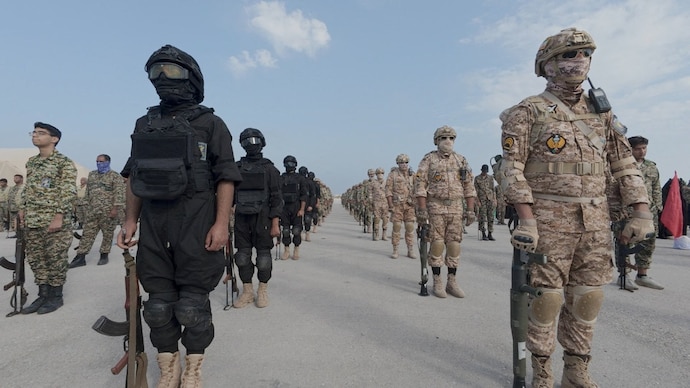
The United Kingdom has designated Iran's Islamic Revolutionary Guard Corps (IRGC) as a terrorist organisation under new national security powers, marking one of the toughest actions taken by London against Tehran in recent years. It follows a series of alleged Iran-linked threats and attacks in Britain and will make supporting the IRGC a criminal offence punishable by up to 14 years in prison once approved by Parliament.
UK Home Secretary Shabana Mahmood announced the decision, saying the government would use new powers under the National Security (State Threats) Act to target organisations accused of carrying out hostile activities on behalf of foreign states. The designation is equivalent to proscription, although it is not legally identical.
GOVERNMENT CITES SECURITY THREATS
The Home Office said the action followed years of concern over the IRGC's alleged involvement in threats on British soil. Officials pointed to an alleged plot targeting two journalists from Iran International television, cyberattacks against UK interests and other activities linked to Tehran.
In a statement, the Home Office said, "Having carefully considered all the evidence, the home secretary has concluded that there is sufficient basis to reasonably believe that each of these bodies is engaged in foreign power threat activity, and that each designation is necessary to protect the safety and interests of the United Kingdom."
UK Home Office minister Angela Eagle said the IRGC was more than a conventional military force.
"The Islamic Revolutionary Guard Corps is a central component of the Iranian state's security apparatus, answerable directly to Iran's Supreme Leader," she said.
"Its role extends far beyond that of a conventional military force. It encompasses intelligence activity, the use of proxy actors, and the projection of influence designed to advance Iranian state objectives."
SUPPORT TO BECOME CRIMINAL OFFENCE
Under the new rules, expressing support for the IRGC or assisting the organisation could carry a prison sentence of up to 14 years. The government said the measure would strengthen the ability of police and intelligence agencies to investigate and prosecute individuals acting on behalf of hostile foreign powers.
Prime Minister Keir Starmer said the new powers would give authorities stronger legal tools to tackle state-backed threats.
"These new powers will make it easier to prosecute and lock up anyone carrying out their dirty work here in Britain," Starmer said.
The announcement reverses years of hesitation by previous governments, which had resisted calls to formally outlaw the IRGC despite growing pressure from lawmakers and security experts.
OTHER GROUPS ALSO TARGETED
Alongside the IRGC, the government also designated the Islamic Movement of Companions of the Right (IMCR), an Iran-linked group accused of carrying out a string of attacks targeting Jewish and Israeli communities and Persian-language media outlets in Britain. Officials said the group had claimed responsibility for seven attacks, including an antisemitic arson attack on four Hatzola ambulances in London's Golders Green area in March.
Britain also designated Russia's GRU Volunteer Corps, which officials described as linked to Russian military intelligence.
The new designations will take effect after they receive parliamentary approval.
The IRGC was established after Iran's 1979 Islamic Revolution and has grown into one of the country's most powerful military and security institutions. It oversees Iran's elite military operations, intelligence activities and regional proxy networks, and has long faced sanctions from Western governments over allegations of terrorism, human rights abuses and efforts to expand Tehran's influence across the Middle East.
The United Kingdom has designated Iran's Islamic Revolutionary Guard Corps (IRGC) as a terrorist organisation under new national security powers, marking one of the toughest actions taken by London against Tehran in recent years. It follows a series of alleged Iran-linked threats and attacks in Britain and will make supporting the IRGC a criminal offence punishable by up to 14 years in prison once approved by Parliament.
UK Home Secretary Shabana Mahmood announced the decision, saying the government would use new powers under the National Security (State Threats) Act to target organisations accused of carrying out hostile activities on behalf of foreign states. The designation is equivalent to proscription, although it is not legally identical.
GOVERNMENT CITES SECURITY THREATS
The Home Office said the action followed years of concern over the IRGC's alleged involvement in threats on British soil. Officials pointed to an alleged plot targeting two journalists from Iran International television, cyberattacks against UK interests and other activities linked to Tehran.
In a statement, the Home Office said, "Having carefully considered all the evidence, the home secretary has concluded that there is sufficient basis to reasonably believe that each of these bodies is engaged in foreign power threat activity, and that each designation is necessary to protect the safety and interests of the United Kingdom."
UK Home Office minister Angela Eagle said the IRGC was more than a conventional military force.
"The Islamic Revolutionary Guard Corps is a central component of the Iranian state's security apparatus, answerable directly to Iran's Supreme Leader," she said.
"Its role extends far beyond that of a conventional military force. It encompasses intelligence activity, the use of proxy actors, and the projection of influence designed to advance Iranian state objectives."
SUPPORT TO BECOME CRIMINAL OFFENCE
Under the new rules, expressing support for the IRGC or assisting the organisation could carry a prison sentence of up to 14 years. The government said the measure would strengthen the ability of police and intelligence agencies to investigate and prosecute individuals acting on behalf of hostile foreign powers.
Prime Minister Keir Starmer said the new powers would give authorities stronger legal tools to tackle state-backed threats.
"These new powers will make it easier to prosecute and lock up anyone carrying out their dirty work here in Britain," Starmer said.
The announcement reverses years of hesitation by previous governments, which had resisted calls to formally outlaw the IRGC despite growing pressure from lawmakers and security experts.
OTHER GROUPS ALSO TARGETED
Alongside the IRGC, the government also designated the Islamic Movement of Companions of the Right (IMCR), an Iran-linked group accused of carrying out a string of attacks targeting Jewish and Israeli communities and Persian-language media outlets in Britain. Officials said the group had claimed responsibility for seven attacks, including an antisemitic arson attack on four Hatzola ambulances in London's Golders Green area in March.
Britain also designated Russia's GRU Volunteer Corps, which officials described as linked to Russian military intelligence.
The new designations will take effect after they receive parliamentary approval.
The IRGC was established after Iran's 1979 Islamic Revolution and has grown into one of the country's most powerful military and security institutions. It oversees Iran's elite military operations, intelligence activities and regional proxy networks, and has long faced sanctions from Western governments over allegations of terrorism, human rights abuses and efforts to expand Tehran's influence across the Middle East.

