Operation Epic Fury 2.0 soon? US planning big strikes on Iran after China visit
However, Donald Trump faces a difficult political calculation ahead of the mid-term polls in November. The war is increasingly unpopular, and its financial cost is being felt by ordinary Americans. Allies have been pressing Trump to reach a compromise that would prompt Iran to reopen the Strait of Hormuz and allow him to declare victory.
With peace talks in limbo, US officials have drawn up plans to restart military strikes against Iran, The New York Times reported on Friday.
The renewed push for a military solution comes after US President Donald Trump completed his two-day visit to China, where he is reported to have discussed the Iran war and the ongoing closure of the Strait of Hormuz with his Chinese counterpart, Xi Jinping.
Aides told the publication that Trump is yet to decide on resuming strikes, which have been paused since a ceasefire was announced on April 7.
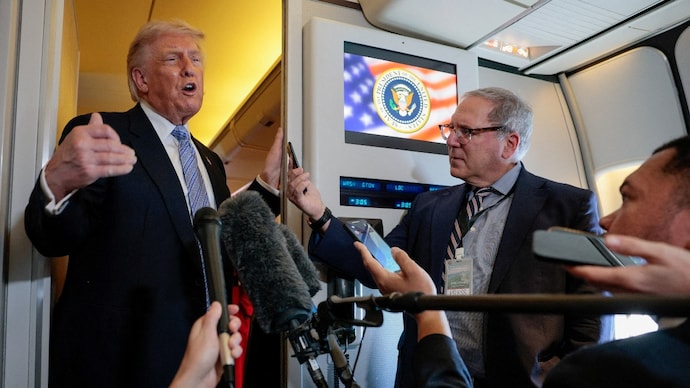
Trump has been rejecting Iran's peace proposals, arguing they fall short of meeting US demands — no nuclear weapons for Iran and the reopening of the Strait of Hormuz. He reiterated his position while returning to Washington DC aboard Air Force One.
However, Trump faces a difficult political calculation ahead of the mid-term polls in November. The war is increasingly unpopular, and its financial cost is being felt by ordinary Americans. Allies have been pressing Trump to reach a compromise that would prompt Iran to reopen the Strait of Hormuz and allow him to declare victory.
PREPARATIONS FOR OPERATION EPIC FURY 2.0
The prospects of a renewed offensive continue to loom large as the US has yet to achieve its primary goal of denuclearising Iran.
The New York Times report noted that the Pentagon is planning for Operation Epic Fury 2.0 in the coming days. "We have a plan to escalate if necessary," Defence Secretary Pete Hegseth told lawmakers during congressional testimony this week.
Two Middle East officials, speaking on condition of anonymity, told the publication that the United States and Israel are engaged in intense preparations for a possible resumption of attacks against Iran as early as next week.
"They're either going to make a deal or they're going to be decimated. So, one way or another, we win," Trump said on Tuesday before departing for China.
OPTIONS BEFORE PRESIDENT TRUMP
US officials told the publication that Iranian military and infrastructure targets could be hit with greater force if Trump decides to resume strikes. Trump had previously vowed to target Iran's civilian infrastructure before the ceasefire — a threat widely condemned as a potential war crime.
A second option would place Special Operations troops on the ground to pursue nuclear material buried deep underground. However, such an operation would entail thousands of support troops, raising the risk of direct engagement with Iranian forces and significant casualties.
A third option involves using troops to seize Kharg Island, a major hub of Iranian oil exports. But holding the island would require a substantially larger ground presence, significantly escalating both the conflict and its cost.
IRAN READY FOR CONFLICT
Meanwhile, Iranian officials have signalled they are prepared for a return to hostilities.
"Our armed forces are ready to deliver a well-deserved response to any aggression; mistaken strategy and mistaken decisions will always lead to mistaken results," Mohammad Bagher Ghalibaf, the speaker of Iran's Parliament, posted on social media on Monday.
"We are prepared for all options; they will be surprised," added Ghalibaf, who has emerged as a key negotiator for Iran.
According to intelligence assessments, Iran has reportedly re-established operational access to most of its missile infrastructure, including launch sites and underground facilities.
Officials say it has regained control of 30 out of 33 missile sites located along the Strait of Hormuz, a critical maritime chokepoint. The sites are considered capable of posing a threat to naval vessels and commercial tankers passing through the narrow waterway, which carries a significant share of global oil trade.
With peace talks in limbo, US officials have drawn up plans to restart military strikes against Iran, The New York Times reported on Friday.
The renewed push for a military solution comes after US President Donald Trump completed his two-day visit to China, where he is reported to have discussed the Iran war and the ongoing closure of the Strait of Hormuz with his Chinese counterpart, Xi Jinping.
Aides told the publication that Trump is yet to decide on resuming strikes, which have been paused since a ceasefire was announced on April 7.
Trump has been rejecting Iran's peace proposals, arguing they fall short of meeting US demands — no nuclear weapons for Iran and the reopening of the Strait of Hormuz. He reiterated his position while returning to Washington DC aboard Air Force One.
However, Trump faces a difficult political calculation ahead of the mid-term polls in November. The war is increasingly unpopular, and its financial cost is being felt by ordinary Americans. Allies have been pressing Trump to reach a compromise that would prompt Iran to reopen the Strait of Hormuz and allow him to declare victory.
PREPARATIONS FOR OPERATION EPIC FURY 2.0
The prospects of a renewed offensive continue to loom large as the US has yet to achieve its primary goal of denuclearising Iran.
The New York Times report noted that the Pentagon is planning for Operation Epic Fury 2.0 in the coming days. "We have a plan to escalate if necessary," Defence Secretary Pete Hegseth told lawmakers during congressional testimony this week.
Two Middle East officials, speaking on condition of anonymity, told the publication that the United States and Israel are engaged in intense preparations for a possible resumption of attacks against Iran as early as next week.
"They're either going to make a deal or they're going to be decimated. So, one way or another, we win," Trump said on Tuesday before departing for China.
OPTIONS BEFORE PRESIDENT TRUMP
US officials told the publication that Iranian military and infrastructure targets could be hit with greater force if Trump decides to resume strikes. Trump had previously vowed to target Iran's civilian infrastructure before the ceasefire — a threat widely condemned as a potential war crime.
A second option would place Special Operations troops on the ground to pursue nuclear material buried deep underground. However, such an operation would entail thousands of support troops, raising the risk of direct engagement with Iranian forces and significant casualties.
A third option involves using troops to seize Kharg Island, a major hub of Iranian oil exports. But holding the island would require a substantially larger ground presence, significantly escalating both the conflict and its cost.
IRAN READY FOR CONFLICT
Meanwhile, Iranian officials have signalled they are prepared for a return to hostilities.
"Our armed forces are ready to deliver a well-deserved response to any aggression; mistaken strategy and mistaken decisions will always lead to mistaken results," Mohammad Bagher Ghalibaf, the speaker of Iran's Parliament, posted on social media on Monday.
"We are prepared for all options; they will be surprised," added Ghalibaf, who has emerged as a key negotiator for Iran.
According to intelligence assessments, Iran has reportedly re-established operational access to most of its missile infrastructure, including launch sites and underground facilities.
Officials say it has regained control of 30 out of 33 missile sites located along the Strait of Hormuz, a critical maritime chokepoint. The sites are considered capable of posing a threat to naval vessels and commercial tankers passing through the narrow waterway, which carries a significant share of global oil trade.

