US resumes air strikes on Iran after missile attack on American base in Jordan
The renewed US strikes represent a significant escalation in tensions between Washington and Tehran at a time when indirect diplomatic contacts are reportedly continuing through regional mediators.
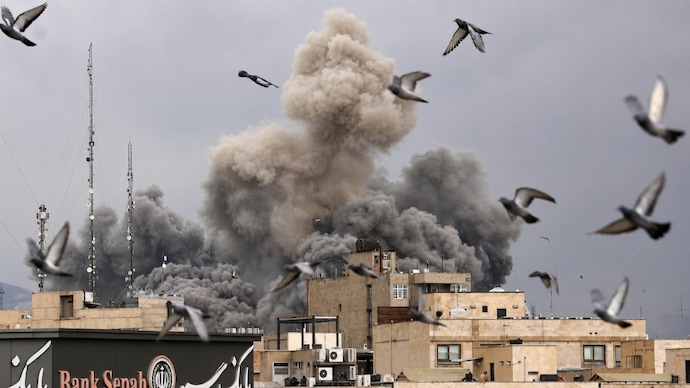
The United States on Thursday resumed air strikes on targets inside Iran, ending a brief pause in military operations in West Asia, as Washington responded to what it said was Tehran's attempted ballistic missile attack on American forces. Multiple explosions were reported across Iran's southern parts as the attacks resumed.
US Central Command (Centcom) confirmed that American forces began launching strikes at 8 pm ET (5.30 am India Time), describing the operation as a direct response to Iran's attempted attacks on US troops based in the region.
"US forces began launching strikes against Iran at 8 pm ET today. The strikes are a powerful response to yesterday's attempted Iranian attacks on US forces based in the Middle East," Centcom said in a post on X.
Shortly after the US strikes began, Iranian media reported multiple explosions across the country's south. Tasnim News Agency said three explosions were heard on Qeshm Island in the Strait of Hormuz and reported that a missile strike had hit a residential area on the island. Iranian media also reported explosions in Bushehr and several other southern locations, though there was no immediate official confirmation on casualties or the extent of the damage.
The strikes came days after Iran launched multiple ballistic missiles from its territory toward a US military base in Jordan. Centcom said all incoming missiles were intercepted, preventing casualties or damage. While the command did not identify the target, US media reports said the missiles were aimed at an American military installation in Jordan.
Iran's Islamic Revolutionary Guard Corps (IRGC) said it had fired several ballistic missiles at a US air base and another military facility in Jordan. The attempted strike marked Iran's first direct ballistic missile attack on a US military installation since Washington paused its bombing campaign against Tehran to allow space for diplomatic efforts.
US President Donald Trump vowed a forceful response following the missile attack.
"So it's our turn," Trump told reporters at the White House on Wednesday. "We're going to hit them very hard."
While saying the United States would retaliate decisively, Trump also left the door open for diplomacy, saying Washington would assess whether an agreement could eventually be reached to end the conflict.
Earlier this week, Trump had also said the two sides were engaged in "good talks" and suggested there was still a possibility of a diplomatic breakthrough, while warning that military operations would resume if negotiations failed.
"We're having good talks. I think there's a good chance that something could happen, and if it doesn't, we go back to doing what we were doing two days ago," he had said.
The renewed US strikes follow a brief suspension of military operations against Iran last week, when American officials said the pause was intended to assess the battlefield situation and provide an opportunity for diplomatic engagement.
The latest escalation also comes after Trump's meeting with Israeli Prime Minister Benjamin Netanyahu at the White House, where Iran was among the key issues discussed. The White House described the talks as "positive and productive".
Meanwhile, tensions have also spread beyond Iran. Earlier this week, the United States and Saudi Arabia carried out coordinated strikes against Iran-backed militias in Iraq after a wave of drone attacks targeting US forces and Saudi energy infrastructure.
According to Centcom, the joint operation targeted logistics hubs and weapons facilities used by Iran-backed groups after more than 30 drone attacks over three days, which Washington blamed on Iran's Islamic Revolutionary Guard Corps. The Popular Mobilisation Forces (PMF) said at least 20 people were killed in the strikes.
Saudi Arabia had earlier announced that its air defence systems intercepted drones targeting oil facilities in the kingdom's Eastern Province, blaming Iran-aligned armed groups operating from Iraqi territory.
The latest exchange of attacks marks one of the sharpest escalations in the confrontation between Washington and Tehran in recent weeks. While indirect diplomatic contacts are reportedly continuing through regional mediators, the resumption of US air strikes and reports of explosions across southern Iran have raised fresh concerns about a broader regional conflict.
The United States on Thursday resumed air strikes on targets inside Iran, ending a brief pause in military operations in West Asia, as Washington responded to what it said was Tehran's attempted ballistic missile attack on American forces. Multiple explosions were reported across Iran's southern parts as the attacks resumed.
US Central Command (Centcom) confirmed that American forces began launching strikes at 8 pm ET (5.30 am India Time), describing the operation as a direct response to Iran's attempted attacks on US troops based in the region.
"US forces began launching strikes against Iran at 8 pm ET today. The strikes are a powerful response to yesterday's attempted Iranian attacks on US forces based in the Middle East," Centcom said in a post on X.
Shortly after the US strikes began, Iranian media reported multiple explosions across the country's south. Tasnim News Agency said three explosions were heard on Qeshm Island in the Strait of Hormuz and reported that a missile strike had hit a residential area on the island. Iranian media also reported explosions in Bushehr and several other southern locations, though there was no immediate official confirmation on casualties or the extent of the damage.
The strikes came days after Iran launched multiple ballistic missiles from its territory toward a US military base in Jordan. Centcom said all incoming missiles were intercepted, preventing casualties or damage. While the command did not identify the target, US media reports said the missiles were aimed at an American military installation in Jordan.
Iran's Islamic Revolutionary Guard Corps (IRGC) said it had fired several ballistic missiles at a US air base and another military facility in Jordan. The attempted strike marked Iran's first direct ballistic missile attack on a US military installation since Washington paused its bombing campaign against Tehran to allow space for diplomatic efforts.
US President Donald Trump vowed a forceful response following the missile attack.
"So it's our turn," Trump told reporters at the White House on Wednesday. "We're going to hit them very hard."
While saying the United States would retaliate decisively, Trump also left the door open for diplomacy, saying Washington would assess whether an agreement could eventually be reached to end the conflict.
Earlier this week, Trump had also said the two sides were engaged in "good talks" and suggested there was still a possibility of a diplomatic breakthrough, while warning that military operations would resume if negotiations failed.
"We're having good talks. I think there's a good chance that something could happen, and if it doesn't, we go back to doing what we were doing two days ago," he had said.
The renewed US strikes follow a brief suspension of military operations against Iran last week, when American officials said the pause was intended to assess the battlefield situation and provide an opportunity for diplomatic engagement.
The latest escalation also comes after Trump's meeting with Israeli Prime Minister Benjamin Netanyahu at the White House, where Iran was among the key issues discussed. The White House described the talks as "positive and productive".
Meanwhile, tensions have also spread beyond Iran. Earlier this week, the United States and Saudi Arabia carried out coordinated strikes against Iran-backed militias in Iraq after a wave of drone attacks targeting US forces and Saudi energy infrastructure.
According to Centcom, the joint operation targeted logistics hubs and weapons facilities used by Iran-backed groups after more than 30 drone attacks over three days, which Washington blamed on Iran's Islamic Revolutionary Guard Corps. The Popular Mobilisation Forces (PMF) said at least 20 people were killed in the strikes.
Saudi Arabia had earlier announced that its air defence systems intercepted drones targeting oil facilities in the kingdom's Eastern Province, blaming Iran-aligned armed groups operating from Iraqi territory.
The latest exchange of attacks marks one of the sharpest escalations in the confrontation between Washington and Tehran in recent weeks. While indirect diplomatic contacts are reportedly continuing through regional mediators, the resumption of US air strikes and reports of explosions across southern Iran have raised fresh concerns about a broader regional conflict.
The United States on Thursday resumed air strikes on targets inside Iran, ending a brief pause in military operations in West Asia, as Washington responded to what it said was Tehran's attempted ballistic missile attack on American forces. Multiple explosions were reported across Iran's southern parts as the attacks resumed.
US Central Command (Centcom) confirmed that American forces began launching strikes at 8 pm ET (5.30 am India Time), describing the operation as a direct response to Iran's attempted attacks on US troops based in the region.
"US forces began launching strikes against Iran at 8 pm ET today. The strikes are a powerful response to yesterday's attempted Iranian attacks on US forces based in the Middle East," Centcom said in a post on X.
Shortly after the US strikes began, Iranian media reported multiple explosions across the country's south. Tasnim News Agency said three explosions were heard on Qeshm Island in the Strait of Hormuz and reported that a missile strike had hit a residential area on the island. Iranian media also reported explosions in Bushehr and several other southern locations, though there was no immediate official confirmation on casualties or the extent of the damage.
The strikes came days after Iran launched multiple ballistic missiles from its territory toward a US military base in Jordan. Centcom said all incoming missiles were intercepted, preventing casualties or damage. While the command did not identify the target, US media reports said the missiles were aimed at an American military installation in Jordan.
Iran's Islamic Revolutionary Guard Corps (IRGC) said it had fired several ballistic missiles at a US air base and another military facility in Jordan. The attempted strike marked Iran's first direct ballistic missile attack on a US military installation since Washington paused its bombing campaign against Tehran to allow space for diplomatic efforts.
US President Donald Trump vowed a forceful response following the missile attack.
"So it's our turn," Trump told reporters at the White House on Wednesday. "We're going to hit them very hard."
While saying the United States would retaliate decisively, Trump also left the door open for diplomacy, saying Washington would assess whether an agreement could eventually be reached to end the conflict.
Earlier this week, Trump had also said the two sides were engaged in "good talks" and suggested there was still a possibility of a diplomatic breakthrough, while warning that military operations would resume if negotiations failed.
"We're having good talks. I think there's a good chance that something could happen, and if it doesn't, we go back to doing what we were doing two days ago," he had said.
The renewed US strikes follow a brief suspension of military operations against Iran last week, when American officials said the pause was intended to assess the battlefield situation and provide an opportunity for diplomatic engagement.
The latest escalation also comes after Trump's meeting with Israeli Prime Minister Benjamin Netanyahu at the White House, where Iran was among the key issues discussed. The White House described the talks as "positive and productive".
Meanwhile, tensions have also spread beyond Iran. Earlier this week, the United States and Saudi Arabia carried out coordinated strikes against Iran-backed militias in Iraq after a wave of drone attacks targeting US forces and Saudi energy infrastructure.
According to Centcom, the joint operation targeted logistics hubs and weapons facilities used by Iran-backed groups after more than 30 drone attacks over three days, which Washington blamed on Iran's Islamic Revolutionary Guard Corps. The Popular Mobilisation Forces (PMF) said at least 20 people were killed in the strikes.
Saudi Arabia had earlier announced that its air defence systems intercepted drones targeting oil facilities in the kingdom's Eastern Province, blaming Iran-aligned armed groups operating from Iraqi territory.
The latest exchange of attacks marks one of the sharpest escalations in the confrontation between Washington and Tehran in recent weeks. While indirect diplomatic contacts are reportedly continuing through regional mediators, the resumption of US air strikes and reports of explosions across southern Iran have raised fresh concerns about a broader regional conflict.

