
Did China quietly save the world from an oil shock?
As US-Iran tensions stirred oil fears, China cut imports and leaned on reserves and alternative energy. The move may have eased pressure on global supplies and limited a wider price surge.
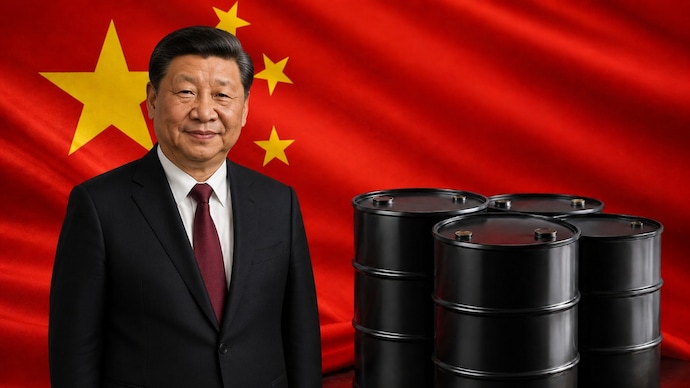

Just a few weeks ago, the world was bracing for another energy crisis.
As tensions between the US, Israel and Iran escalated, investors feared the worst. Analysts warned that any disruption to the Strait of Hormuz — the narrow waterway through which roughly a fifth of the world's oil passes, could send crude prices soaring and high for a long time, reignite inflation and derail economic growth.
Yet the shock never fully arrived.
Oil prices rose, but not nearly as much as many feared. Inflation remained relatively contained. Global stock markets have recovered and now, with US President Donald Trump and Iranian President Masoud Pezeshkian formally signing a memorandum of understanding (MoU) to end hostilities between the two countries, one of the biggest geopolitical risks hanging over the oil market has eased considerably.
So what prevented a much bigger crisis?
According to Bloomberg energy analyst Javier Blas, the answer may lie in an unexpected place: China.
THE OIL SHOCK THAT NEVER CAME
Saudi Arabia has long been known as the world's 'swing producer', a country capable of increasing or reducing oil production to stabilise markets during periods of disruption.
But on the demand side, there has never been an equivalent player.
Until now.
Blas argues that during the Iran conflict, China effectively became the world's first "swing importer" of oil, dramatically reducing its purchases and absorbing much of the global supply shock without causing visible damage to its own economy.
The scale of the adjustment was extraordinary.
Chinese customs data showed that the country's total oil imports fell to an eight-year low of 7.8 million barrels a day in May. Imports arriving by tanker fell even further, dropping to a 10-year low and more than 45% below their average level in 2025.
In practical terms, China reduced its seaborne oil imports by roughly the same amount as the combined oil consumption of Germany, France and the United Kingdom.
Yet there was little evidence of economic distress. That is what makes the development so significant.
HOW DID CHINA PULL IT OFF?
The answer lies in a strategy Beijing has been quietly building for more than two decades.
For years, China worried about what former president Hu Jintao called the "Malacca Dilemma" — the country's heavy dependence on oil and commodity imports passing through the narrow Strait of Malacca.
In any future conflict, particularly one involving Taiwan, those supply routes could become vulnerable.
China's response was simple: reduce that vulnerability.
Over the years, Beijing invested heavily in strategic petroleum reserves, electric vehicles, renewable energy, coal-fired power generation and alternative industrial feedstocks.
Those investments appear to have paid off during the recent crisis.
According to Blas, China's strategic oil reserves may now total around 1.4 billion barrels — roughly three times larger than US reserves and more than six times the size of Japan's stockpile.
There are indications that Beijing may have tapped these reserves during the conflict, potentially releasing between 100 million and 200 million barrels into the domestic market.
At the same time, electric vehicle usage surged. Data from Chinese highways showed charging activity rising between 50% and 80% year-on-year during April and May.
Coal also played a role.
China's coal-fired power generation hit a seasonal record during the period, while its coal-to-chemicals industry helped replace feedstocks that became harder to source because of supply disruptions.
Together, these measures allowed China to reduce oil imports sharply without significantly disrupting economic activity.
WHY THE WORLD SHOULD CARE
The implications extend far beyond China.
For decades, rising Chinese demand has been one of the biggest drivers of higher oil prices. Every major economic expansion in China pushed global energy markets tighter.
Now that relationship may be changing.
If China can repeatedly absorb supply disruptions by drawing on reserves, increasing EV usage and switching energy sources, future geopolitical crises may have a smaller impact on global oil prices than previously assumed.
In effect, China's energy strategy acted as a shock absorber for the global economy.
Had Beijing continued importing oil at normal levels during the Iran conflict, the pressure on global supplies could have been significantly higher, potentially resulting in much sharper increases in oil prices and inflation.
Instead, the world avoided the kind of energy crisis many had feared.
LESSONS FOR INDIA
The episode also raises an important question for India.
India remains one of the world's most oil-dependent major economies and imports more than 85% of its crude oil requirements.
Unlike China, India's strategic petroleum reserves are relatively limited and the country's transition towards electric mobility remains at an earlier stage.
The recent crisis highlighted how energy security is no longer just about securing supplies. It is also about building flexibility — whether through strategic reserves, alternative energy sources, electric vehicles or domestic energy production.
China's response suggests that countries which invest in those buffers are better positioned to weather global shocks.
A SHIFT IN THE OIL MARKET
The Trump-Pezeshkian peace agreement may have reduced immediate fears of disruption in the Middle East.
But something more important may have happened beneath the surface.
For much of the last two decades, China was viewed as the biggest source of growth in global oil demand.
Today, it may be evolving into something very different: a stabilising force.
If Saudi Arabia remains the world's swing producer, China may have emerged as its first true swing importer.
And that could permanently change how the world thinks about oil shocks.