
JEE route confirmed for new IIT courses in Robotics, Physical AI and Space Technology

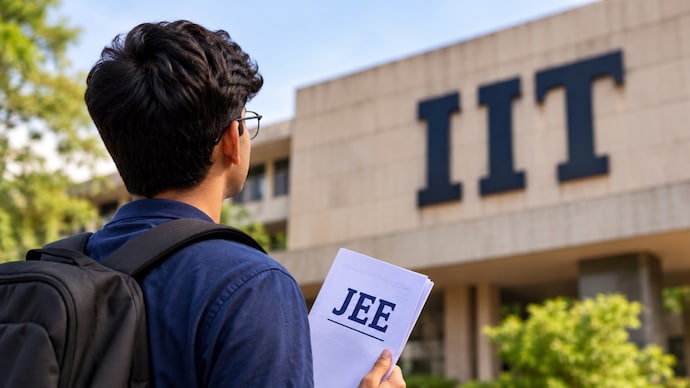
The Mehta Family Foundation confirmed that admissions to new undergraduate IIT programmes will be conducted through JEE. The phased expansion will add 6,000 seats across academic levels without replacing the existing intake.
 Last UpdatedNov 28, 2026 13:26 IST
 Published by
The upcoming undergraduate programmes in Robotics, Physical AI and Space Engineering at the Indian Institutes of Technology (IITs) will admit students through the Joint Entrance Examination (JEE), with all the proposed seats being additional to the existing IIT intake, the Bhupat and Jyoti Mehta Family Foundation has clarified.
The clarification comes days after the foundation announced its plan to create around 6,000 new seats across undergraduate, postgraduate and doctoral programmes in partnership with multiple IITs over the next eight to ten years. The first batches are expected to begin in 2027.
Speaking about the admission process and expansion plans with India Today, Rahul Mehta, founder of the Bhupat and Jyoti Mehta Family Foundation, says undergraduate admissions to the new programmes would be through JEE, while additional opportunities would also be created at the Master's and PhD levels.
"All 6,000 seats will be additional to the IITs' existing intake. The initiative will expand their overall academic capacity without reducing or replacing seats in conventional engineering disciplines," Mehta says.
The proposed 6,000 seats will be distributed across two domains: Robotics and Physical AI, which will account for 5,000 seats, and Space Engineering and Technology, with 1,000 seats.
Of the 5,000 seats planned in Robotics and Physical AI, 2,500 will be at the BTech level, 1,200 at the Master's level and 1,300 at the PhD level. The Space Engineering and Technology domain will have 500 BTech seats, 300 Master's seats and 200 PhD seats.
This takes the total proposed undergraduate intake to 3,000 seats, while Master's and doctoral programmes will account for 1,500 seats each. The expansion will be introduced in phases over the next eight to ten years.
IITS YET TO FINALISE INSTITUTE-WISE SEAT ALLOCATION
The Foundation is currently in discussions with multiple IITs on institutional participation, programme structures and the distribution of seats. The names of the participating institutes and the programmes planned at each campus will be announced once these discussions are concluded.
"These seats will be introduced in phases, with the institute-wise distribution determined in consultation with the participating IITs and based on their respective academic plans," Mehta adds.
The Foundation has previously partnered with six IITs – IIT Madras, IIT Kanpur, IIT Guwahati, IIT Roorkee, IIT Palakkad and IIT Indore – to establish eight schools and centres in areas including Artificial Intelligence, Data Science, Biomedical Engineering and Sustainability.
Through these partnerships, it has supported more than 4,000 admissions across undergraduate, postgraduate and doctoral programmes since 2019.
WHY DEDICATED PROGRAMMES ARE BEING PLANNED
Explaining the need for specialised programmes, Mehta says traditional robotics education has largely been rooted in mechanical and electrical engineering, but the field is increasingly bringing together several disciplines.
"While these disciplines remain important, the next generation of robotics combines physical hardware with artificial intelligence, computer vision, sensors, software and advanced AI models. This requires a different approach to engineering education, with students learning how to build machines that can process information and respond dynamically to their environment," he notes.
He adds that existing engineering programmes provide a strong foundation, but dedicated interdisciplinary courses are needed to prepare students for emerging technologies and the industries they will shape.
The new academic ecosystem is expected to be supported by more than 120 dedicated faculty members. Research areas will include foundation models, simulation-to-real-world transfer, digital twins, humanoid and legged robots, swarm robotics and soft robotics.
The programmes will also focus on practical industry exposure. Each programme will include a fourth-year capstone project as a core graduation requirement, with students expected to work with industry on projects addressing real-world requirements.
"A paid industry-residency semester is also under discussion. Creating industry advisory councils as part of the schools will ensure hands-on experience for the students as part of their core education," Mehta says.
The initiative aims to prepare engineers and researchers for emerging opportunities across manufacturing, agriculture, healthcare, defence and the expanding space technology sector.
"Our vision goes well beyond creating 6,000 seats. We want these graduates to become contributors to India's next phase of industrial and technological growth," Mehta further adds.

Mridusmita Deka is Chief Sub Editor on the Education & Jobs desk at India Today Digital. She was born and brought up in Dibrugarh, Assam. She completed her Master's in Mass Communication from Dibrugarh University. She has previously worked with NDTV Education, Careers360 and The Indian Express. Her work spans higher education, competitive exams, scholarships, admissions, skilling, and jobs.
READ MORE