
 Handcrafted ByOur Editors
 NCERT's textbook errors: Corrections, court cases and a crisis of trust

An NCERT textbook was considered the gold standard of Indian education. But after a year marked by textbook withdrawals, court interventions, repeated revisions and fresh controversies, educators are beginning to ask a difficult question. Is India's most trusted publisher facing a trust crisis?
NCERT faces textbook trust test

New Delhi,UPDATED: Jun 27, 2026 11:33 IST
Ask anyone who has gone through the Indian education system, and they’ll tell you the same thing... when in doubt, go back to the NCERT textbook. Teachers recommend it, coaching institutes build their lessons around it, and parents insist their children master it.
For students preparing for CBSE board exams, NEET, JEE, CUET or even the UPSC, NCERT has long been the safest and most trusted source.
Which is precisely why the past year has stood out.
The first signs appeared in August 2025, when NCERT corrected a historical map in a Class 8 Social Science textbook after historians raised objections. Speaking to India Today.in at the time, Michel Danino, who heads NCERT’s textbook development panel, said the map was based on available academic sources and that the panel remained “open to correction after further research.”
A few months later came an even bigger setback. In February this year, the Supreme Court took exception to portions of a newly introduced Class 8 Social Science textbook that referred to corruption in the judiciary. NCERT subsequently withdrew the book, describing it as an “error in judgement”, and set up a process to revise only the disputed section.
However, the questions did not end there.
As NCERT continued rolling out new textbooks under the National Education Policy (NEP 2020), teachers began pointing to inconsistencies in other subjects, students noticed differences between editions, and fresh revisions followed in several books.
Then came another flashpoint. On Thursday (June 25), NCERT’s latest Social Science textbooks dropped the Preamble to the Constitution and references to secularism and federalism while retaining a chapter on the Emergency. The changes reignited political and academic debate — not just over what is being taught, but also over how such decisions are being taken.
Beyond NCERT, textbook controversies also surfaced in Odisha and Karnataka, raising broader questions about whether India’s textbook review systems are keeping pace with the country’s sweeping curriculum reforms.
Taken individually, none of these episodes may be enough to dent the credibility of an institution as respected as NCERT. But together, they point to something larger.
As Dheeren Joshi, a former NCERT official, told India Today.in, “A textbook is not just another publication; it is a public document that shapes how millions of children understand the world. That is why the standard for accuracy has to be exceptionally high. Even small mistakes can weaken public confidence.”
That concern is now being echoed by teachers, parents and educationists alike.
WHEN THE SUPREME COURT QUESTIONS A TEXTBOOK
Perhaps the most significant setback came earlier this year when the Supreme Court objected to portions of the newly introduced Class 8 Social Science textbook that referred to corruption in the judiciary. The court’s observations were unusually sharp.
Soon afterwards, NCERT halted the distribution of the textbook, admitted what it described as an “error in judgement”, and the Centre constituted a three-member expert committee to rewrite the chapter. It was an extraordinary sequence of events.
Textbooks are expected to undergo multiple rounds of academic scrutiny before they are printed. If a chapter has to be withdrawn after judicial intervention, it inevitably raises questions about the review process itself.
Preeti Chopra, an educationist from Pune puts it this way, “Curriculum reform is necessary, but reform cannot come at the expense of academic rigour. Every textbook should undergo independent peer review and rigorous fact-checking before it reaches students.”
THEN CAME ANOTHER CORRECTION. AND ANOTHER
The judiciary chapter was not an isolated episode this academic year (2025-26).
A revised Class 8 textbook also drew criticism after a map depicted Jaisalmer as part of the Maratha Empire. Historians objected, political leaders questioned it, and the map was later removed.
NCERT also had to repeatedly warn students against fake and pirated textbooks circulating in the market. Teachers have also flagged inconsistencies in some newly revised content as the National Education Policy (NEP) rollout gathers pace.
Each issue may have its own explanation, but taken together, they begin to chip away at something far more valuable than a printed page. This is what we refer to as trust.
Just when the spotlight was on NCERT, another controversy unfolded hundreds of kilometres away. In Odisha, a government review found 1,678 mistakes across 55 newly introduced SCERT textbooks for Classes 1 to 8. Some of the errors sounded almost unbelievable.
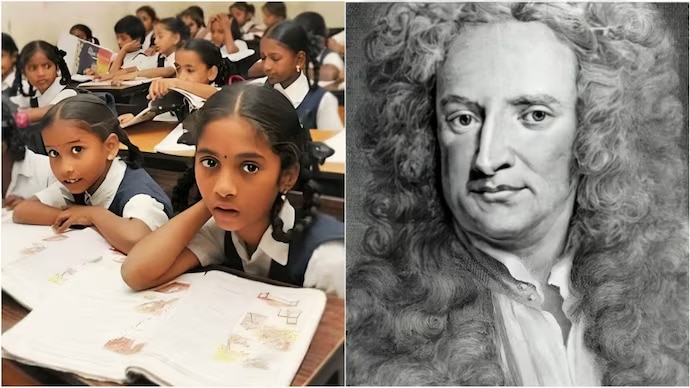
Isaac Newton was reportedly identified as a pilot, a photograph of Karnataka’s Vidhan Soudha appeared where the Odisha Legislative Assembly should have been. The Hampi temple complex was mistaken for the Konark Sun Temple. Scientific concepts were incorrectly explained.
The highest number of mistakes, 705, were found in Class 8 books alone. The Odisha government has ordered a high-level enquiry.
To be clear, these are SCERT textbooks, not NCERT publications. But the episode reinforced a larger concern: If textbook errors of this scale can escape review elsewhere, are India’s textbook quality-control systems struggling under the pressure of large-scale curriculum reforms?
As Rekha Dhawan, a CBSE principal, remarked, “Teachers expect textbooks to settle debates, not create them. Every correction after publication means another round of explanations in the classroom.”
KARNATAKA SHOWED ANOTHER SIDE OF THE PROBLEM
If Odisha highlighted factual errors, Karnataka highlighted how textbooks are increasingly being scrutinised for representation and interpretation.
A newly introduced NCERT Kannada textbook titled Krishna drew criticism from an education rights group, which alleged ideological bias. NCERT rejected the allegation, clarifying that the title referred to the Krishna river and not the Hindu deity. Whether the criticism was justified or not is almost beside the point.
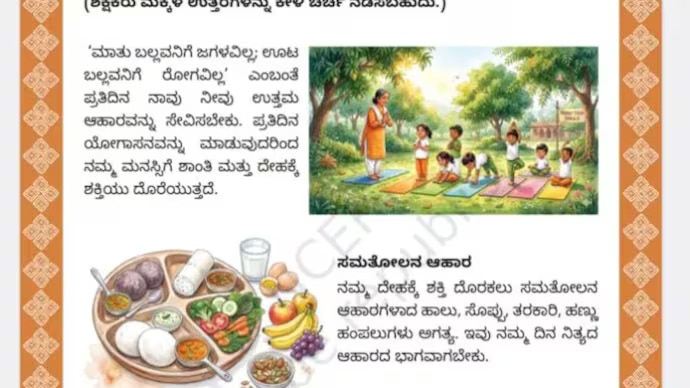
The incident demonstrated that textbooks today are expected to meet far higher standards, not just of factual accuracy but also of historical interpretation, language and cultural sensitivity.
THE BIGGEST REWRITE SINCE INDEPENDENCE
To be fair, NCERT is in the middle of one of the biggest textbook revision exercises in independent India. The implementation of the National Education Policy (NEP) 2020 and the National Curriculum Framework has led to new textbooks being introduced across multiple classes, while many others continue to be rewritten.
Entire chapters have been replaced, learning approaches have changed, fresh content has been introduced. As a result millions of textbooks are being printed and distributed every year.
The latest Class 8 Social Science books have become the newest flashpoint. The Preamble to the Constitution no longer appears in the introductory section where it featured in earlier editions. References to secularism and federalism have also been removed from some discussions, while the Emergency continues to occupy a dedicated chapter.
NCERT has maintained that the revisions are part of the new National Curriculum Framework, but the changes have once again triggered political criticism and renewed scrutiny over the direction of school education.
No, we are not disputing that education must evolve, but the scale of reform makes quality assurance even more important.
As Sanjay Raut, an education policy expert, observed, “Trust is NCERT’s greatest asset. Every avoidable error — whether factual, historical or editorial — erodes that trust a little. Rebuilding confidence is always harder than correcting a page.”
WHO CHECKS THESE BOOKS
On paper, NCERT’s review process appears exhaustive. Textbooks are prepared by subject experts, university academics, school teachers and curriculum specialists. They pass through editorial teams, language experts and review committees before receiving final approval.
Which naturally raises another question. If so many layers exist, how are disputed maps, factual inaccuracies and controversial passages still finding their way into printed books? Teachers say they are often left to answer questions that should never have reached the classroom in the first place.
One government school teacher told us, “Students often ask us which edition they should trust. That uncertainty should never become part of classroom learning.”
Unlike most publishers, NCERT occupies a unique place in India’s education system. Its books are followed by CBSE schools, used by several state boards and relied upon by millions of students preparing for competitive examinations. That means every factual error has consequences far beyond the classroom.
Parents notice, teachers notice, and students certainly do.
Sapna Das, a mother of a child preparing for NEET summed it up simply. “Parents don’t expect perfection. But they do expect that nationally prescribed textbooks have gone through the highest possible level of fact-checking.”
Students, too, admit that repeated revisions create uncertainty. As one Class 12 student preparing for competitive examinations put it: “We’ve always been told that NCERT is the final authority. When the books keep changing, it becomes difficult to know which version is actually correct.”
TRUST TAKES DECADES TO BUILD
No institution is perfect, mistakes happen, and correcting them is important and necessary. But repeated corrections after publication raise a larger question. Could more of these errors have been caught before the books reached millions of students?
That is the conversation India is beginning to have. For decades, NCERT’s greatest strength was not simply that it published textbooks. It was that generations of Indians believed those textbooks had already been questioned, challenged, debated and verified before they reached the classroom.
That confidence remains one of NCERT’s biggest strengths. Preserving it may prove to be just as important as rewriting the next chapter.
(India Today has emailed NCERT seeking its response on the recent textbook revisions, the review process, quality-control mechanisms and the concerns raised by educators. A response had not been received at the time of publication.)
- Ends