
Discovery of Bihar: Why CM Samrat Choudhary wants officials to play tourists
The government, in an imaginative experiment, is sending officials across the state—not as inspectors but travellers
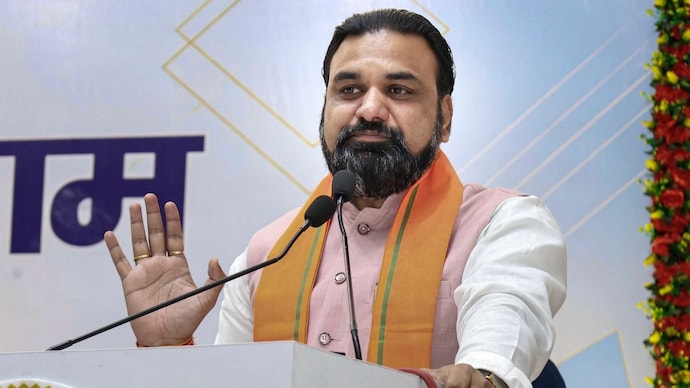

 On a hot May afternoon, Bihar's bureaucracy received an unusual assignment. Its officers were not being asked to review files, inspect projects or attend another round of meetings. Instead, they were being told to pack bags, leave their districts and travel across the state.
The directive, issued by the general administration department headed by chief minister Samrat Choudhary, requires government officials to undertake periodic visits to tourist destinations, stay overnight and return with suggestions on how those places can be improved. On paper, it is a tourism initiative. In practice, it may be one of the more imaginative governance experiments attempted by the Choudhary administration.
The underlying idea: before officials can improve Bihar, they must first know it.
For decades, India's bureaucracy has often governed through reports, presentations and official reviews. The Choudhary administration appears to be testing a different proposition—that administrators who experience a place as travellers are more likely to understand its strengths and shortcomings than those who encounter it only through files.
The timing is significant. Bihar's tourism sector is no longer a peripheral economic activity. In 2025, the state recorded an estimated 65.4 million domestic tourist visits and 743,000 foreign tourist arrivals—numbers that place Bihar among India's major tourism destinations. Yet the state continues to wrestle with a familiar challenge: extraordinary historical and spiritual assets often coexist with uneven visitor infrastructure.
There is another dimension to the initiative that makes it particularly distinctive. The circular allows officials to undertake these visits with their families and encourages overnight stays at tourism destinations. In a bureaucracy often associated with long working hours, transfers and administrative pressures, the programme quietly creates space for family travel and shared experiences. It is difficult to quantify the value of a weekend spent exploring a new district with one's spouse, children or parents, but the government appears to recognise that stronger family bonds and a better work-life balance can themselves be public goods.
In that sense, the oncoming Bihar Darshan is not merely a tourism policy; it is also a modest social intervention that encourages officials to step away from their desks and engage with the state in a more personal way.
The economic implications could be equally significant. Bihar's government workforce numbers well over a million employees. If even a fraction of them begin undertaking periodic tourism visits every quarter, accompanied by family members, the cumulative impact on local economies could be substantial. Hotels, homestays, restaurants, transport operators, guides, handicraft sellers and small businesses around tourism destinations would all stand to benefit.
The initiative has the potential to create immediate demand for local services across districts. In effect, the Choudhary administration is attempting to transform its own workforce into a grassroots tourism ecosystem, generating economic activity while simultaneously creating a network of informed travellers capable of identifying gaps in Bihar's tourism infrastructure.
From the Buddhist circuit of Bodh Gaya and Rajgir to the Sikh heritage of Patna Sahib, from Vikramshila's ancient ruins to the forests of Valmiki Nagar, Bihar possesses destinations capable of attracting visitors from across the world. What it has often lacked is a systematic mechanism for understanding how those destinations are experienced by travellers.
The Bihar Darshan initiative seeks to address precisely that problem. Instead of relying exclusively on consultants, surveys or departmental reviews, the government has turned its own bureaucracy into a travelling feedback network. Officers are expected to visit tourist destinations, observe facilities, assess accommodation, document shortcomings and submit recommendations for improvement. The state is effectively asking its administrators to become tourists in the state they govern.
That may sound like a small administrative adjustment. In reality, it reflects a broader governing philosophy that has increasingly become associated with Choudhary's tenure—a preference for field engagement, visibility and direct assessment over purely desk-bound administration.
The initiative is also notable because it arrives after a period in which Bihar's administrative culture had, in the eyes of many observers, become increasingly routine. By the end of Nitish Kumar's long tenure, governance in Bihar was often seen as stable and predictable, although critics argued that innovation and administrative experimentation had become less visible. The bureaucracy continued to function, but fresh thinking was seldom at the centre of the conversation.
Since assuming office, Choudhary has sought to inject a different energy into the system. Whether it is demanding faster responses from the police, pushing departments towards greater transparency, experimenting with new approaches to urban planning or attempting to reposition tourism as a driver of economic growth, his administration has signalled a willingness to challenge established habits within government. The Bihar Darshan programme belongs firmly within that category of governance initiatives that seek to alter behaviour rather than merely issue instructions.
Its most interesting feature is that it treats knowledge as a governance tool. A district magistrate who has never spent a night near a remote tourism destination can only imagine its shortcomings. A senior officer who has never attempted to travel through another district as a visitor may never fully appreciate what tourists encounter. Missing signboards, poor road access, inadequate accommodation, cleanliness issues or gaps in local hospitality often reveal themselves only through direct experience.
The circular, therefore, asks officers to do something deceptively simple: travel, observe and report. More importantly, it explicitly directs them not to combine these visits with official inspections or review meetings. For perhaps the first time in their careers, many officers are being encouraged to look at a district not as administrators but as travellers.
There is something almost old-fashioned about the idea. In an era dominated by dashboards, video conferences and performance metrics, the government is placing faith in observation. It is betting that a night spent at a tourism destination may reveal more about its strengths and weaknesses than a dozen presentations prepared in a conference room.
The circular's emphasis on homestays is equally significant. Officials have been asked to encourage local participation in tourism so that visitors can stay with residents, experience local cuisine and engage directly with Bihar's cultural traditions. This reflects a growing global recognition that successful tourism depends not only on monuments and attractions but also on communities and experiences.
For Bihar, this matters enormously. The state possesses one of the richest civilisational landscapes in the world. It is the land of Buddha's enlightenment, Mahavira's teachings, Nalanda's intellectual legacy and the sacred sites of multiple faiths. Its challenge has never been the absence of attractions. Rather, it has been converting those attractions into a seamless visitor experience capable of generating employment, investment and local prosperity.
By directing officials to experience destinations first-hand, the government appears to be acknowledging that tourism initiatives cannot be managed entirely from Patna. They must be understood on the ground. Whether the programme succeeds remains to be seen. Bureaucratic initiatives often begin with enthusiasm before gradually settling into routine. There is always the possibility that these visits become another compliance exercise, complete with photographs, reports and little substantive change.
Yet even sceptics may concede that the underlying premise is refreshingly original. The state is asking its officials to see Bihar not through files, presentations or statistics but through roads travelled, meals eaten, nights spent and conversations held.
And that, ultimately, may be the real significance of the Bihar Darshan initiative. It is not merely about promoting tourism or filling hotel rooms. It is an attempt to make governance more experiential, to reconnect administration with geography. In asking bureaucrats to leave their offices, travel with their families and rediscover Bihar, the Samrat Choudhary administration is making a simple but ambitious wager: that people govern places better when they have actually seen them.
Subscribe to India Today Magazine