
How a Maharashtra district is saving pilgrim lives

The Solapur administration will crack down on illegal sand mining to prevent deaths by drowning of Pandharpur pilgrims
 Last UpdatedSep 28, 2026 19:53 IST
  Published by
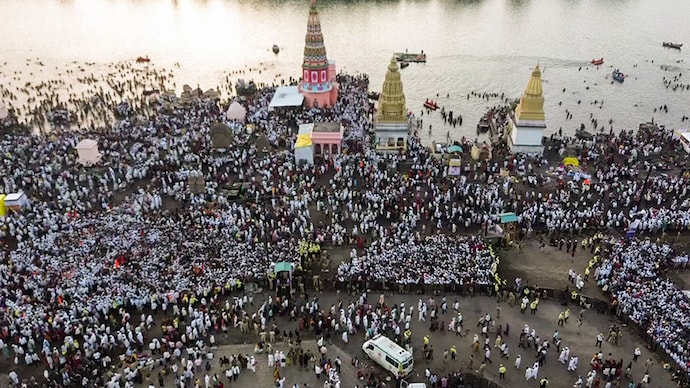
 It is a shrine revered by millions across the country and abroad. However, for pilgrims visiting the temple of Lord Vithoba in Pandharpur, Maharashtra, and taking a holy dip in the river Chandrabhaga, danger lurks on the river bed with over a 100 people drowning every year. To curb drowning deaths in the temple town, the Solapur district administration is cracking down on the illegal sand mining that causes craters on the river bed in which unsuspecting pilgrims get drowned. The river Bhima, which is a tributary of the Krishna, has a meandering, crescent-like course in Pandharpur, and is referred to as Chandrabhaga at the site.
The wari or pilgrimage on foot to Pandharpur, over 350 km from Mumbai, sees lakhs of Lord Vithoba devotees march to the temple town. During the months of Ashada (June-July) and Kartika (November), the warkaris walk to Pandharpur with the palkhis or palanquins of saints of the bhakti tradition such as Nivruttinath, Dnyaneshwar, Namdev, Eknath and Tukaram. This year, around 32 lakh warkaris visited Pandharpur in July during the Ashadi wari (July 24 to July 26), up from 27 lakh last year.
Warkaris and other devotees who visit the shrines of Lord Vithoba, also known as Vitthala and Panduranga, and his consort Rukmini, take a dip in the Chandrabhaga as it is said to bring spiritual merit. Apart from the Ashadi and Kartiki waris, Pandharpur also sees significant footfalls on Ekadashi day twice every month.
Solapur district collector Karthikeyan S. says the administration will map a two-and-a-half-kilometre stretch of the river bed using technologies such as sonar before areas more than six-feet deep are fenced off and warning signs installed. “The river water will be channelised, filtered and released into a snana kunda (bathing tank) for devotees to have a dip,” he says. Expected to be completed by November- December 2027, the tank is part of the Maharashtra government’s ambitious Pandharpur temple corridor project, which seeks to decongest the shrine and its surroundings, improve access, and provide better infrastructure and amenities.
The administration will use AI-enabled cameras to prevent drowning deaths, and also launch a crackdown on sand mining in the river bed and the use of donkeys for ferrying the dredged sand. There are over 150 annual casualties, including bodies recovered downstream, on an average. However, increased vigilance during the yatra season has ensured that casualties during the Ashadi wari have dipped from nine in 2022 to three in 2023, zero in 2024 and two this year. Deaths during Kartiki have fallen from seven in 2021 to three in 2022 and none since.
Officials from the Solapur district collectorate say over 150 volunteers, including women, were trained in rescue operations and using boats, and deployed during the Ekadashis. Of these, 27 were from Pandharpur town and taluka.
Vithoba or Vitthala is revered as a form of Lord Krishna, though it is believed he was a folk god (or even a hero stone or veergal by some accounts) who later entered the Hindu or Brahminical pantheon. The author and researcher R.C. Dhere has pointed to how Vithoba has been variously claimed by sects and belief systems ranging from the Dhangar pastoralists to the Buddhists and the Jains. In his seminal ‘Shri Vitthal: Ek MahaSamanvay’, Dhere controversially claimed the real Vitthala idol was at Madha near Pandharpur and not in Pandharpur.
The origins of the wari tradition are vague, and even though some believe the 13th-century bhakti saint Dnyaneshwar began the tradition, historians point to references that predate this. Most of the existing structure of the temple dates to the Maratha period, and epigraphical evidence shows the temple received patronage from the Hoysalas and the Seuna Yadava king Mahadeva. The warkari sect had saints cutting across caste lines like Namdev, Dnyaneshwar, Goroba Kumbhar, Savta Mali, Chokhamela, Eknath and Tukaram. P.G. Sahasrabuddhe has written about how the warkari or bhakti tradition has its origins in the Nath sect.
Subscribe to India Today Magazine