
How Xi Jinping's latest PLA purge tests China's military readiness

For India, the significance lies more in what the changes could mean for China's military decision-making along the contested Line of Actual Control (LAC)
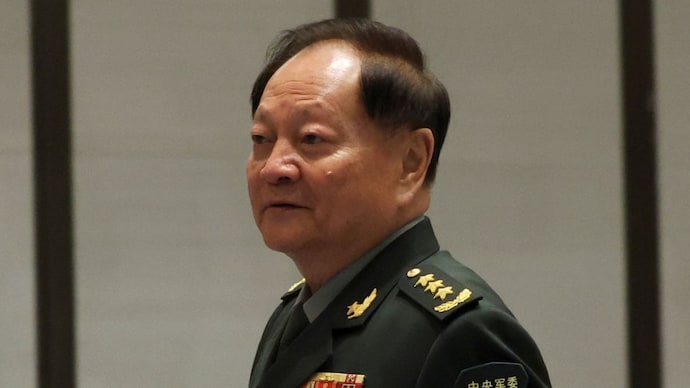

 China has expelled Generals Zhang Youxia and Liu Zhenli, two of the seniormost and experienced commanders of the People’s Liberation Army (PLA), from the Chinese Communist Party (CCP) and the military. Beijing has framed the move as part of its continuing campaign against corruption, disloyalty and violations of CCP discipline. Yet this latest purge raises a more consequential question: how much can military professionalism be sacrificed in the pursuit of absolute political loyalty?
Zhang, former vice-chairman of the Central Military Commission (CMC) and a Politburo member, and Liu, former chief of the Joint Staff Department, were among the few senior PLA leaders with direct battlefield experience. Their removal highlights a central tension in Chinese president Xi Jinping’s effort to reshape the military: building a PLA that is politically loyal and tightly controlled while preserving its ability to provide independent professional advice and make sound decisions under the pressure of war.
For India, the significance of the PLA purge lies more in what the changes could mean for China’s military decision-making along the Line of Actual Control (LAC). The 2020 stand-off between the two sides in eastern Ladakh had demonstrated how quickly tensions along the Himalayan frontier can escalate and how important command continuity, accurate intelligence and rapid military decision-making can become.
India will, therefore, be watching closely for changes in the leadership and functioning of the PLA’s Western Theatre Command, which is responsible for the LAC. Removing senior officers with operational experience could raise questions about institutional continuity, although it would be premature to conclude that the PLA’s effectiveness has been diminished. Personnel changes at the top do not necessarily translate into changes in China’s military posture on the ground.
Xi’s presidentship has effected extensive restructuring of the PLA, with political loyalty to the CCP at its core. The first phase targeted senior officers associated with networks built under previous Chinese leaderships. The removal of former CMC vice-chairmen Guo Boxiong and Xu Caihou in 2014 and 2015 dismantled powerful patronage networks within the military. Other senior commanders, including General Fang Fenghui, were subsequently investigated as part of the broader anti-corruption campaign.
Initially, many China watchers viewed the purges as an attempt to eliminate rival power centres and consolidate Xi’s control over the PLA. But the campaign eventually moved beyond officers associated with earlier factions. The removal of former defence ministers Wei Fenghe and Li Shangfu, along with investigations into senior Rocket Force commanders, demonstrated that even officers elevated during Xi’s own tenure were not immune.
The case of Zhang is particularly significant. His long association with Xi’s military network had made him one of the most politically connected senior commanders. His removal suggests that proximity to the top leadership offers no permanent protection once an officer comes under suspicion over corruption, loyalty or discipline.
But the consequences of such a purge extend beyond politics. For all the PLA’s investment in advanced weapons, training, technology and modernisation, battlefield experience remains difficult to manufacture. Zhang and Liu belong to a generation of commanders with direct experience of the 1979 China-Vietnam conflict.
Zhang is regarded as one of China’s most experienced military figures and served as an important advisor on strategic and operational matters. Liu, as chief of the Joint Staff Department, was responsible for military planning, coordination and joint operations.
That experience matters particularly for a military preparing for complex, high-intensity operations. A potential Taiwan contingency, for instance, would require the army, navy, air force, Rocket Force and supporting elements to operate together across multiple domains. Operations in contested maritime areas would demand commanders capable of coordinating large formations, adapting quickly to battlefield uncertainty and making difficult decisions when plans begin to unravel.
The removal of Zhang and Liu, therefore, leaves the PLA’s highest command structure without two officers who possessed practical knowledge of warfare. China can build more advanced weapons, expand its forces and conduct increasingly sophisticated exercises, but developing commanders with genuine combat experience is a much longer process, argue military observers.
A key military observer, who monitors the PLA closely, said the repeated purges could also affect institutional confidence and decision-making. “In a crisis, commanders must be able to respond rapidly to incomplete information and changing circumstances. Just as importantly, they must be willing to tell political leaders when an operation is unlikely to succeed, when equipment is inadequate, when logistics are vulnerable or when an adversary’s capabilities have been underestimated,” the observer said.
This is where Xi’s emphasis on political reliability creates a potentially difficult trade-off. Beijing may argue that eliminating corruption, factionalism and indiscipline will strengthen the PLA. Political loyalty and ideological unity are central to Xi’s vision of a military firmly under CCP control. But an excessively punitive political environment can also discourage commanders from delivering unwelcome assessments, say observers.
Another military expert pointed out that if officers fear that reporting failures could be interpreted as political disloyalty, they may become less willing to expose weaknesses in training, logistics, equipment or operational planning. A professional military depends on commanders who can identify problems before they become battlefield failures. It also requires a culture in which senior officers can challenge assumptions and offer alternative assessments.
“If political survival begins to take precedence over professional judgement, the information reaching the highest levels of decision-making can become incomplete or distorted. Strategic planning may then be shaped more by political expectations than by realistic assessments of military capability,” said a military expert.
For a military power preparing for possible high-intensity conflict, that can become a serious vulnerability. The PLA’s ability to mount a large-scale operation would depend not simply on the number of missiles, aircraft, ships or troops it possesses, but on command experience, coordination and leadership effectiveness. A military operation would require close integration between the Army, Navy, Air Force, Rocket Force and other supporting elements. It would involve enormous logistical demands, contested communications, rapidly changing battlefield conditions and the coordination of joint operations across multiple military branches. The loss of senior officers with operational backgrounds could, therefore, create challenges in maintaining command continuity and institutional expertise.
The larger issue is whether Beijing’s emphasis on political reliability affects the quality of military advice reaching China’s top leadership. In a border crisis, commanders need to provide realistic assessments of logistics, terrain, troop readiness and the likely consequences of escalation. If political considerations begin to outweigh professional military judgement, the risk is not simply weaker military performance but miscalculation.
Indian military experts believe New Delhi should focus less on the purge itself and more on what follows: changes in deployments along the LAC, military exercises, infrastructure development, logistics networks and the composition of senior command structures. These indicators will offer a clearer picture of whether the latest upheaval represents a temporary leadership shake-up or a deeper transformation of how the PLA prepares for and manages potential conflict.
The larger concern lies in strategic decision-making. A command structure dominated by officers primarily concerned with demonstrating loyalty may increase the risk of strategic miscalculation—not necessarily because the PLA lacks weapons or resources but because its senior leadership may receive an incomplete picture of what those weapons and resources can actually achieve in war.
The purge of Zhang and Liu, therefore, reflects the depth of Xi’s effort to maintain control over the PLA. Beijing may regard such purges as necessary to eliminate corruption, enforce discipline and ensure political reliability. But they also expose a fundamental challenge for China’s military: maintaining the balance between political loyalty and professional competence.
The PLA has undergone rapid modernisation. Experts believe it possesses advanced technology, expanding capabilities and significant resources. Yet military power also depends as much on experienced commanders, accurate assessments, institutional confidence and the ability to make sound decisions under pressure.
Xi has spent more than a decade reshaping the PLA in his image. The bigger test now is whether that politically unified military can retain the professional expertise required to fight a real war. The long-term impact of the latest purge will depend on whether China can maintain both political loyalty and genuine military competence at the highest levels of its armed forces.
Subscribe to India Today Magazine