
Why BJP MP Mahima Kumari's no to Kumbhalgarh tiger reserve is unfashionable, not illogical
The Rajsamand MP is questioning not just a wildlife project but the broader political trend of equating tiger reserves with conservation success

 Few wildlife projects in India enjoy greater political consensus than creating a new tiger reserve. It promises central funding, boosts a state’s conservation credentials, attracts tourism and becomes a symbol of environmental commitment. Politicians across party lines usually compete to claim credit for bringing tigers to a landscape.
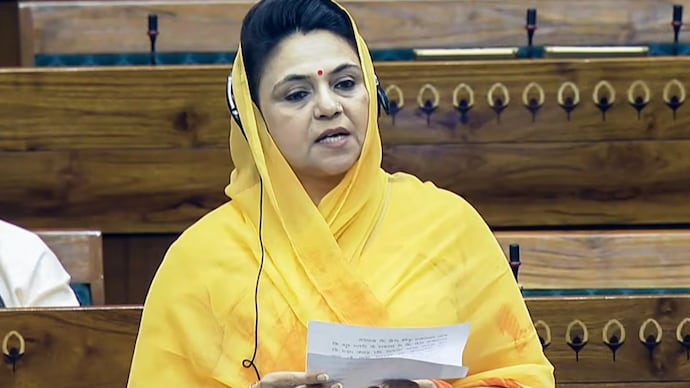
That is why the BJP’s Rajsamand MP and daughter-in-law of erstwhile Mewar dynasty Mahima Kumari’s sustained opposition to the proposed tiger reserve in Kumbhalgarh Wildlife Sanctuary stands out.
Mahima Kumari’s predecessor MP Diya Kumari (who is now Rajasthan deputy chief minister) had mooted the proposal to introduce tigers in Kumbhalgarh. Around the same time, Lok Sabha speaker Om Birla had proposed a tiger reserve in his constituency of Bundi-Kota—the Ramgarh Vishdhari Tiger Reserve followed. And before that, Vasundhara Raje, as then chief minister of Rajasthan, got the Mukundra sanctuary declared as a tiger reserve in son Dushyant Singh’s Jhalawar-Baran Lok Sabha constituency.
In a June 19 representation to Union environment, forest and climate change minister Bhupender Yadav, Mahima Kumari has urged the Centre to reconsider the approval for the Kumbhalgarh project, arguing that the region’s ecological identity should not be rewritten merely because tigers are India’s most celebrated conservation symbol.
Many find this an unusual political position, but Mahima Kumari has consistently argued that conservation should begin with understanding an ecosystem rather than trying to reshape it.
Expert opinion, including from the state’s forest and wildlife officials, has highlighted the risks of shifting tigers, posed from scarcity of buffer forest area and prey base. Both Mukundra and Ramgarh Vishdhari Tiger Reserves have claimed the lives of several tigers and cubs. On the contrary, the reintroduction of tigers to Sariska was a success because it is an ecosystem where tigers had thrived before disappearing in early 2000.
Mahima Kumari’s first argument is historical. Drawing upon records from the erstwhile Mewar state, she contends that Kumbhalgarh was never a natural breeding habitat for tigers. Historical references, she says, relate only to migratory tigers that occasionally crossed into the region from areas such as Ramgarh before moving on. Even when Mewar’s forests extended over nearly 12,000 sq km in the early 20th century, records do not identify Kumbhalgarh as a resident tiger landscape.
“If tigers never established a permanent population [in Kumbhalgarh] when the forests were denser than they are today, what makes the sanctuary a natural tiger habitat now?” she questions.
Mahima Kumari’s second argument shifts the focus from tigers to biodiversity. Kumbhalgarh, she says, is already one of India’s richest leopard landscapes, while also supporting wolves, striped hyenas, sloth bears, caracals, four-horned antelopes and several other species. In her view, the conservation policy should protect this existing ecological balance instead of concentrating overwhelmingly on a single charismatic species. “Not every sanctuary needs a tiger” is her philosophy.
Mahima Kumari also questions whether Kumbhalgarh is physically suited for a tiger reserve. The sanctuary, even after expansion, covers about 610 sq km—significantly smaller than Rajasthan’s established tiger reserves at Sariska and Ramgarh Vishdhari. Several stretches are barely 4 km wide and, she notes, the landscape is not connected to an established tiger corridor, raising concerns over long-term genetic exchange and the sustainability of any introduced tiger population.
The MP also argues that conservation cannot be separated from the people who have historically lived alongside forests. Mahima Kumari notes that Bhil, Garasia, Raika and other forest-dependent communities that have protected Kumbhalgarh for generations now face displacement, restrictions on grazing and increasing administrative pressure in the name of conservation and tourism.
Traditional grazing, she argues, has long played an ecological role by reducing dry vegetation that could otherwise fuel forest fires while naturally enriching forest soils through animal manure. Removing these practices without adequately considering their ecological function could produce unintended consequences.
Perhaps Mahima Kumari’s strongest criticism is directed at what she describes as the growing tendency to link conservation with tourism-led development. According to her, the proposed tiger reserve risks becoming more of a tourism project, eventually encouraging commercial development that could undermine the very ecosystem it claims to protect.
The BJP leader’s warning echoes concerns raised by some conservationists because Kumbhalgarh has already witnessed unregulated and massive invasion of hotels and associated infrastructure. Her conclusion is blunt: “The objective of conservation should be to protect ecosystems, not redesign them to fit a particular narrative.”
There is, of course, another side to the debate. Wildlife authorities argue that expanding tiger habitats is essential for India’s long-term conservation strategy. Tiger reserves often secure greater protection for forests, attract conservation funding and create economic opportunities through eco-tourism. Government agencies also maintain that scientific assessments underpin decisions to notify new reserves.
In an era when announcing a new tiger reserve is politically far easier than questioning one, Mahima Kumari’s stand is unusual precisely because it challenges an increasingly popular political narrative—that every forest becomes more valuable once it has tigers.
Subscribe to India Today Magazine