US unstable, India-China can shape new world order, says top American economist

Top economist Jeffrey Sachs asserted that China's stakes in India's success were enormous, and it is a key reason why President Xi Jinping was coming to Delhi for the BRICS Summit.
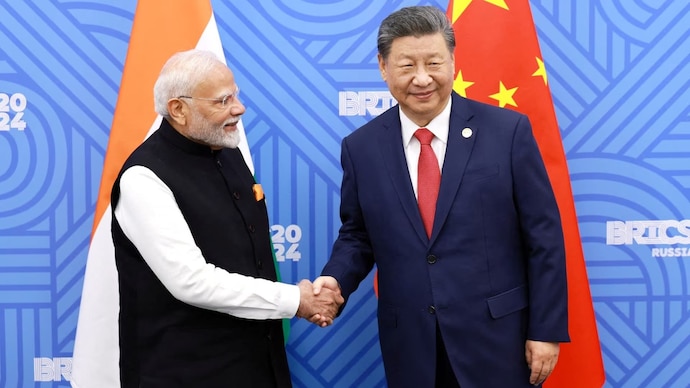

Batting for close between India and China, top American economist Jeffrey Sachs argued that the two countries could shape a "new world order" as the US becomes increasingly "unstable". Speaking at the India Today BRICS Roundtable 2026, Sachs emphasised that, contrary to perception, China's stakes in India's success were enormous, and it is a key reason why President Xi Jinping was coming to Delhi for the BRICS Summit.
India is set to chair its fourth BRICS Summit in New Delhi on September 12-13, the biggest global event since it hosted the G20 in 2023. A hallmark will be the bilateral meeting between Prime Minister Narendra Modi and Chinese President Xi Jinping. This will be Xi's first India visit in seven years and comes against the backdrop of a gradual thaw in ties following the deadly Galwan border clash.
'INDIA SHOULD QUIT QUAD'
Sachs underlined that closer ties between the two Asian powers could help build a more balanced and multipolar global system. He went as far as to assert that India should leave the Quad to focus on strengthening its ties with China. The Quad is an informal grouping of the US, India, Japan and Australia that was formed to counter China's influence in the Indo-Pacific region.
"China's stakes in India's success are enormous. US is bearing down on China. This won't work. The US can no more gets it way," Sachs said.
The noted economist also pushed back against the idea that India's rise necessarily depends on countering China. While Sachs acknowledged issues like the border dispute and wider concerns surrounding China's ties with Pakistan, he said both countries had a major stake in improving relations.
"India is on a rapid development trajectory. India is not threatened by China," Sachs said.
At the same time, Sachs acknowledged that China itself was not in a position to replace the US or Britain as a singular global hegemon.
"China is in no position to run the world, like Britain or the US. We are in a world of multiple powers, where India is one," he said.
That, Sachs suggested, is precisely why India could be an important partner for China in reshaping the global order. "India is a great partner in remaking the world in a better way. That's why Xi is coming to India," he said.
'US DELUSION BIGGEST DANGER'
Sachs asserted that the "biggest danger" facing the world was American delusion. "We are in a multipolar world. The US has a unilateral mindset. This is a dangerous mindset," he underlined.
Calling India one of the "four superpowers" in the world today, he said they need to learn to coexist rather than compete for unilateral dominance.
Sachs argued that the US should not dictate to a country which nations it can trade with. This message needs to go out to the US from the BRICS Summit, he stressed.
"The BRICS needs to say we are not anti-West, but anti-imperialism. The US can't dictate to India on doing business with Iran or Russia. The BRICS is big enough to tell the US to calm down," he said.
THREE PRIORITIES FOR BRICS SUMMIT
As India gears up to host the BRICS Summit, Sachs listed three priorities for the grouping.
Firstly, Sachs said BRICS should take on a more assertive role in defending the multilateral system, particularly the United Nations. At the same time, the bloc should send a clear message against a "hegemonic world order".
"The BRICS should be a defender of the multilateral system. Its role should be to stand up and say we won't accept a hegemonic world," Sachs said.
Secondly, Sachs said the BRICS should call on the US to "back off" from the Iran war and oppose unilateral military interventions.
Thirdly, he called for the creation of a multi-currency payment system that would limit the US's ability to impose unilateral sanctions.