
Pakistan's space push with China, Turkey help concern for India: Defence chief

The Chief of Defence Staff flagged Pakistan's growing space capabilities, backed by China and potentially Turkey, stressing the need for India to accelerate the development of its own space-based military assets to maintain a strategic edge.
 Last UpdatedNov 28, 2026 09:59 IST
 Published byWritten ByShipra Parashar
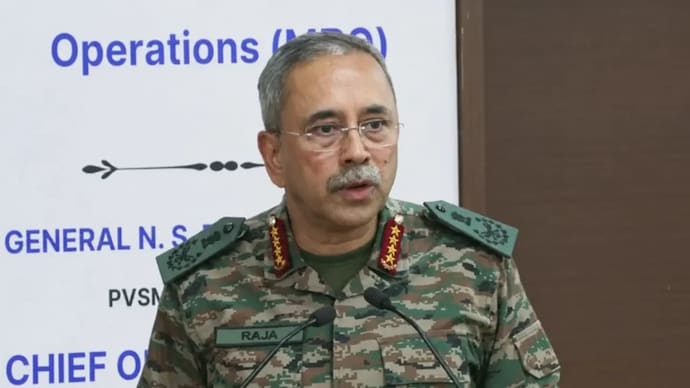
Pakistan's expanding space capabilities, backed by China and potentially Turkey, have emerged as a security concern for India, with Chief of Defence Staff (CDS) General NS Raja Subramani on Friday stressing the need for New Delhi to accelerate the development of its own space-based military assets.
Flagging the growing technological and military cooperation between Islamabad and Beijing, General Subramani said Pakistan was not merely relying on Chinese assistance but was also working to develop indigenous space capabilities through its Space and Upper Atmosphere Research Commission (Suparco).
Turkey, he said, could emerge as another source of technological assistance for Islamabad.
“Pakistan’s space capability is improving with Chinese help. Also, Pakistan’s Suparco (Space and Upper Atmosphere Research Commission) is working to develop its own capability. Now we also have to take for granted that it will be aided by the Turkish too," the CDS said, while addressing a session titled 'Future of Warfare and India's Preparedness to Conduct Multi-Domain Operations'.
The concern, the CDS pointed out, extends beyond Pakistan's ability to launch satellites. Islamabad could potentially draw upon China's advanced capabilities in intelligence, surveillance and reconnaissance (ISR), as well as positioning, navigation and timing systems, significantly enhancing its battlefield awareness and military capabilities.
"Any capabilities available to China in areas such as ISR, positioning, navigation and timing could potentially be leveraged by Pakistan. This is something India must take into account in its strategic planning," he said.
General Subramani, however, said India's space capabilities should not be directly compared with China's.
"Neither should we plan nor compete to try and get whatever China has got. We need to have enough to look at our borders and the ability to reduce that revisit time; those calculations have been done, and we are looking at launching an adequate number of satellites," he said.
General Subramani added that India needed to strengthen its military capabilities in space, pointing to the Space Based Surveillance (SBS) Phase-III programme to expand the country's surveillance and reconnaissance network.
Under the Rs 26,968-crore programme, India plans to deploy 52 dedicated military satellites over the next three years, strengthening its space-based defence infrastructure.
Approved by the Cabinet Committee on Security in October 2024, the project will be implemented under the aegis of the Defence Space Agency and Headquarters Integrated Defence Staff.
Of the 52 satellites, 21 will be built and launched by the Indian Space Research Organisation (ISRO), while private-sector firms will be responsible for the remaining 31, reflecting the industry's growing role in India's national security architecture.
The CDS also flagged China's growing space capabilities, including its development of technologies that can disrupt or target satellites.
Beijing is widely believed to possess anti-satellite systems and electronic warfare technologies capable of interfering with satellite communications and navigation networks.

Shipra Parashar is a Chief Sub-Editor at India Today, covering politics, national affairs and international developments. With over six years of experience across print and digital newsrooms, she has worked with publications including Financial Express, Zee News, The Pioneer and India News. An alumna of the Asian College of Journalism and Delhi University, Shipra has a keen interest in political developments, infrastructure and stories that shape everyday lives. When she is not in newsroom, she can be found talking about politics and trending topics over a cup of coffee or planning her next trip.
READ MORE