Delhi Lakshmi Yojana deposits locked till 2029, maturity period open to review
Under the scheme, eligible women will receive Rs 2,500 every month. Of this, Rs 1,500 will be deposited in a recurring deposit account, while Rs 1,000 will be transferred through a Central Bank Digital Currency (CBDC) wallet.

The Delhi government's Delhi Lakshmi Yojana will keep recurring deposits locked in until July 31, 2029, though the Council of Ministers can review and change the maturity period two years after the scheme's launch, according to an official document. The current maturity date falls in the year of the next Lok Sabha election.
"The Council of Ministers will have the power to review and change the maturity period of recurring deposits under the Delhi Lakshmi Yojana after two years of its launch," the document said.
Under the scheme, eligible women will receive Rs 2,500 every month. Of this, Rs 1,500 will be deposited in a recurring deposit account, while Rs 1,000 will be transferred through a Central Bank Digital Currency (CBDC) wallet linked to the beneficiary's bank account.
Women can also choose to have the entire Rs 2,500 deposited every month in a recurring deposit account through the selected banking partner. The deposits will earn interest at the prevailing rate.
RESTRICTIONS ON HOW RS 1,000 CAN BE SPENT
The Rs 1,000 transferred through the CBDC wallet will come with spending restrictions.
According to the document, the money cannot be used to purchase items on the scheme's negative list, including alcoholic beverages, tobacco products, narcotic drugs and psychotropic substances. It also cannot be spent on lottery tickets, gambling or betting.
NO AADHAAR? WOMEN CAN STILL REGISTER
The scheme also provides alternatives for women who do not have an Aadhaar card.
Such applicants can register using an Aadhaar enrolment slip, where available, along with another identity document such as a PAN card, ration card, voter identity card, passport or driving licence.
The Women and Child Development Department will help beneficiaries without Aadhaar enrol through its district offices while they complete their registration under the scheme.
The document also provides alternatives in cases where Aadhaar authentication fails because of poor biometric quality or other reasons. Beneficiaries can use iris or face authentication or an Aadhaar-based OTP.
If these methods also fail, benefits may be provided after verification through a physical Aadhaar letter carrying a QR code.
WHO IS ELIGIBLE?
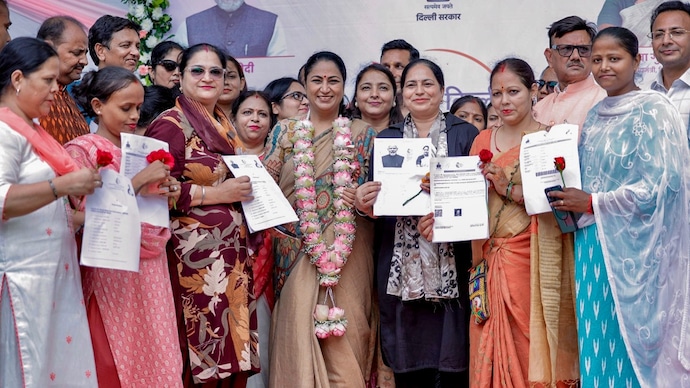
The Delhi government formally launched the Delhi Lakshmi Yojana on August 26, with the first monthly disbursements scheduled from September 1. Around 4,000 beneficiaries received sanction letters on the day of the launch. The government aims to cover up to 17 lakh eligible women.
To qualify, an applicant must be between 21 and 60 years old and the eldest female member of her family. Only one woman from each household can receive the benefit, and the family's annual income cannot exceed Rs 2.5 lakh.
The applicant, her husband or her parents must also have lived in Delhi for at least 10 years, while the applicant must be a registered voter in the capital.
Income-tax payers, GST filers and government employees are excluded. Families consuming more than 2,400 units of electricity annually or owning a four-wheeler are also not eligible.