
Law must not be weakened at any cost: Punjab CM Bhagwant Mann on anti-sacrilege law

Bhagwant Mann met a government panel reviewing objections to Punjab's anti-sacrilege law alongside Akal Takht concerns. He said consultations may refine provisions, but life imprisonment and heavy fines for beadbi must stay.
 Last UpdatedSep 27, 2026 23:22 IST
  Published by
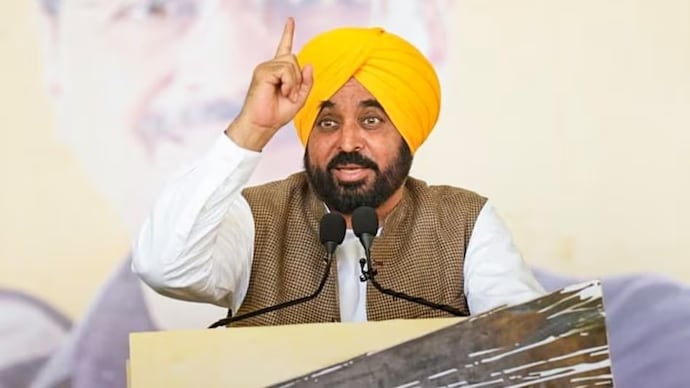
Punjab Chief Minister Bhagwant Mann on Sunday said the Akal Takht is supreme for "all of us" and reiterated that his government will leave no stone unturned to protect the sanctity and dignity of the Guru Granth Sahib through the strongest possible legal framework against sacrilege.
At a meeting with a seven-member committee set up by the Punjab government to discuss amendments to an anti-sacrilege law passed in April, Mann said life imprisonment and heavy fines for those who commit 'beadbi' form the core of the law and cannot be diluted.
The meeting discussed the Jaagat Jot Sri Guru Granth Sahib Satkar (Amendment) Act, 2026, objections raised over some provisions, and the way forward through consultation and consensus, according to an official statement.
Mann asked the committee to hold detailed and regular meetings with the panel set up by the Akal Takht to review the proposed amendments, consider its suggestions and work towards a consensus, while ensuring that the law continues to provide the strongest possible protection to the sanctity of the Guru Granth Sahib and brings solace to the "deeply hurt sentiments of the Sikh Sangat".
"The spirit and core objective of the law must not be compromised while discussing its provisions with the panel constituted by the Akal Takht. The provisions prescribing life imprisonment and heavy fines for perpetrators of sacrilege constitute the core foundation of this law. Therefore, the law must not be weakened at any cost," Mann said.
He said the government's only objective is to ensure the strictest possible punishment for those guilty of sacrilege so that no person ever dares to commit such a grave offence.
Mann said certain concerns had been raised about some provisions of the Act and that the government had therefore formed a seven-member committee of eminent intellectuals and legal experts to examine them.
"The proposed amendments will be discussed comprehensively so that an amicable resolution is reached after taking into consideration all legal, constitutional and other relevant aspects," he said.
He added, "I have asked the committee members to hold meetings with the panel constituted by the Akal Takht Sahib so that, through mutual consultation and consensus, necessary amendments to the law can be initiated, if required. Our government will approach this entire process with utmost respect and sensitivity."
The chief minister said the state's objective was clear: the sanctity of the Guru Granth Sahib must remain fully protected and the law must effectively serve its purpose. He expressed hope that the committee's deliberations would lead to an outcome in line with the sentiments of the Sikh Panth and further strengthen the legal framework for protecting the sanctity of the Guru Granth Sahib.
Those present at the meeting included former Akal Takht jathedar Giani Raghbir Singh, Baba Sahib Singh representing Damdami Taksal, and Sant Baba Sewa Singh Rampur Khera.
The Punjab Assembly had unanimously passed the Jaagat Jot Sri Guru Granth Sahib Satkar (Amendment) Bill, 2026, on April 13. It received the governor's assent on April 17 and was notified as an Act soon after. The Akal Takht later objected to several parts of the law, especially Sikh terminology, the use of the term "custodian" for the religious text, and the assigning of unique numbers to holy "Birs".
Akal Takht Jathedar Giani Kuldip Singh Gargajj on June 29 asked the state government to address these objections within a month. On July 30, Gargajj described the Punjab government's response as "unsatisfactory" and announced a five-member committee to engage with the AAP government on the issue.