Saubhagya: How Uttar Pradesh led India's last-mile rural electrification drive

Saubhagya focused on taking electricity from village infrastructure to individual households across India. Uttar Pradesh's 91.8 lakh connections showed how central the state was to the scheme's last-mile push.
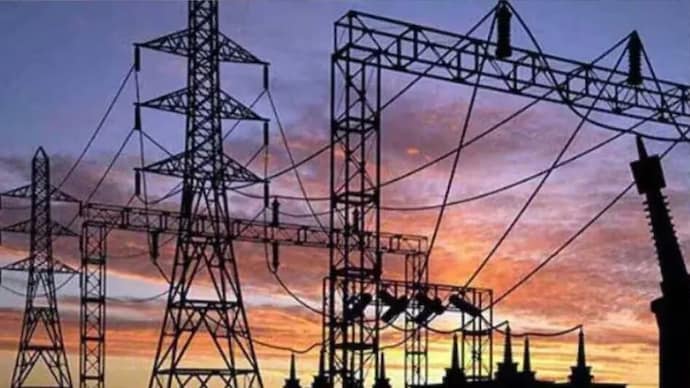

For millions of Indian households, the problem was not whether electricity had reached their village. It was whether it had reached their doorstep.
That was the gap the Centre sought to close with the Pradhan Mantri Sahaj Bijli Har Ghar Yojana, or Saubhagya, launched in September 2017. The scheme aimed to provide electricity connections to households that remained outside the formal power network, with a particular focus on poor and rural families.
By the time the scheme closed in March 2022, the government said 2.86 crore households across India had been electrified under Saubhagya.
Uttar Pradesh accounted for the largest share.
What Saubhagya set out to do
Prime Minister Narendra Modi announced Saubhagya on September 25, 2017, with an initial target of completing household electrification by December 2018. The deadline was later extended to March 2019.
The scheme was backed by a central outlay of 16,320 crore.
Its focus was different from simply expanding the electricity grid. The last stretch — taking a connection from existing infrastructure to an individual home — remained a major barrier in many parts of the country.
Under Saubhagya, households identified as poor through the 2011 Socio-Economic and Caste Census were eligible for a free electricity connection. Other households could also receive a connection by paying 500, with the amount recoverable in instalments through electricity bills.
The package was designed to cover the basic requirements of a household connection. It included a service cable from the nearest electricity pole, an energy meter, wiring for a single light point, an LED bulb and a mobile charging point.
The original deadline was ambitious. By March 2019, the government reported that all willing un-electrified households identified up to that point had received connections.
But the programme did not end there.
Seven states — Assam, Chhattisgarh, Jharkhand, Karnataka, Manipur, Rajasthan and Uttar Pradesh — subsequently identified households whose residents had initially declined electricity connections but later opted in. Together, these states connected another 18-19 lakh households.
Saubhagya was formally closed on March 31, 2022.
By then, the government said it had electrified 2.86 crore households across the country. Projects worth 14,082 crore had been sanctioned under the scheme, with a central grant of 6,305 crore released.
Uttar Pradesh carried the biggest load
No state connected as many households under Saubhagya as Uttar Pradesh.
The state provided electricity connections to more than 91.8 lakh households, putting it well ahead of Bihar, which recorded around 32.6 lakh connections. Odisha followed with about 24.5 lakh and Assam with around 23.3 lakh.
The scale becomes clearer when the starting point is considered.
Uttar Pradesh had the largest number of un-electrified households in the country when Saubhagya was launched. Its position at the top of the final connection numbers therefore reflects both the size of the problem and the scale of the subsequent rollout.
For the state, Saubhagya was less about connecting a handful of remote homes than about taking electricity to millions of households that had remained outside the formal electricity network.
That made Uttar Pradesh central to the success of the national programme.
From village electrification to household connections
Saubhagya also marked a shift in how India's electrification progress was measured.
Having an electricity line reach a village did not necessarily mean every household in that village had a connection. The last-mile challenge remained at the household level.
Saubhagya was designed around that final connection.
The programme's numbers therefore capture something more specific than the expansion of India's transmission or distribution network: the number of individual households brought into the electricity system.
Uttar Pradesh's 91.8 lakh connections show the scale of that final-mile challenge in the country's most populous state.
The scheme ended in 2022, but its legacy lies in that transition — from asking whether a village had electricity infrastructure to asking whether individual households could actually plug into it.