One year to act: Sonam Wangchuk's ultimatum to Modi govt on Ladakh demands

Sonam Wangchuk has given the Centre a year to lay out Ladakh's roadmap. He said the demand is tied to democratic accountability, local control and environmental urgency.
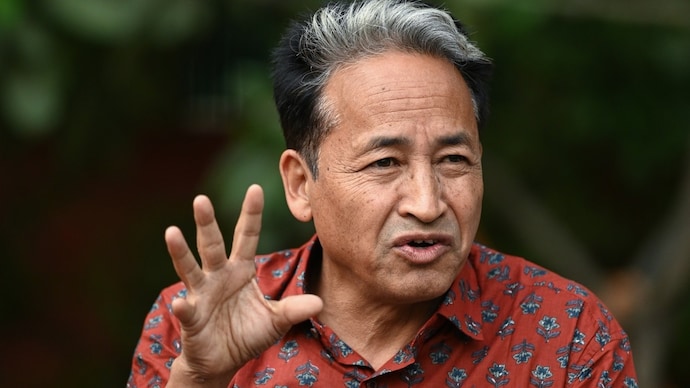

A year. That is the deadline innovator, educational reformer, and environmentalist Sonam Wangchuk has given the Narendra Modi-led central government to act on Ladakh’s long-pending political demands — and set the Union Territory on the path towards an elected government.
In an exclusive interview with India Today, Wangchuk said he expects the Centre to introduce and pass a Ladakh bill in Parliament during the upcoming winter session. The next year, he said, should see the formation of an assembly and Ladakh’s own government.
For Wangchuk, the question is not merely about statehood. It is about who gets to decide how Ladakh is governed.
He questioned the Centre’s decision to take major administrative decisions even before an elected assembly has come into being. “What is bothering Ladakh is that big administrative decisions are taken even before the assembly has come into being,” he said, arguing that such decisions should wait until a people’s assembly is in place.
“Our people's assembly has to be supreme,” Wangchuk said. He argued that bureaucracy, law and order, financial powers and decisions on how Ladakh is governed should ultimately come under the elected representatives of the region.
But Wangchuk also appeared to climb down from the demand for immediate statehood, saying Ladakh could not expect to get everything “in the first go”. He said the region was willing to accept a “tailor-made democratic set-up” for now, particularly since it has been told that Ladakh is not yet financially self-reliant.
He said Ladakh could use the intervening years to strengthen its economy and learn to govern itself before pursuing full statehood. “We can take time, learn, economy becomes self-reliant and maybe five or 10 years down the line we can become a state,” he said.
What he wants from the Centre immediately, however, is a clear political roadmap — and he has put a one-year deadline on it.
WANGCHUK CRITICISES OPENING LIQUOR SHOPS IN LADAKH
Wangchuk was equally critical of the reported move to open new liquor shops in Ladakh, particularly at a time when the administration is grappling with concerns over drug abuse among young people.
“To bring liquor as an answer to the drug problem is undigestible,” he said. If the administration cannot tackle the drug menace, he argued, introducing alcohol would only “add more fuel to the fire."
Wangchuk also made a controversial comparison with China’s policies in Tibet while explaining his concerns about alcohol and drugs in Ladakh.
He said the liquor push was being viewed as an attempt to keep the youth distracted through alcohol and drugs, drawing a parallel with what he alleged was happening in Tibet. The concern, he said, was that a disengaged youth would be less likely to question government policies or resist decisions affecting the region.
HAS GEN Z DENTED THE ‘INVINCIBILITY’ OF MODI GOVERNMENT?
Wangchuk, who took part in the recent Jantar Mantar protest led by the Cockroach Janta Party (CJP) and also observed a 25-day-long hunger strike, with the demand for major educational system reform, also spoke about the recent Gen Z protests and whether they have dented the perception of the Modi government as politically invincible.
He pushed back against the very idea of “invincibility” in the Indian context, saying the term was more appropriate for authoritarian regimes such as China or North Korea. India, he said, is a democracy, and the bigger issue is whether the government has become inaccessible to its people.
He argued that the protests and people coming out to express their anger could be signs of a healthy democracy rather than a threat to the government. He said the ruling establishment had, at some point, begun celebrating a perception of invincibility instead of remaining rooted in democratic engagement.
According to Wangchuk, that inaccessibility has now begun to decline — something he sees as a positive development even for the ruling party.
For Wangchuk, the protests at Jantar Mantar represented precisely the kind of public expression that can prevent a larger political rupture. He pointed to Bangladesh, Nepal and Sri Lanka as examples of what can happen when public anger builds up without adequate democratic channels to release it.
“To avoid that, what happened at Jantar Mantar is a glorious thing,” he said.
IT IS ALREADY LATE FOR US
The conversation then moved from politics to the issue Wangchuk has spent years raising — the fragile Himalayan ecosystem.
Reflecting on the recent catastrophe in Nepal and the lessons it holds for India, Wangchuk delivered a stark warning: the country cannot afford to wait any longer before addressing its environmental vulnerabilities.
“It’s already late for us,” he said. “We are in a disaster zone.”
Wangchuk said he was disheartened by India’s poor standing on global environmental indicators despite the country being located in some of the most vulnerable environmental hotspots on the planet.
The Himalayas, he stressed, are not merely a remote mountain ecosystem. They are a source of life for nearly a quarter of the world’s population. What happens to the mountains, therefore, has consequences far beyond Ladakh or the Himalayan region.
He pointed to the worsening conditions in the plains as another warning sign, arguing that India is already experiencing the consequences of environmental degradation.
For Wangchuk, that makes India’s environmental choices particularly consequential. A country facing some of the world’s greatest ecological vulnerabilities, he suggested, cannot afford to postpone difficult decisions on development, sustainability and climate resilience.
From Ladakh’s political future to liquor policy, the Gen Z protests and the ecological crisis in the Himalayas, Wangchuk’s message remains rooted in one broad demand: greater accountability — from those governing the country and those making decisions for the people living in its most vulnerable regions.