Udan enters new phase with state-led airport selection, longer funding support

The modified Udan scheme will prioritise state-identified high-potential airports, revive underserved routes, extend viability gap funding from three to five years and fast-track projects with an 18-month completion target.
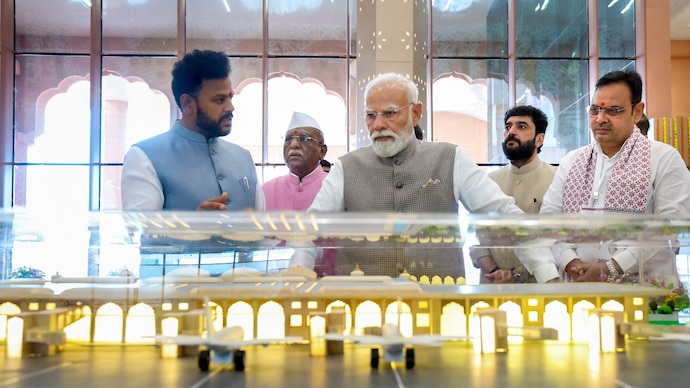

The next phase of the regional air connectivity scheme Udan will give state governments a greater role in identifying high-potential airstrips and aerodromes for development, Civil Aviation Minister Ram Mohan Naidu said on Tuesday, as 21 states signed MoUs with the Centre for its implementation.
Naidu said the scheme, drawing on experience and learning from the previous phase, was being extended for another 10 years. He said 90 airports had been built under Ude Desh ka Aam Nagrik (Udan) in the last 10 years, while projects under the next phase would now be completed within 18 months.
The next phase, being implemented under the modified Udan scheme, marks a shift towards greater participation by state governments. States have been asked to identify and suggest high-potential airstrips and aerodromes in their respective regions. These projects will be prioritised for development and capacity building, while other airports will be developed in a phased manner.
Naidu also said heliports would be constructed under the scheme, particularly in the Northeast and hill states. He added that the country had reached a stage where it could build its own aircraft and said the maintenance, repair and overhaul (MRO) sector was developing.
According to the minister, MoUs are being signed between the Ministry of Civil Aviation (MoCA) and state governments. A major change in the scheme is that state governments will now identify and suggest high-potential airstrips and aerodromes that could be developed under the programme.
The role of states will therefore extend beyond facilitating projects. Based on inputs from state governments, the Ministry of Civil Aviation will execute the projects, while the states will be responsible for facilitating key requirements such as land allocation and acquisition, road infrastructure, last-mile connectivity, security and clearances from fire services and local authorities.
The Ministry of Civil Aviation, meanwhile, will be responsible for better funding, institutional support and the policy framework for the projects.
Officials described the approach as a "Challenge Mode", under which state governments will identify locations where airports need to come up. Bihar's Purnea was cited as an example where passenger demand was high, making the project more feasible.
The identified airstrips and aerodromes will be prioritised for development, while other airports will continue to be developed in phases. The objective is to ensure that the work is completed within a defined timeline and in a streamlined manner, while also ensuring that the airports remain operational.
REBOOT FOR UNDERSERVED UDAN AIRPORTS
Udan was launched in 2016 with the aim of providing air connectivity to districts and remote locations, connecting new tourist destinations and improving access to healthcare and business.
Under the scheme, more than 687 air routes and 97 airports were connected. However, officials said the implementation of the scheme also provided important learnings from airports such as Kushinagar and Moradabad in Uttar Pradesh, where airline operations are no longer taking place after the airports shut down.
Under modified Udan, the government has launched a "reboot" for such underserved airports. These airports will be identified by state governments and the Ministry of Civil Aviation, following which the routes will be reallocated to airlines.
The first phase of modified Udan is aimed at strengthening regional connectivity by developing new airports as well as reviving underserved airports launched under the original scheme.
FUNDING SUPPORT EXTENDED TO FIVE YEARS
Another key change under modified Udan is the extension of the viability gap funding (VGF) support period from three years to five years.
VGF is the financial support provided by the Centre to airlines operating flights on Udan routes. The extension is aimed at providing greater financial support and hand-holding to routes during their initial years of operation.
Officials said one of the key lessons from the earlier Udan scheme was that several routes shut down after VGF support ended, as passengers were unwilling to pay higher airfares.
Under the revised VGF model, the government aims to introduce a staggered increase in costs. The idea is that if fares rise gradually over the two years following the initial three-year window, passengers will not face a sudden cost shock.
Separate consultations are also being held with airline operators on route identification. Officials said airlines were being consulted because their investments and assets would be involved in operating the routes, and their inputs would be considered while identifying viable routes.
The modified Udan scheme is thus intended to combine greater state-level participation with enhanced financial support, a streamlined project implementation process and efforts to revive routes and airports that became non-operational under the earlier scheme.