
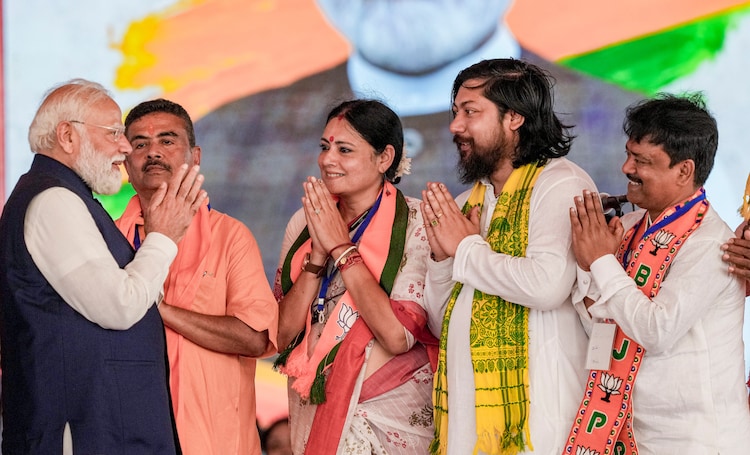
Suvendu Adhikari govt's 150 days: Has anything changed in West Bengal?

It has been 150 days since the first BJP-led government in West Bengal was sworn in. The BJP promised change to end the 15-year rule of Mamata Banerjee's Trinamool Congress. With Suvendu Adhikari at the helm now, has West Bengal really changed? Here's a 360-degree view.
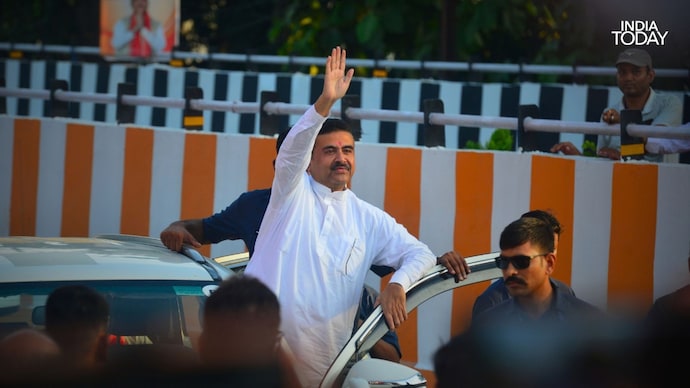
Suvendu Adhikari is the first BJP Chief Minister to take charge of West Bengal. (Image: Getty)
New Delhi,Oct 5, 2026 11:16 IST Last UpdatedOct 5, 2026 11:16 IST
  Published by
Last UpdatedOct 5, 2026 11:16 IST Published byShounak Sanyal
Oct 5, 2026 06:30 ISTFor 15 years, Trinamool Congress (TMC) chief Mamata Banerjee seemed to be in complete control of the political situation in West Bengal. The question that was asked in those years was: can Mamata be dislodged from the Chief Minister's chair? On May 4 this year, that question was answered with a saffron sweep. The Bharatiya Janata Party (BJP) won 207 of the 294 Assembly seats, and formed the government in West Bengal for the first time. Suvendu Adhikari was sworn in as Chief Minister on May 9.
Now, 150 days later, the state is confronting a different question. It is no longer whether Bengal can change governments, but whether it has changed its governing culture.
There is plenty the Suvendu Adhikari-led government can point to as evidence that its promise of poriborton (change) to Bengal has begun to take shape in the BJP-led government's first 150 days.
"No administration in the history of West Bengal has worked as swiftly as the Suvendu Adhikari-led administration has since coming to power," Rajya Sabha MP and former West Bengal BJP president Rahul Sinha told India Today Digital.
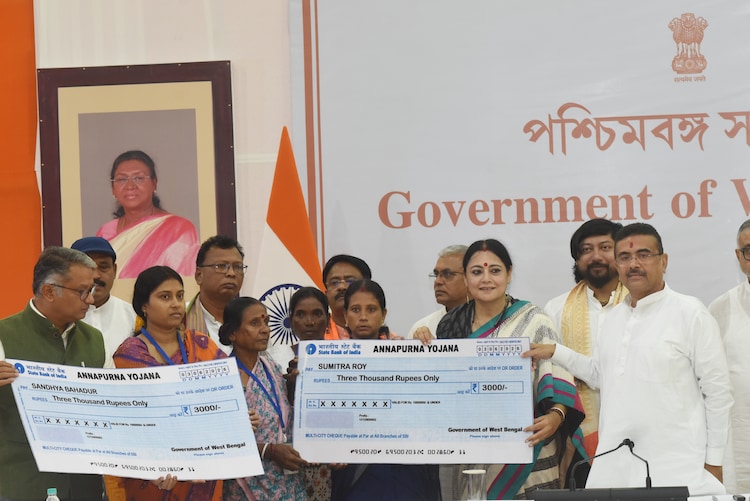
The BJP points to the rollout of Annapurna Yojana, which has put Rs 3,000 a month in the accounts of around 1.5 crore women, the implementation of Ayushman Bharat in the state, the first full budget's promise of 1 lakh government recruitments and a Rs 36,000-crore allocation for Annapurna Yojana, besides a renewed push to attract big-ticket investments.
But can announcements alone settle the verdict? According to political experts, the BJP government's first 150 days present a complicated picture. The party is set to face its first major test on October 6, when West Bengal votes in bypolls for Nandigram, a long-time Adhikari family stronghold, and Rejinagar, a Muslim-majority constituency vacated by Humayun Kabir.
WHAT THE BJP HAS CHANGED AFTER COMING TO POWER IN WEST BENGAL
The BJP entered Nabanna (State Secretariat of West Bengal) promising an end to what it called the TMC's culture of cut money, syndicates, stalled central schemes and hooliganism. The first visible and major sign of change has been the Suvendu Adhikari-led government's push to rework welfare and implement schemes that were previously limited in Bengal.
Annapurna Yojana is the most visible example. The scheme replaced and restructured the TMC government's flagship Lakshmir Bhandar programme. Under the official notification of the Annapurna Yojana, eligible women aged 25 to 60 receive Rs 3,000 a month through Direct Benefit Transfer (DBT), while existing Lakshmir Bhandar beneficiaries were to be migrated to the new scheme after verification.
By September, the government claimed that about 1.5 crore women were receiving the fourth instalment. But the rollout has not been seamless, with reports of delayed or pending payments and continuing verification drives. There have also been protests in September over delayed payments and exclusion of beneficiaries.
Kolkata-based political analyst and author Sayantan Ghosh told India Today Digital that the government's intent is visible, even if the execution is uneven.
"The intention of building West Bengal is clearly seen in the 150 days of the government," Ghosh said, adding, "The level of intent shown by the Suvendu government is also resonating on the ground. Yes, people are speaking and acknowledging that something is happening, that there are some changes."
But the welfare story cuts both ways. Ghosh said the Annapurna Yojana had not reached everyone who earlier received money from the Lakshmir Bhandar scheme.
The BJP did not simply promise continuity. It promised more money with cleaner delivery. The question is whether verification is cutting out fraud while protecting genuine beneficiaries, or creating a new layer of exclusion.
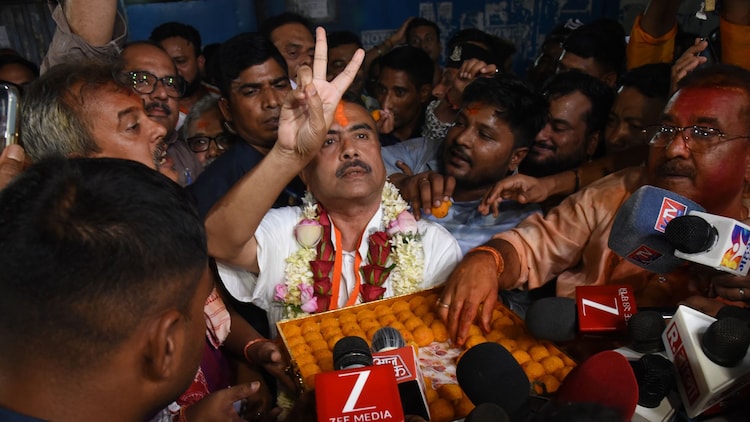
BJP'S FIRST 150 DAYS IN BENGAL: HINDUTVA AND UCC
One factor that sets Suvendu Adhikari apart from previous West Bengal chief ministers is his highly visible association with Hindu religious identity and promises like the implementation of the Uniform Civil Code (UCC) in the state.
Soon after taking office, he met Ramakrishna Mission president Swami Gautamananda Maharaj and other senior monks at Belur Math, later returning for Guru Purnima. He also visited Iskcon's Mayapur headquarters, performed gau puja and met its leaders.
Since May 4, Adhikari has made a series of high-profile appearances at Hindu religious events, including Ratha Yatra celebrations, Radha Ashtami festivities, Ganesh Puja and mass Bhagavad Gita recitals. His most overt association with Hindutva was displayed on September 9, when he led the Gerua Samman Yatra from Golpark to Jadavpur University. He also defended Dhirendra Krishna Shastri's remarks on non-vegetarian food during Durga Puja, warning that those who insult sadhus, monks or gurus could be jailed.
While in opposition, the BJP frequently accused the Mamata Banerjee government of pursuing Muslim appeasement to consolidate a vote bank. Adhikari, in the first 150 days, seems to be trying to consolidate a similar Hindu voter base through this highly visible association with Hindu religious identity.
Then there is the UCC, suggested in the Constitution but seen as a nationalist promise of the BJP.
Adhikari on Sunday (October 4) promised to implement the UCC in West Bengal within six months, saying his government would also bring strict laws against "love jihad", "land jihad" and forced religious conversion.
Addressing a gathering, Adhikari said West Bengal would follow Uttarakhand and Gujarat in implementing the UCC. "After Uttarakhand and Gujarat, the UCC will be implemented in West Bengal as well. I promise you, give me six months," he said.
"After the UCC, I will work to bring in strict laws to stop love jihad', 'land jihad' and religious conversion," Adhikari added.
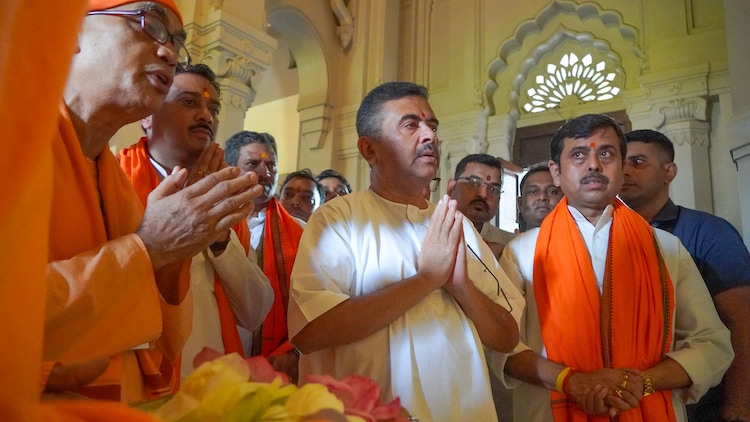
FOR THE BJP GOVT IN WEST BENGAL JOBS STILL REMAIN A BIG TEST
The BJP's promise was also about employment and stopping Bengal's young people from leaving the state.
Its first budget, presented by the state's Finance Minister Swapan Dasgupta, promised 1,00,000 government jobs, including a 33% reservation for women. Adhikari also appealed to migrant workers to return, promising employment and 125 days of work for those with job cards.
Sayantan Ghosh said this is an area where 150 days is too early, and the process would take more time.
"The kind of expectation from the BJP is not achievable in 150 days, because the issues are all governance-related and based on long-term goals," he said. "There is a lack of job opportunities."
A real change in Bengal's jobs economy will require factories opening, private investment arriving and migrants finding reasons to come home. West Bengal for the past 15 years was governed by the Mamata Banerjee-led government and before that for 34 years under the CPI(M)'s rule. The state witnessed regular protests and strikes, and a negative business sentiment that resulted in the shifting of big companies from the state.
It is this flight of industries from West Bengal that the BJP will need to reverse.
AMID BJP'S SONAR BANGLA PROMISE, INVESTMENT PLEDGES HAVE BEGUN
In September, Bengal allotted land for 33 industrial projects, with the government estimating investment of about Rs 60,000 crore and the potential for 62,000 direct and indirect jobs. CM Adhikari also promised a new industrial land policy before Durga Puja, covering land pooling, direct purchase and single-window clearances. The BJP government's focus on ease of doing business is visible.
There has also been a greater push towards infrastructure development, with several new projects, including a proposed water metro, two inter-city metro services, expanded bus networks and a greenfield airport at Kalyani, reportedly in the pipeline. Several long-delayed Kolkata Metro projects have also moved forward, including the Joka–Esplanade, New Garia–Airport and Kavi Subhash–Barasat corridors. The Centre has also moved to revive 17 stalled railway projects spanning around 400 km and estimated at 4,500 crore.
There have also been several major investment announcements, including Amul's Rs 700-crore dairy project and Lux Cozi's Rs 600-crore expansion in Dankuni. RP-Sanjiv Goenka Group chairperson Sanjiv Goenka has also expressed interest in further investments in the state, including a proposed battery-storage unit. Similarly, Reliance Industries recently proposed a nuclear power plant in Bengal, that, if approved, could bring in investment worth about Rs 2 lakh crore over a period of six to seven years.
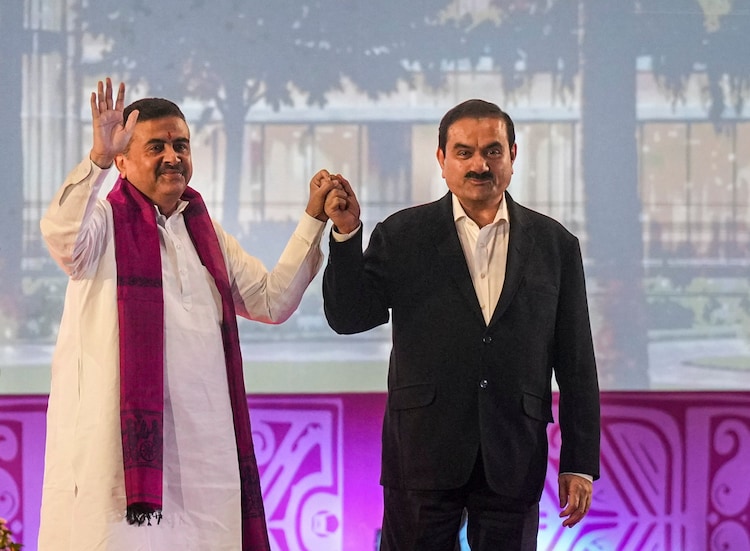
Then came the biggest headline under the BJP rule in Bengal. Industrialist Gautam Adani announced that the Adani Group plans to invest more than Rs 1 lakh crore in West Bengal by 2035 across infrastructure, energy, logistics, healthcare and digital sectors. The group is also developing a 2,000-bed hospital in New Town with an investment of more than Rs 4,000 crore.
Political Analyst Ghosh said that this is a visible shift that the BJP government is working on.
"The BJP government is attracting new investments. Recently, they cracked a big investment promise from the Adani Group. We don't know whether direct investment will come or not, but they are hosting summits and pitching Bengal as an investment hub," he told India Today Digital.
In 150 days of the BJP's rule, Bengal has accumulated commitments, land allotments and project announcements. The real success will come when investments start reflecting as construction begins, capital is deployed and jobs appear.
One needs to remember that, as CM, the late Buddhadeb Bhattacharya of the CPI(M) also brought several major industrial projects to West Bengal, most notably the Tata Motors plant at Singur. Yet virtually none of these projects materialised, in part because of large-scale protests led by Mamata Banerjee and the TMC.
THE LAW AND ORDER SITUATION IN WEST BENGAL: ONLY CHANGE OF FACES?
If economics is the BJP's biggest opportunity, law and order has become its biggest credibility test in the state.
Rajya Sabha MP Rahul Sinha told India Today Digital that the government had brought law and order "completely under control" and stopped tolabazi (extortion). He said corruption complaints were being acted upon and that police officers and government employees were also being investigated or arrested.
But that assertion has collided with controversies, including violence at Jadavpur University and attacks involving rival political groups.
For context, since May 4, opposition party offices have repeatedly faced vandalism and arson. Party offices of the TMC, CPI(M), CPM and the Congress have been targeted across the state.
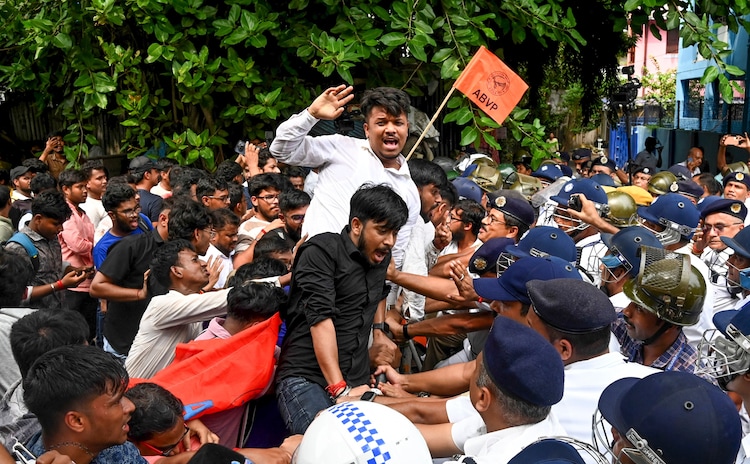
Other institutions have also faced attacks. Clashes between ABVP and Left-leaning student groups at Jadavpur University in late August left several injured, while on September 6, a mob surrounded the Anandabazar Patrika newspaper office in Kolkata and painted parts of its wall with saffron. At the Satyajit Ray Film and Television Institute (SRFTI), clashes between students and members of the RSS-linked Akhil Bharatiya Grahak Panchayat on September 27 also left several injured.
On Jadavpur, BJP's Rajya Sabha MP Sinha told India Today Digital that the government would not tolerate "anti-national and Marxist elements" dominating educational institutions.
"We will take every possible measure to clean up institutions like Jadavpur [University] and ensure that they become hubs of education rather than places where anti-national elements call for India to be broken into pieces," Sinha said.
Political Analyst Sayantan Ghosh provides more clarity on the issue. "The law and order situation in West Bengal is not good. The law and order situation has only changed faces, but the issue persists."
TRINAMOOLISATION OF THE BJP: AN UNCOMFORTABLE QUESTION
One intense criticism against the Suvendu-led government is that parts of Bengal's old political culture might be migrating into the new ruling party.
India Today Magazine's report in September documented allegations of extortion involving BJP functionaries and even elected MLAs described concern over local cadre behaviour.
Author and journalist Snigdhendu Bhattacharya told India Today Digital that the state was witnessing "a new era of mob rule", with attacks targeting political and social groups. He said the emerging pattern was new even though political violence itself was not.
The BJP rejects the charge of "Trinamoolisation of the BJP".
"There is no such thing as Trinamoolisation of the BJP. We shut the doors on those wanting to defect from the TMC on May 4 itself. The doors have stayed shut, and will stay shut," said BJP's Sinha.
Ghosh, however, argued that the reality in the state was more complicated, particularly at the grassroots. "The BJP has not won this election on the strength of its organisation. It won because people wanted change. There was anti-incumbency, and the BJP was the only alternative," he said.
This has created a paradox. The BJP inherited a state where political networks had long been intertwined with local power. Even though there has been some pushback by the party, with 25 workers suspended and around 300 others issued show-cause notices over alleged extortion and anti-party activities, dismantling those networks is harder than replacing the people at the top.
"The workers of the TMC have joined the BJP and are joining them in attacking the TMC's top leaders," Ghosh said.
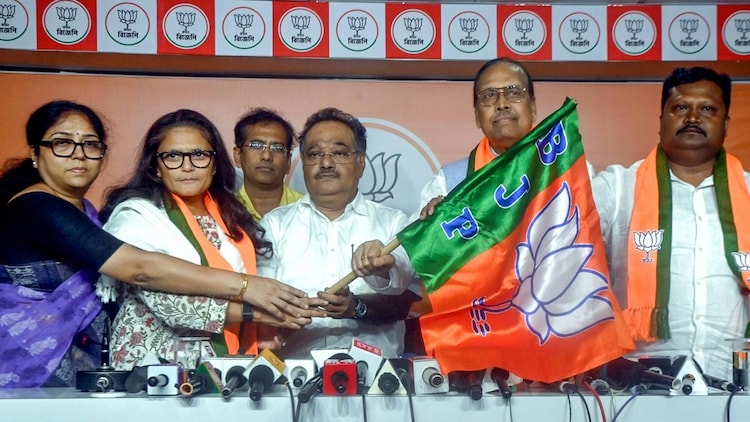
This migration of people from the TMC into the BJP was also highlighted by former Governor of Tripura, Tathagata Roy, who warned that facilitating the entry of such individuals was fuelling discontent in the BJP's ranks.
"Sukhendu Shekhar Roy, Koel Mallik, Prakash Chik Baraik, and Susmita Deb, who were Trinamoolis till yesterday, have been sent to Rajya Sabha by BJP in preference to longtime BJP workers," Roy wrote on X, adding, "There is considerable anguish among BJP workers in West Bengal who have suffered horribly at the hands of Trinamooli goons during their reign. It would be very unwise for the BJP central leadership to overlook this anguish."
SPLIT IN TMC, MPs DEFECTING FROM THE PARTY: WHAT'S THE GROUND REACTION
The Trinamool defections are raising questions about whether the BJP is actually different from Bengal's old political culture.
Sayantan Ghosh said grassroots workers from rival parties, particularly the TMC, are moving into the ruling BJP. "People voted against the TMC leaders, and the same leaders are seen having breakfast with PM Modi and CM Adhikari," he said.
That has left people underwhelmed. The initial satisfaction of defeating the TMC has given way to frustration, particularly over defections and political violence.
"People have realised that nothing new is happening," Ghosh said. The shift, according to him, has damaged the image of the new government among voters who had expected a cleaner break from the past.
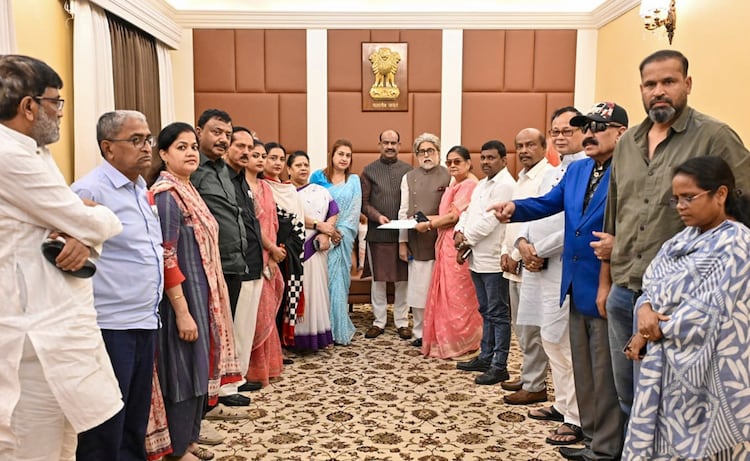
SUVENDU ADHIKARI GOVT'S 150 DAYS. HAS ANYTHING CHANGED?
So, has anything changed in West Bengal? Yes, but not yet enough to declare a transformation.
The first 150 days of the Adhikari government have produced an administrative shift. Central schemes have moved into Bengal, women's cash support has doubled, employment and industry are at the centre of the government's pitch, and investors are being actively courted.
But the old anxieties that have traditionally been inherited in the state still remain. Welfare has a delivery gap. Jobs are still promises. Investment is still largely at the commitment stage. Political violence and accusations of intimidation continue. And the charge that old political habits are changing party labels rather than disappearing remains potent.
For a government that came to power promising a different model of governance, the coming days will be less forgiving. The novelty of the BJP's arrival will fade. The question that will remain is whether the change in government has finally produced a change in everyday life.
West Bengal's electorate can be patient, but it can also be unforgiving. It gave the Congress 22 years, the CPI(M) 34 years and the TMC 15 years. All three have since been pushed to the margins of state politics. As the BJP completes 150 days, the lessons from the past are key for governance.
- Ends
(This story was originally published at 6:30 on October 5. It was updated at 11:10 to include a section on CM Suvendu Adhikari's public association with Hindu religious identity.)
A history and geopolitics buff, Shounak is a newly minted writer. He looks to bring his interests into his stories. When not at work, he can be found consumed in books, videogames and drawing.
READ MORE
Avinash Kateel is a multimedia journalist with the India Today Group (Digital), and a cub reporter. His heart belongs to coastal Karnataka, but his mind closely tracks the politics of the entire country and the policies that shape India and the world. From geopolitics to the economy, Kateel covers anything that makes news. He believes in breaking down complex stories into simple versions because news matters when readers understand it.
READ MORE