
From the Editor-in-Chief

India and China need disciplined management of a relationship too consequential for either side to allow to drift into permanent hostility

ISSUE DATE: Sep 28, 2026 | UPDATED: Sep 18, 2026 19:53 IST
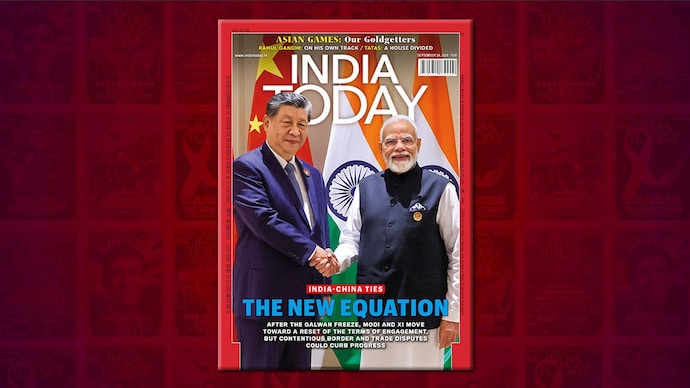
In the difficult universe of Indo-China relations, deadlock and resolution are neighbouring states of being, never too far apart. What was rigid and taboo six years ago can become fair game again, as long as one walks with care and speaks with economy. Such a moment has presented itself again, in the positive backdrop of the BRICS summit in New Delhi. An opening of doors, not wide open, but ajar in a measured way, with an eye on what can be let in and what must be kept out. The macro signalling contained real and tangible movement. Chinese president Xi Jinping was in India after nearly seven years, and a spark of renewed chemistry marked his interactions with Prime Minister Narendra Modi. The world is watching, from Washington to European capitals to BRICS peers, because the implications go well beyond the bilateral. Two Asian giants entering a pact of coordination could shift the world’s centre of gravity in ways few diplomatic developments of comparable scale could. Two hard realities impinge on this: a border that has never been settled, and economic ties that hold more promise than has been fulfilled. The riddle is being approached via a series of carefully calibrated steps, each small enough to be deniable as a concession, but collectively adding up to a genuine detente.
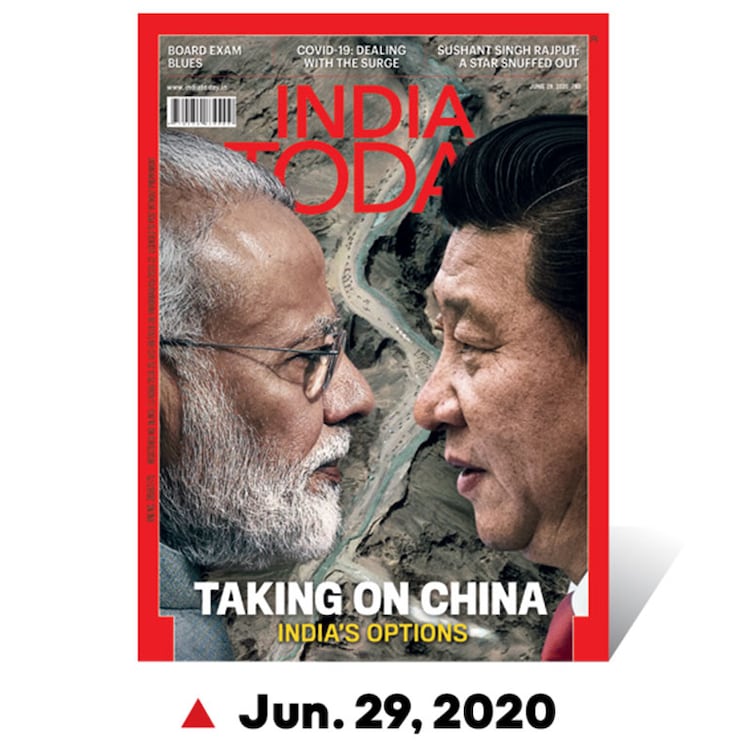
India and China were coming off a particularly tense freeze: the Galwan clashes of 2020, the worst military standoff in over four decades. Modi and Xi created a thaw incrementally, with meetings that used the convenient platforms of BRICS or SCO summits since 2024 to do the work that bilateral meetings would have made too symbolically loaded. Clearing the path for this was quiet, back-room diplomacy by National Security Advisor Ajit Doval and Chinese foreign minister Wang Yi, both special representatives on the boundary question. Meeting before each Modi-Xi encounter, they locked in a few more inches of agreement. The vocabulary moved in unison. The first sign of an imminent thaw came at St Petersburg, before Kazan, with words like “urgency”, “early resolution”, “stabilise and rebuild”. As the language got more optimistic, policy progressed. Land crossings, such as to Kailash Mansarovar, reopened; direct flights resumed; India relaxed post-Galwan trade and investment restrictions.
Diplomatic language moves at a glacial pace between India and China, so the shift in phraseology this August caught everyone’s attention. A year ago, Doval-Wang had agreed to pursue “early harvest” on the border question. This time, a Beijing joint statement spoke of “early and substantial harvest”. The India map has a particularly high visual salience. Unlike with artificial straight lines or obscure islands, any trimming will be palpably visible. The textual addition is not incidental. It goes to the heart of the two countries’ long-standing disagreement on how to sequence a border settlement. “Early harvest” means formally demarcating the border where consensus is within reach, the easier stretches before tackling the intractable ones. In 2017, China proposed this for Sikkim. India was reluctant, since giving away the easy bargains could leave it bereft of bargaining chips on tougher questions, like Aksai Chin or Tawang. India preferred a more composite resolution and in 2019 proposed settling the Middle Sector along with Sikkim. China refused. Seven years later, it is significant that China has agreed to that textual concession. Indian experts, though, are cautious and say what’s important is the ground situation, including levels of troop mobilisation. The caution is warranted. But the language shift is still significant.
What keeps the two sides going is the value of creating stable, predictable geo-economic ties in a fraught world. Both countries can do with one less inflammable front. It’s much better to negotiate the extent of FDI and technology transfer than arguing over miles of icy wasteland. However, even trade reveals stark asymmetry. The trade deficit has shot up 155 per cent in five years, to $112.1 billion. Bilateral trade touched $151 billion in FY26. Of that, India’s imports were $131.6 billion—more than double the pre-COVID levels. More worryingly, the nature of our imports has changed. In times when China leads in 69 of 74 critical technologies globally, it is no longer only low-value goods like plastic Ganeshas or toys. Our import basket is heavy on electronics, machinery, computers and organic chemicals. The buyers are not bargain-hunting consumers but factories. It’s creating what a trade expert calls “production dependence”, with the inherent risk of a supply choke. Managing the dependency requires Chinese FDI that builds local capacity rather than simply deepening import reliance. The border dispute is old, complex and unlikely to resolve quickly, however encouraging the diplomatic signals. The trade relationship offers far more immediate opportunity.
In our cover story this week, Group Editorial Director Raj Chengappa surveys the full canvas of Sino-Indian ties, speaking to a gallery of eminent names from the diplomatic and military corps. The appropriate ambition for the relationship, as former NSA Shivshankar Menon calls it, is “breathing room”. Not warmth. Not trust, which is a scarce commodity that rarely crosses these borders. Instead, it’s stability, predictability and disciplined management of a relationship too consequential for either side to allow to drift into permanent hostility. That is a realistic goal. And in the current state of the world, realistic is what India needs to do.
- Ends