
From the Editor-in-Chief

Delhi's afflictions have outlived successive governments, countless promises and thousands of crores of expenditure. What is missing is not the money, technology or knowledge of the problems, it is the political will
ISSUE DATE: Dec 7, 2026 | Nov 27, 2026 17:46 IST Last UpdatedNov 27, 2026 17:46 IST
 Published by
Last UpdatedNov 27, 2026 17:46 IST Published byShyam Balasubramanian
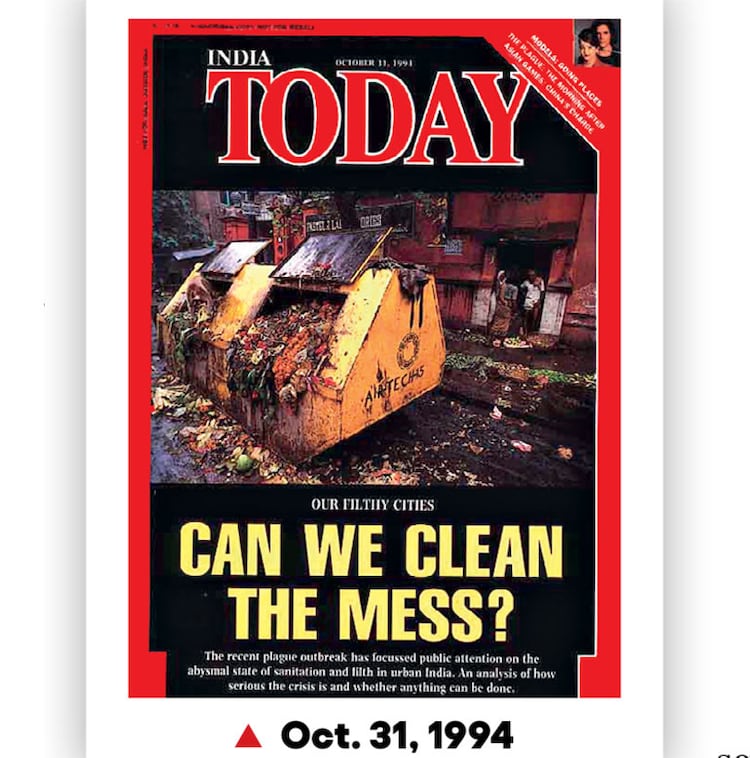
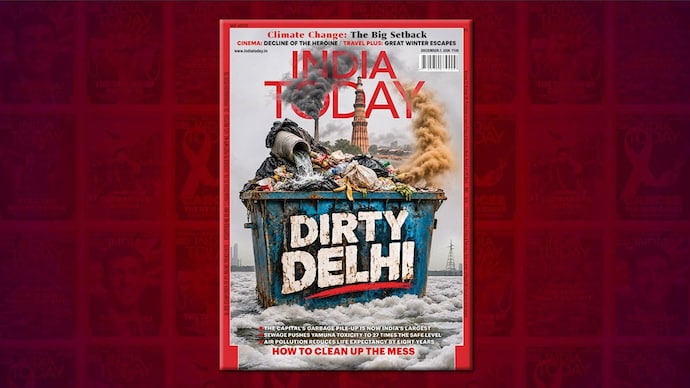
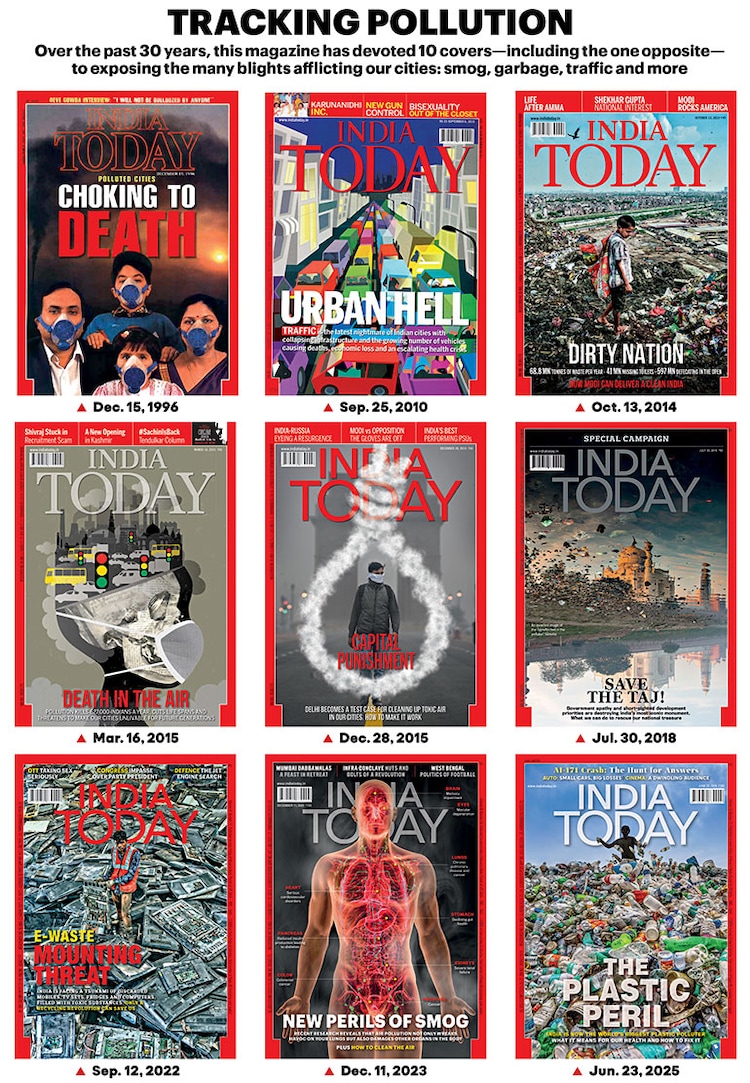
Nov 27, 2026 17:46 ISTEvery major Indian city is weighed down, in varying degrees, by three major issues: toxic air, overflowing garbage and polluted rivers. These are concerns this magazine has consistently taken up for the past three decades, as evident in these thumbnails of 10 cover stories dating back to 1994. Tragically, Delhi takes the cake on all three counts. The shame is that nothing has gotten better, it has only gotten worse. The N95 mask is now a winter accessory. The stench is part of the commute. We cough, we complain, we buy a purifier and resign ourselves to our fate, as we have no choice. Delhi should symbolise all that makes us proud. Instead, it has become a sinkhole of toxicity of every kind. The apathy that brought it here spans decades and governments of every hue. Pollution, it turns out, is agnostic about politics. Consequently, Delhi is arguably the worst city in the world to live in.
Start with the air. This Diwali, Delhi recorded its worst post-festival air in five years. The next day, 14 of its 51 monitoring stations showed AQI above 400, the ‘Severe’ mark. IQAir puts the city’s PM2.5, the nasty, tiny particulate matter that travels deep into our lungs, at 99.6 micrograms per cubic metre, nearly 20 times the WHO benchmark, the worst of any major city on earth. Much to my horror, the Supreme Court yet again allowed green crackers to be burst. The question is, does the administration have the capacity to ensure only green crackers are burst, assuming they don’t pollute? Delhiites, the University of Chicago estimates, would gain 8.2 years of life if the air were clean. The usual suspect gets the blame. But paddy-stubble fires in Punjab and Haryana are just one of the problems, that too seasonally. The bigger culprit: Delhi’s 10.5 million vehicles. Add the thousands of trucks that roll in every night, and traffic pollution now accounts for 52 per cent of the city’s PM2.5. Delhi may boast one of the world’s largest Metro networks, with 400-km-plus of buzzing lines, but it accounts for only 20 per cent of the 25 million daily motorised commutes. Buses carry another 17 per cent. That leaves 42 per cent borne by cars, two-wheelers or autorickshaws. That’s the statistic you’re breathing every day.
Then there’s the dust. Not just from roads, kerbsides and barren patches, but also from the 6,000 tonnes of construction and demolition waste generated daily in one of India’s fastest growing cities. It makes up a large share of the coarse particulates swirling through Delhi’s air. This winter was supposed to be different: 1,193 km of roads recarpeted, 2,283 polluting units shut, 98 mechanised sweepers on the job. Yet, of the Rs 600 crore set aside for emergency measures for FY26, only Rs 129 crore had been spent by January. Much of it on smog guns, those ghostly sprinklers exhaling mist into the gloom, manifestly in vain. The 70 more mechanised sweepers that were promised are arriving only now, in batches, after the peak is over. Delhi also wears the dubious crown of being India’s garbage capital. It produces 13,500 tonnes of solid waste a day and can process 7,642, only 57 per cent. The gap, 5,858 tonnes, exceeds the 5,500 tonnes of waste Bengaluru generates in a day. Much of it ends up at three landfills: Ghazipur, almost as tall as the Qutub Minar and spread over 40 football pitches, is a tower of shame.
Finally, the Yamuna river, if we can still call it that. Delhi generates about 3.6 billion litres of sewage every day. Over 262 million litres, or 7 per cent, are dumped daily into the Yamuna untreated. Of our 37 treatment plants, some 10 do not meet the standards for treating sewage. When the river enters Delhi from Haryana, the biochemical oxygen demand (BOD), required to sustain aquatic life, is within the safe level for bathing of 3 mg/l. But by the time it exits Delhi, the BOD is 25 times more. Worse, faecal coliform, the microbes responsible for spreading waterborne diseases, is 14 times the safe limit. It has taken the Supreme Court to say what we all should have been shouting about. In a November 4 order, it observed that despite the huge sums spent, pollution in the Yamuna has only risen, reflecting the failure of civic administration along its banks.
So, what must be done, with some urgency? To clean up the air, make travelling by private vehicles a choice rather than a necessity. Expand the electric bus network, improve connectivity to Metro stations, enforce credible emission testing and curb pollution from vehicles, construction and industry through the year, not just when winter sets in. Stop spending money on anti-smog guns and tackle pollution at source. For the Yamuna, upgrade existing treatment plants and build new ones expeditiously. The Rs 9,000 crore committed must deliver by 2029, not become another announcement in 2029. Connect every colony to a sewer, every sewer to a plant that works. Stop industrial effluents at source. Divert a modest share of canal water from surrounding states to give Delhi’s Yamuna the flow it lacks. On garbage, institute a second round of collection after 9 pm in markets where necessary, enlisting even informal waste collectors. Enforce fines and hasten the removal of legacy waste at Ghazipur. The MCD commissioner says the mountain of waste will be gone by this time next year. We will be watching. Delhi’s three afflictions have outlived successive governments, countless promises and thousands of crores of public expenditure. What is missing is not the money, technology or knowledge of the problems. It is the political will to fix it despite the powers that be living here and experiencing the toxicity. Surely, the citizens of our national capital deserve better. In fact, Delhi should be setting the standard and be the template for halting the decay afflicting our cities.
- Ends