A new-age neighbourliness | Viewpoint by Ranjit Rae

Nepal PM Balendra Shah's visit signalled that bilateral relations with India are back on track
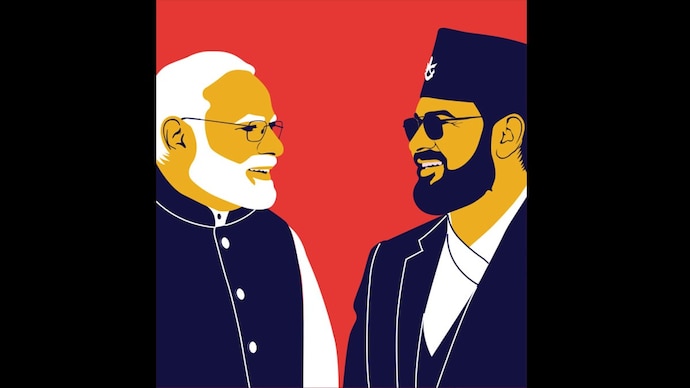
(Illustration by Raj Verma)
ISSUE DATE: Dec 7, 2026 | Nov 27, 2026 17:47 IST Last UpdatedNov 27, 2026 17:47 IST
 Published by
Last UpdatedNov 27, 2026 17:47 IST Published byShyam Balasubramanian
Nov 27, 2026 17:46 ISTThe rupture in the traditional political processes in Nepal since September 2025 saw a new generation of young and dynamic leaders emerge. India had had relatively little contact with these new leaders. The first visit of Prime Minister Balendra Shah to India was, therefore, extremely important for the political leadership of the two countries to take stock of each other and develop mutual trust.
This is an aspirational generation that carries none of the political baggage of the past. It believes in economic partnership and development diplomacy. This message strikes a chord with India. One of the problems India has faced in Nepal is anti-India nationalist sentiment, which has been a major obstacle to the development partnership. The new government is not ideological but pragmatic. It recognises that India’s cooperation is critical for Nepal’s development.
Perhaps the most significant outcome of the visit is that, for the first time, the two countries have prepared a comprehensive, forward-looking vision document—Viksit Bharat and Samunnat (or ‘developed’) Nepal. It identifies 10 pillars of cooperation, priority areas within each sector and the modalities of implementation. A monitoring mechanism, headed by Nepal’s foreign secretary and the Indian ambassador, will review implementation every six months. In the past, the complaint has been that India promises but does not deliver. We have now established a process whereby promise and action can match. I feel this is something we should do with every neighbouring country.
The Rs 15,000 crore development assistance package, the largest ever extended by India to Nepal, comprising Rs 3,500 crore in grants and Rs 11,500 crore in lines of credit, demonstrates New Delhi’s support for the new government. India was the first responder to the Bhote Koshi floods, just as we were during the 2015 earthquake. Climate change and its impact on lives and livelihoods are integral to the bilateral agenda, with an emphasis on early warning systems and hydrological data-sharing. Balendra Shah had proposed a trilateral cooperation involving India, Nepal and China when he addressed the UN in New York. India should consider the proposal positively.
The emphasis on sports diplomacy, particularly cricket, and connecting the startup ecosystems of India and Nepal are excellent ways of reaching out to its aspirational generation. I am somewhat disappointed that there has been no closure on the Pancheshwar multipurpose project—the proposed joint hydropower, irrigation and flood-control dam project. But it is good that the two PMs have moved to expedite the finalisation of the Detailed Project Report. There was some criticism in Nepal that the visit saw no forward movement in the boundary dispute or the issues concerning the 1950 Treaty of Peace and Friendship. It is important that discussions begin on these issues without allowing them to negatively impact the economic partnership.
Balendra Shah, who came to power in March 2026, remains extremely popular. His government has a strong mandate, but there is a sense in Nepal that it is opening too many fronts too quickly. The ship of state moves slowly. These are young people, impatient to get things done, and they are learning by doing. Going forward, the most important thing for us is to remain focused on the economic partnership, particularly energy. Bilateral merchandise trade stood at $9.39 billion (Rs 87,000 crores) in 2025-26, with Indian exports accounting for $7.45 billion (Rs 69,036 crores). Greater electricity exports from Nepal could help redress this imbalance. We must also extend this cooperation to the subregional level, bringing in Bangladesh and eventually Bhutan.
There has been a fear in Nepal of becoming too dependent on India. We must change the narrative from dependency to interdependency. India looks to Nepal for energy, while Nepal relies on India for the bulk of its exports and access to the rest of the world. Once the people of Nepal are seen to be benefiting from this cooperation, addressing other issues that bedevil the relationship will be much easier. n
—The author is a former Indian ambassador to Nepal
- Ends