
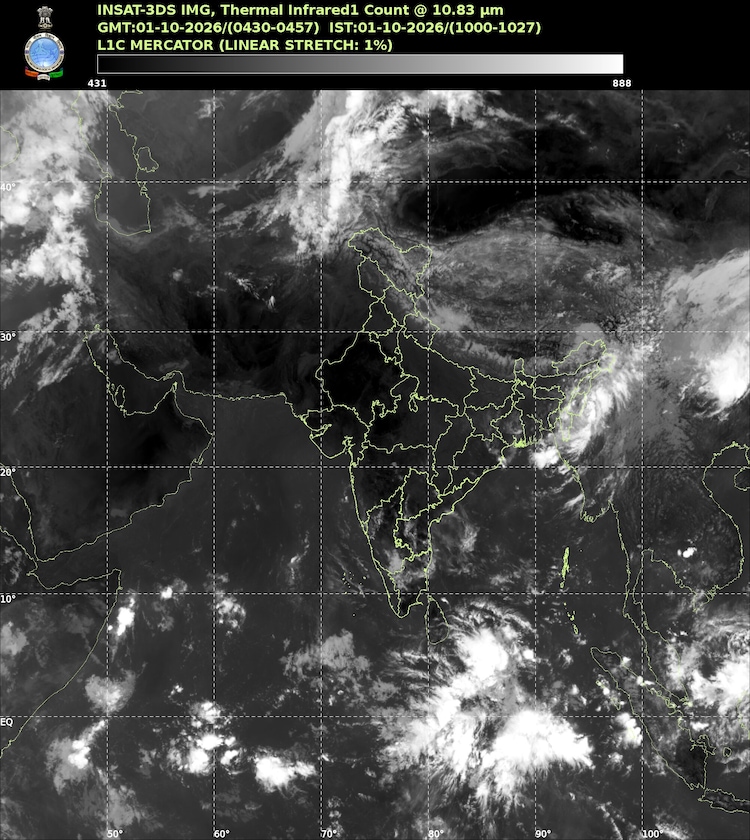
India's monsoon season ends with 13% rain deficit. Now comes the real water test

India's southwest monsoon has ended with a 13% rainfall deficit, putting several regions under pressure. The focus now shifts to soil moisture, reservoirs and groundwater as the rabi season begins.
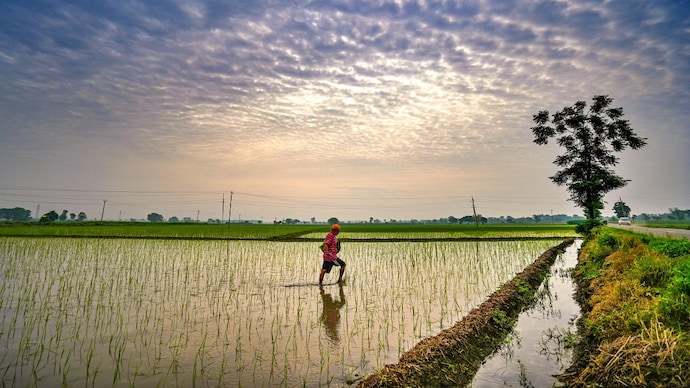
A farmer crosses a waterlogged paddy field on a cloudy day in Amritsar. (Photo: PTI)
New Delhi,Oct 1, 2026 11:10 IST Last UpdatedOct 1, 2026 11:10 IST
  Published by
Last UpdatedOct 1, 2026 11:10 IST Published bySibu Kumar Tripathi
Oct 1, 2026 11:10 ISTIndia’s four-month southwest monsoon has ended, but for large parts of the country, the water story is far from over.
The season closed with a 13% rainfall deficit, leaving reservoirs, soil moisture and groundwater under pressure in several regions.
Now, as the country moves into the rabi sowing season, the question is whether there will be enough water left in the ground to support the next crop.
The situation is already critical in Maharashtra. The state government has declared drought in 265 of its 358 talukas, covering nearly three-fourths of the state, after deficient rainfall and prolonged dry spells affected agriculture and water availability.
This makes the coming months particularly important for farmers.
Unlike kharif crops, which largely depend on the southwest monsoon, rabi crops are sown after the monsoon and depend more heavily on residual soil moisture, irrigation, reservoirs and groundwater. Wheat, gram, mustard and other winter crops therefore face greater water stress if the monsoon fails to adequately recharge these sources.
A weak monsoon does not automatically mean a failed rabi season. But where rainfall was deficient or poorly distributed, farmers may have less moisture available when they begin sowing. In drought-hit Maharashtra, prolonged dry spells have already damaged kharif crops and strained water supplies.
And the immediate weather outlook offers little relief for much of India.
BELOW-NORMAL RAIN AHEAD
The India Meteorological Department (IMD) expects October rainfall over the country as a whole to be below normal, at less than 85% of the long-period average.
Most parts of India are likely to receive below-normal rainfall during the month, although parts of northwest India, southern peninsular India and isolated areas of eastern India could see normal to above-normal rain.
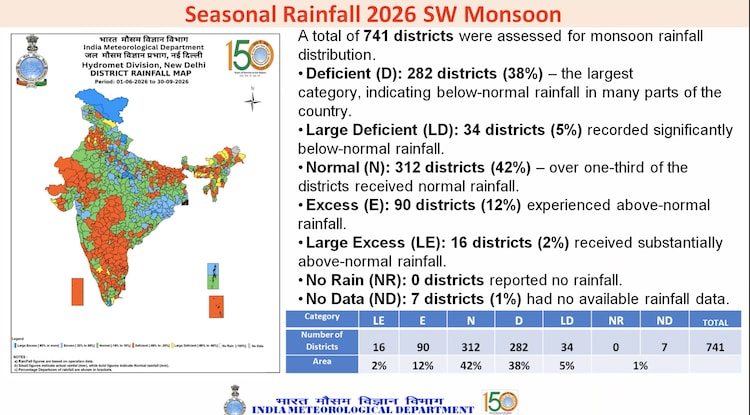
For the entire October-December post-monsoon period, the IMD expects South Peninsular India — including Tamil Nadu, Kerala, coastal Andhra Pradesh, Rayalaseema and south interior Karnataka, to receive normal rainfall, at 88-112% of its long-period average.
But most of the country is expected to remain on the drier side.
EL NINO TO SHOCK THE SYSTEM
There is another complication: strong El Nio conditions are currently prevailing over the equatorial Pacific, with sea-surface temperatures well above average. IMD's climate models indicate that El Nio is likely to strengthen through the end of the year.
Temperatures could add to the pressure. IMD expects above-normal maximum and minimum temperatures across much of India in October, potentially increasing evaporation and water demand.
So, the end of the monsoon is not the end of India's water story.
The real test now begins underground, in the soil, reservoirs and wells that will determine how much of India's rabi crop can be supported through the winter.
- Ends