
Neelakurinji flower blooms after 12 years: If missed, you may have to wait till 2038

The rare Neelakurinji flowers have bloomed again across the Korandakadu hills near Mattupetty after nearly 12 years. The brief spectacle highlights the Western Ghats' fragile mountain ecosystems and may not return until 2038.
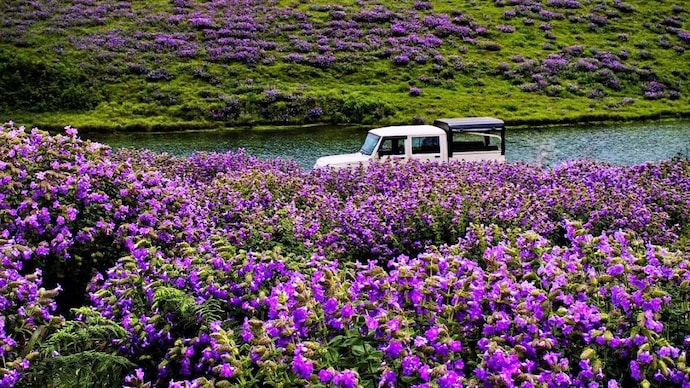

After a wait of nearly 12 years, the spectacular bloom of the rare Neelakurinji flowers has returned to the hills near Munnar in Kerala, transforming parts of the landscape into a sea of purple-blue.
The flowers have bloomed in large numbers across the Korandakadu hills near Mattupetty, drawing attention to one of the Western Ghats' most extraordinary natural phenomena.
But visitors hoping to witness the bloom may want to hurry. Neelakurinji, scientifically known as Strobilanthes kunthiana, is famous for its unusual flowering cycle.
In many parts of the Western Ghats, the plant blooms once every 12 years, covering mountain slopes with its distinctive purple-blue flowers.
The latest bloom follows the spectacular flowering witnessed around Munnar nearly 12 years ago. If the Korandakadu population follows its characteristic cycle, the next major flowering event may not occur until around 2038.
WHAT IS NEELAKURINJI?
Neelakurinji is a shrub native to the high-altitude grasslands and shola ecosystems of the Western Ghats. The plant is most famously associated with the hills of Kerala's Idukki district, particularly around Munnar, although different species of Strobilanthes grow across the region.
What makes Neelakurinji particularly remarkable is a phenomenon known as gregarious flowering. Large numbers of plants that have remained largely unnoticed for years flower almost simultaneously after completing their long biological cycle.
For a brief period, the hillsides are transformed as thousands of flowers bloom together, creating one of India's most visually striking seasonal spectacles.
The name Neelakurinji itself is closely associated with the colour of the flower, with “neela” referring to blue. The mass bloom has also historically been linked to the identity and ecology of the Nilgiri and Western Ghats landscapes.
However, the flowering event is more than just a tourist attraction.
Neelakurinji grows in fragile mountain ecosystems that face increasing pressure from climate change, habitat loss, tourism and human development. Conservationists have long emphasised the importance of protecting the grasslands and natural habitats where the species survives.
The ongoing bloom near Mattupetty is therefore a rare opportunity for nature lovers and tourists to witness a biological clock that takes more than a decade to complete.
And once the purple-blue spectacle fades, the hills will return to their usual appearance, leaving visitors with a long wait before nature puts on the show again.