Vietnamese crab exporter

Topic

Advertisement
TOPIC

Afghanistan

Afghanistan is a landlocked country in South Asia, bordered by Pakistan, Iran, Turkmenistan, Uzbekistan, Tajikistan and China. With a population of more than 40 million, it sits at the crossroads of Central and South Asia and has historically served as a key route for trade and migration.

The country’s terrain is dominated by the Hindu Kush mountain range, which divides much of the nation and has shaped its social and economic development. Kabul is the capital and largest city. Afghanistan is ethnically diverse, with Pashtuns, Tajiks, Hazaras and Uzbeks among its largest communities. Dari and Pashto are the official languages.

Modern Afghanistan has experienced decades of conflict. The Soviet Union invaded in 1979, triggering a prolonged war. Following the Soviet withdrawal, civil war led to the rise of the Taliban in the mid-1990s. After the 11 September 2001 attacks in the United States, a US-led coalition removed the Taliban government. In August 2021, the Taliban returned to power as foreign troops withdrew.

Afghanistan’s economy remains fragile, heavily dependent on agriculture and international aid. The country faces significant humanitarian challenges, including poverty, food insecurity and restrictions on women’s education and employment under the current administration.

  • ALL
  • STORIES
  • VIDEOS

STORIES

India becoming Afghanistan: Singer Chinmayi lashes out over Kalkaji gang-rape

Singer and activist Chinmayi Sripada slammed women's safety standards in the capital following the Kalkaji gang-rape, which led Lady Shri Ram College to move classes online following an early morning operation by the police near its campus. The fallout has raised fresh concerns over security in educational spaces.

Pakistan strikes border camps as Xi readies Washington visit

Pakistan dominated Monday's regional developments with border airstrikes, Tehran outreach and fresh pressure on PTI. The flurry of moves unfolded alongside Xi Jinping's Washington visit announcement and wider diplomatic activity across South Asia.

Load More

VIDEOS

Iran President Lands In Delhi For Summit; Modi-Pezeshkian Bilateral, Chabahar Port On Focus

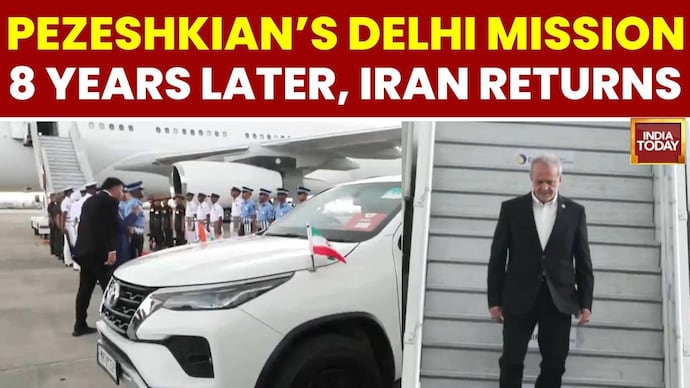
Iranian President Masoud Pezeshkian has arrived at the Palam Air Force Station in New Delhi ahead of the summit. This marks the first visit by an Iranian president to India in eight years, following Hassan Rouhani's trip in 2018. Prime Minister Narendra Modi and President Pezeshkian are scheduled to hold bilateral talks focusing on crucial issues, including the Chabahar port project, regional connectivity to Afghanistan and Central Asia, and energy security. The discussions also come amid global shipping security concerns regarding the Strait of Hormuz, the Red Sea, and the Suez Canal. The two leaders previously met in Bishkek on the sidelines of the Shanghai Cooperation Organisation summit, where discussions centred on trade diversification and regional stability through dialogue and diplomacy. India aims to navigate multilateral groupings such as BRICS and facilitate consensus among member nations.

India Rejects Indus Ruling; Ladakh Diverts Glacier Water; Pakistan's PM Crops SCO Photo

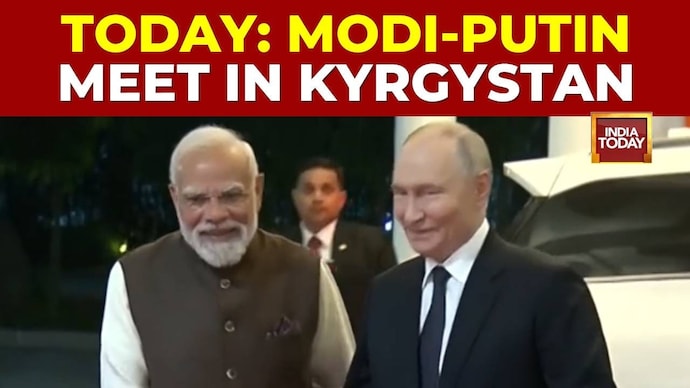
At the Shanghai Cooperation Organisation summit in Bishkek, Prime Minister Narendra Modi outlined regional priorities focusing on security, connectivity, and opportunity, demanding zero tolerance for cross-border terrorism. Following state-sponsored attacks, including the Pahalgam terror attack, India held the Indus Waters Treaty in abeyance and categorically rejected a ruling by the Court of Arbitration in The Hague regarding hydroelectric projects, citing lack of jurisdiction. Meanwhile, Pakistan Prime Minister Shehbaz Sharif faced scrutiny for sharing an edited SCO group photograph that cropped out Modi and Iranian President Masoud Pezeshkian, before re-uploading the original. Footage of Modi interacting with Russian President Vladimir Putin and Chinese President Xi Jinping gained international attention. On the ground in Ladakh, local authorities created two diversions at Stok Nala using JCB machines, redirecting approximately 90 million litres of glacier water daily into the Igoo-Phay Canal to irrigate over 1,000 acres across 12 villages. In domestic developments, ABVP candidate Ankit Bidhan secured victory in the Panjab University student union elections for the president's post.

PM Modi at SCO Summit: Calls for Action on Cross-Border Terror, Connectivity, and Trade

At the SCO summit in Bishkek, Prime Minister Narendra Modi outlined key messages focusing on security, connectivity, and opportunity. He called for measurable outcomes and zero tolerance for cross-border terrorism, urging the dismantling of terror ecosystems including financing, recruitment, and safe havens. The Prime Minister stressed that terrorism cannot be treated as a strategic asset. He advocated for continued humanitarian and development assistance to Afghanistan and highlighted dialogue and diplomacy to resolve conflicts impacting energy security and supply chains. Additionally, PM Modi emphasised respecting sovereignty and territorial integrity in regional connectivity, tackling drug trafficking, simplifying trade customs, and fostering youth and civilisational exchanges.

SCO Summit: Focus On Energy Security, Regional Connectivity And Counter-Terrorism

The Shanghai Cooperation Organisation summit agenda highlights key priorities including multilateral cooperation for nuclear safety and security, energy efficiency, and regional connectivity. Member states are considering proposed outcome documents addressing preventive diplomacy, emergency disaster assistance, green technology corridors, and combating synthetic drug trafficking. The inclusion of English as an official working language is also featured among the key summit discussions. Focus areas include sustaining energy supplies, securing uranium and critical mineral supply chains, and exploring multilateral mechanisms for energy security. Regional connectivity initiatives, including transport corridors and the International North-South Transport Corridor, remain linked to a secure regional environment and counter-terrorism cooperation. The summit deliberations also encompass cybersecurity, economic cooperation, the SCO Development Bank, and strategic developments concerning regional stability across Central and South Asia.

India-Russia Ties: Strategic Partnership, Energy Trade And Defense Dependency Examined

A special broadcast reviews the multifaceted bilateral relationship between India and Russia, emphasizing strategic cooperation across defense, energy, space, and diplomacy. The discussion highlights key defense platforms underpinning ties, including BrahMos, Sukhoi aircraft, and S-400 anti-missile systems, alongside long-term projects such as the Kudankulam nuclear plant, Sakhalin-1, and the Gaganyaan space mission. Examining bilateral trade bolstered by discounted energy supplies, the analysis notes how India balances its partnerships amid Western scrutiny. Looking ahead to high-level diplomatic engagements at the SCO summit, the conversation outlines major anticipated discussion points, including the global energy crisis, shifting United States foreign policy dynamics, the ongoing Russia-Ukraine war, and broader regional stability across Central Asia and Afghanistan. Additionally, the dialogue addresses diplomatic prospects regarding potential bilateral and informal leadership interactions involving India, Russia, and China ahead of the BRICS summit.

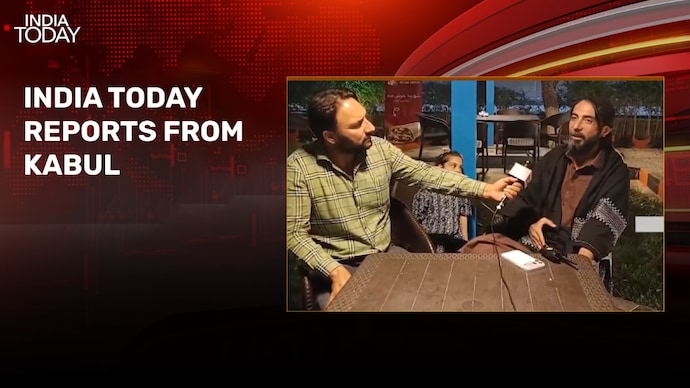
Afghans seek stronger ties with India, relaxed visa norms

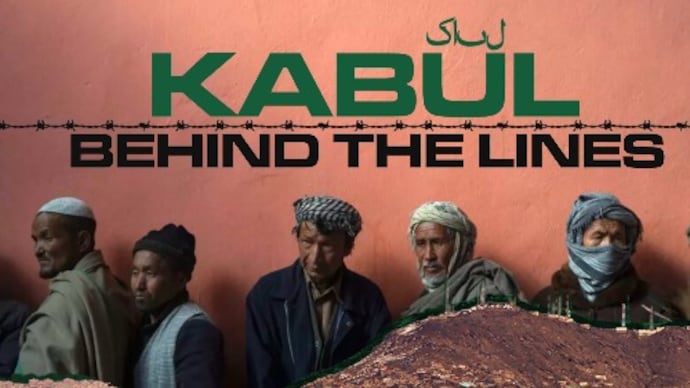
As relations between Pakistan and Afghanistan hit an all-time low, residents in Kabul have expressed a desire for stronger ties with India and have appealed to the Indian government to relax visa norms to facilitate business and higher education opportunities.

Netanyahu appears, what about Mojtaba Khamenei?

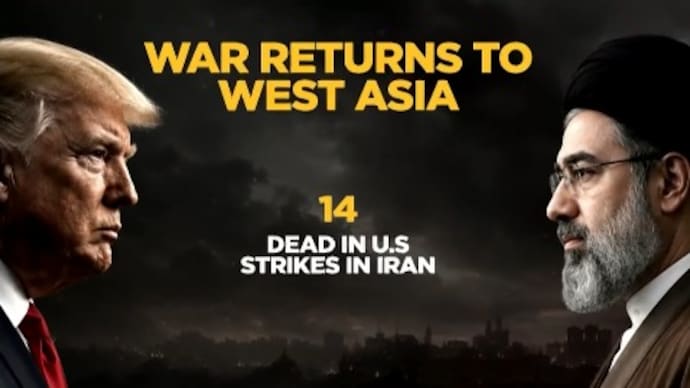
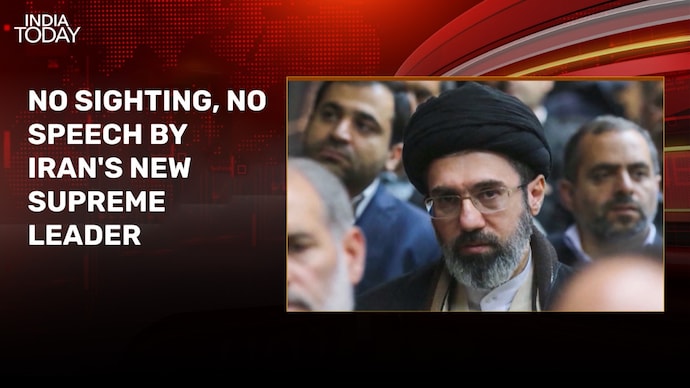
Israeli Prime Minister Benjamin Netanyahu held a midnight press conference addressing speculation about his death, declaring 'I am alive'. While, Iran's new Supreme Leader, Mojtaba Khamenei, remains unseen nearly 20 days after his father Ayatollah Ali Khamenei was killed in an Israeli strike on February 28.