Vietnamese crab exporter

Topic

Advertisement
TOPIC

Chhattisgarh

Chhattisgarh is an Indian state located in the east-central part of the country. Formerly a part of Madhya Pradesh, it was granted statehood on November 1, 2000.

The state is bounded by Jharkhand and Odisha in the east, Madhya Pradesh and Maharashtra in the west, Uttar Pradesh and western Jharkhand in the north and Andhra Pradesh in the south. It is the 9th largest state areawise and 17th largest state population-wise.

Raipur is its capital city. Other major cities are Bhilai, Bilaspur, Raigarh and Jagdalpur. The highest point in the state is the Gaurlata near Samri. Nearly 40 per cent area of the state is covered with deciduous forests of the Eastern Highlands Forests. It experiences three major seasons - summer, monsoon and winter. The official languages of the state are Chhattisgarhi and Hindi. Among other languages, Odia is largely spoken by people in the eastern part of the state.

Chhattisgarh is the source of one of the most important rivers of the South Asian peninsula — Mahanadi. It originates in a village near Raipur. Among other rivers that flow through the state are the Indravati, Arpa, and Pairi. The state is rich in minerals and is one of the country’s largest suppliers of dolomite.

The state has a rich cultural heritage and attractive natural diversity. It houses ancient monuments, rare wildlife, Buddhist sites, palaces, waterfalls. Among its major tourist attractions are - Kangerghati National Park, Kailash caves, Sita Bongara, and Kutumbsar caves.

The state won the title of the cleanest state in the year 2020.

  • ALL
  • STORIES
  • VIDEOS

STORIES

Chhattisgarh hikes PG stipend by up to 59%; 3rd-year students to get Rs 93,996

Chhattisgarh has approved higher stipends for postgraduate medical and dental students at government institutions, with revised monthly rates reaching Rs 93,996 for third-year residents from October 1, 2026. The move raises support across all years, with dental residents seeing the sharpest increase under the new structure.

Heavy rain floods Bastar, submerges NH-30, shuts schools across Chhattisgarh

Heavy rain battered Chhattisgarh, flooding homes and roads, cutting off villages in Bastar and disrupting traffic. One person died in a rain-related incident in Kondagaon, while schools were shut in eight districts. Reservoir levels rose sharply in Dhamtari, with authorities releasing water from the Gangrel dam amid continued rainfall.

Load More

VIDEOS

PM Modi Interacts With Seva Yatris On Bike Rally From Vadnagar To Varanasi

Prime Minister Narendra Modi held a virtual interaction with Seva Yatris who are undertaking an extensive bike rally covering over 35,000 kilometres in ten groups. The rally connects the Prime Minister's birthplace in Vadnagar, Gujarat, to his parliamentary constituency in Varanasi, Uttar Pradesh. During the interaction, participants traveling through districts including Lalitpur, Sagar, and Jhansi shared their field experiences, noting local public sentiment around development initiatives like the Ken-Betwa river linking project in Bundelkhand, women empowerment schemes, and rural transformation. The participants recounted their interactions with citizens, school students, and beneficiaries across various states. Prime Minister Modi encouraged the volunteers to actively document their observations, maintain service commitments, promote national awareness among communities along their route, and contribute towards the vision of building a developed nation.

Delhi Satya Niketan Building Collapse: Debris Cleared, Ground Report Exposes Dilapidated PGs

A building collapse in Delhi's Satya Niketan student residential hub has triggered safety concerns over rental accommodations housing college students. The area, located near prominent colleges such as ARSD College, Shri Venkateshwar College, Motilal Nehru College, Ram Lal Anand College, Jesus and Mary College, and Maitreyi College, is widely known as an affordable hub for students. Ground reporting from adjacent paying guest accommodations revealed severe safety violations and hazardous living conditions. Multi-storey buildings housing dozens of students operate with cracked support beams, water-seeping ceilings, lack of windows, and no emergency fire exits. In some facilities, two separate five-storey buildings share a single narrow staircase lacking railings. Middlemen lease out flats and charge exorbitant rents, up to ₹15,000 to ₹25,000 per bed, while basic safety norms remain compromised.

Delhi Building Collapse: Owner Arrested, 5 MCD Officials Suspended, Rescue On

Following a fatal building collapse in Delhi, student protests have erupted as rescue operations continue to retrieve individuals trapped under the debris. Chief Minister Rekha Gupta announced strict action, confirming the arrest of the building owner and the immediate suspension of five Municipal Corporation of Delhi officials ranging from deputy commissioner to junior engineer. Authorities have also ordered the sealing of fifth floors on similar structures and proposed periodic structural safety audits. An eyewitness and first-year student from Atma Ram Sanatan Dharma College, Rishit Ratodia, recounted the incident, sharing that his friend Atharv Rawat from Chhattisgarh remains trapped under the rubble. Ratodia stated that several new students who recently relocated for the academic session were inside the building, which housed a library and shops, when the structure collapsed. Concerns were raised regarding emergency response delays, crowd control issues, and structural compliance in student residential areas across the capital.

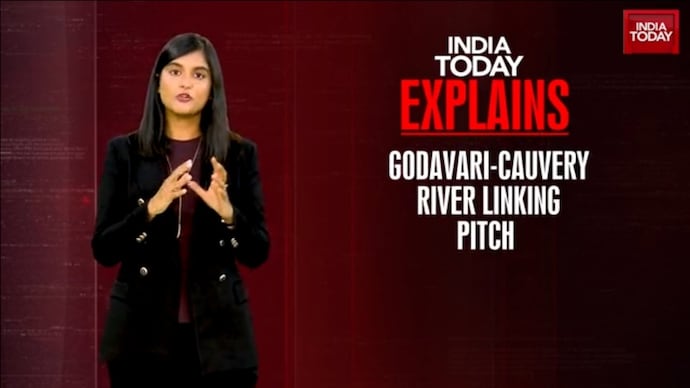
Godavari-Cauvery River Linking Plan: Route Details, State Concerns & Key Hurdles Explained

The proposal to link the Godavari and Cauvery rivers faces complex political and legal hurdles among southern states. Andhra Pradesh Chief Minister N Chandrababu Naidu has advocated linking the Godavari with the Cauvery by tapping surplus river water flowing into the Bay of Bengal and diverting it to drought-prone regions, proposing a route starting at Polavaram and seeking national project status. Under the Central government's National River Linking Project blueprint, the route begins at Inchampally in Telangana and passes through Nagarjuna Sagar and Somasila before reaching the Grand Anicut in Tamil Nadu. However, interstate disagreements persist. Telangana questions how surplus water is calculated, raising concerns over downstream diversions impacting its needs. Karnataka insists any extra Cauvery inflows cannot solely benefit Tamil Nadu and demands its own share be protected. Tamil Nadu seeks additional water without compromising existing river entitlements. Upstream states including Chhattisgarh, Odisha, and Maharashtra also hold stakes, leaving a consensus among stakeholders elusive.

Gold Medallist Sells Vegetables In Ranchi As Jharkhand CM Assures Aid

Four-time international throwball gold medallist Amardeep Kumar is selling vegetables and driving a cab in Ranchi to make ends meet. The 29-year-old athlete stated that his repeated requests for cash awards and a government job in Jharkhand have gone unanswered, even as teammates from Chhattisgarh, Haryana, and Bihar secured government positions. Amardeep had to borrow 65,000 rupees to travel to Malaysia for a tournament in 2015 and now aims to participate in an upcoming event in Sri Lanka. Following a viral video highlighting his financial struggles, Chief Minister Hemant Soren assured assistance, while Sports Minister Sudivya Kumar Sonu stated the state government is exploring employment options for him.

Godavari-Cauvery River Linking Push, Inter-State Water Disputes And South India Water Crisis

Andhra Pradesh Chief Minister Chandrababu Naidu has renewed the push to link the Godavari and Cauvery rivers to address recurring water shortages in southern states. The proposal aims to transfer surplus Godavari water to water-stressed regions across Andhra Pradesh, Tamil Nadu, and Karnataka. Scaled-down versions of the plan envisage transferring approximately 140 to 150 TMC of water annually to provide irrigation across several lakh hectares, drinking water for millions, and potential hydropower generation. However, achieving inter-state consensus remains a significant hurdle. Upstream and riparian states, including Telangana, Karnataka, Tamil Nadu, Chhattisgarh, Odisha, and Maharashtra, have raised concerns regarding water rights, diversion points, and actual surplus availability. Environmental experts also cite challenges such as transmission losses, climate change impacts on rainfall patterns, and ecological effects on river deltas and fisheries.

Gautam Adani Meets DK Shivakumar; Bid For Bengaluru Tunnel Road Triggers Political Row

A political controversy erupted in Karnataka following a 20-minute meeting between Gautam Adani and Chief Minister DK Shivakumar at his residence on August 23. The Chief Minister's office described the meeting as a courtesy visit, highlighting the jobs and investment brought by the group. The interaction occurred as Adani Enterprises emerged as the lowest bidder for both packages of the proposed 17-kilometer Hebbal to Silk Board Bengaluru Tunnel Road project. Adani's bid of 22,267 crore rupees exceeds the government's initial estimate of 17,698 crore rupees by approximately 4,600 crore rupees. The Karnataka BJP questioned the Congress party's position, alleging double standards given Rahul Gandhi's repeated national attacks against Adani. BJP MP Tejasvi Surya opposed the tunnel project citing environmental impact and moved the Karnataka High Court, while Leader of Opposition R Ashoka demanded clarification. The report noted that Congress-led governments in Telangana, Rajasthan, and Chhattisgarh have previously signed major deals and investments with the Adani Group.

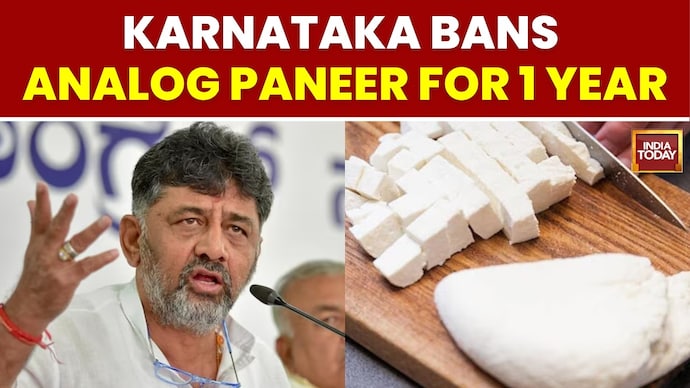
Karnataka Bans Sale And Use Of Analog Paneer For One Year Following Health Concerns

The Karnataka government has imposed a one-year ban on the sale and use of analog paneer and non-dairy products across the state, effective from August 17. Following similar bans in states like Maharashtra, Gujarat, Chhattisgarh, Uttar Pradesh, and Madhya Pradesh, the Karnataka Food Department initiated a crackdown on fake dairy products due to growing health concerns. Under the new directive, only solid, milk-based paneer can be manufactured, sold, or marketed to consumers. The decision aims to address hygiene and health risks linked to synthetic and non-milk substitutes being passed off as genuine paneer in the market.