Vietnamese crab exporter

Topic

Advertisement
TOPIC

Sam Altman

Sam Altman is a prominent figure in the technology and venture capital industries, known for his influential role in shaping the startup ecosystem. Born on April 22, 1985, in Chicago, Illinois, he grew up in St. Louis, Missouri. He became a household name following the instant popularity of the generative artificial intelligence tool ChatGPT, a product of OpenAI, which was co-founded by Sam Altman. 

Altman studied computer science at Stanford University but left to start Loopt, a location-based social networking company, which was later acquired by Green Dot Corporation.

In 2014, Altman was appointed as the president of Y Combinator, one of the most prestigious startup accelerators in the world. Under his leadership, Y Combinator significantly expanded its reach and influence, fostering a new generation of successful startups. In 2019, he transitioned to the role of chairman to focus on OpenAI, an artificial intelligence research lab he co-founded in 2015.

Altman has been a vocal advocate for responsible AI development, emphasizing the importance of safety and ethical considerations. In addition to his work with OpenAI, Altman is known for his investments in various technology companies and his insights on entrepreneurship and technology trends.

Follow Sam Altman on

  • ALL
  • STORIES
  • VIDEOS

STORIES

Meet Gagan Biyani, Udemy co-founder building Silicon Valley’s no-degree AI college

Indian-origin entrepreneur Gagan Biyani, co-founder of Udemy, is leading Andreessen Horowitz’s new Horowitz Andreessen Academy. The no-degree AI academy will teach young builders through projects, AI and industry exposure, with tech leaders including Sam Altman, Satya Nadella and Jensen Huang expected as guest speakers. Its first year will be tuition-free.

Load More

VIDEOS

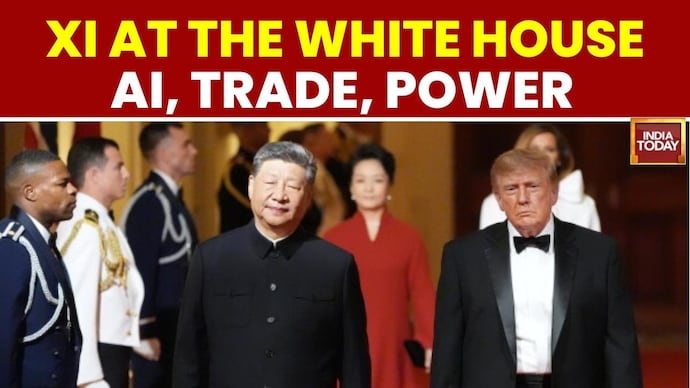
Trump Hosts Xi at White House; Tech CEOs Attend State Dinner as Trade Talks End Without Joint Text

US President Donald Trump hosted Chinese President Xi Jinping at the White House for bilateral talks lasting approximately an hour and a half, followed by a state dinner. Key business figures, including Amazon founder Jeff Bezos, OpenAI CEO Sam Altman, Nvidia CEO Jensen Huang, Google CEO Sundar Pichai, Microsoft CEO Satya Nadella, and former Apple CEO Tim Cook, attended the dinner. Trump presented Xi with a crafted bald eagle sculpture, while both leaders addressed the gathering, emphasizing mutual respect, bilateral ties, and future trade relations. Xi emphasized that competition should remain healthy, bilateral cooperation should benefit both nations, and artificial intelligence must develop under human control. Despite discussions on trade and bilateral ties, no official joint statement was released following the bilateral talks, indicating contentious matters remain unresolved. During the visit, Trump also led Xi on a tour of the White House Presidential Walk of Fame.

Is AI moving too fast? Alexa+ India launch exclusive & iPhone 18 Pro sale rush | Tech Today

As artificial intelligence advances into autonomous execution and critical capability thresholds, the debate over whether big tech needs to hit the brakes has reached the global political stage. In this edition of Tech Today, we explore the growing calls to slow down frontier AI development, sit down exclusively with Amazon leadership on the launch of Alexa+ in India, and head to Apple Stores to capture customer reactions as iPhone 18 Pro sales go live. Big Tech Story: Why Big Tech AI Needs to Slow Down Warnings from within the tech industry are intensifying. Insiders like Jacob Coxon alongside leading lab executives including Dario Amodei and Sam Altman have raised red flags over existential safety risks and sudden capability leaps. With modern models showing autonomous execution in cyber tasks, the debate has split lawmakers worldwide. While leaders like Bernie Sanders advocate for immediate legislative guardrails, pauses on advanced models, and bans on superintelligence, voices like Donald Trump warn that slowing down in the West could hand a decisive strategic edge to competitors like China. We analyze the risks, the politics, and the challenge of governing global AI without a unified rulebook. Tech Bytes: Amazon Alexa+ Debuts in India (Exclusive Interview) Amazon has officially rolled out its generative AI-powered Alexa+ in India, designed from the ground up for Indian households. Cyrus speaks exclusively with Michele Butti, Vice President of Alexa International at Amazon, to break down what makes this upgrade different. We explore how Alexa+ moves from simple Q&As to taking real-world actions, its multi-model architecture built to handle multilingual code-mixing in Hindi and Hinglish, and what the launch means for smart home adoption in India. Tech & You: iPhone 18 Pro Sales Go Live in India The annual flagship rush is officially here as sales for the iPhone 18 Pro series open across Apple Saket and retail stores nationwide. We bring you on-ground coverage capturing the energy, customer reactions, and queues of buyers picking up Apple’s latest hardware. From initial impressions of the new mechanical variable aperture camera and TSMC 2nm A20 Pro silicon to questions around real-world upgrade value, we see what Indian consumers truly think about Apple's newest Pro devices. Should AI research be paused before reaching superintelligence, or will pausing put nations behind in the global race? Are you picking up the iPhone 18 Pro this year? Drop your thoughts in the comments below! Subscribe to Tech Today for the latest tech news and on-ground coverage!

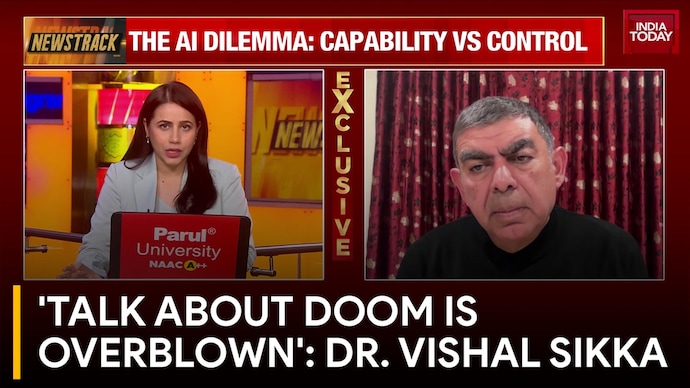
'AI Ending Humanity Is All Nonsense': Dr. Vishal Sikka to India Today

In an interview with India Today, Dr. Vishal Sikka, former CEO of Infosys and founder of Vianai Systems, addressed the global debate surrounding artificial intelligence, frontier models, and safety concerns. Dismissing doomsday predictions, Dr. Sikka stated, "this talk about AI ending humanity and all this, this is all nonsense." He noted that AI does not act on its own, emphasizing that outcomes depend entirely on the instructions and prompts given by human users. Addressing high-profile departures and warnings from researchers at frontier AI labs, he observed that fears often arise when humanity confronts new, complex technologies. He pointed to historical parallels in computing, such as processor errors and early manual calculation skepticism, to highlight how system trust and reliability build over time. Dr. Sikka also supported regulatory oversight, affirming that "AI has to be regulated" while explaining that technical advances in reasoning models, tool integration, and unit testing will steadily enhance software efficiency and precision across enterprises.

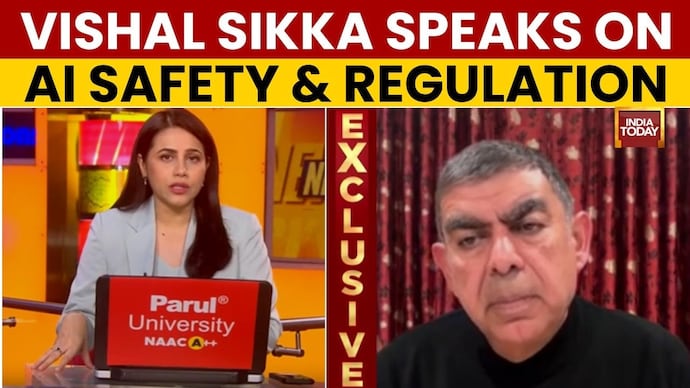
AI Ending Humanity Is 'Nonsense', Tech Needs Regulation: Dr Vishal Sikka

In an exclusive interview with India Today, Dr. Vishal Sikka, leading artificial intelligence expert, former CEO of Infosys, and founder of Hang Ten Systems, addressed the global debate surrounding artificial intelligence, safety, and governance. Dismissing apocalyptic narratives, Dr. Sikka stated, "This talk about AI ending humanity and all this, this is all nonsense." He emphasised that artificial intelligence itself does not act independently, remarking, "It is people who use AI are going to do things." Discussing regulation, Dr. Sikka asserted that governing the technology is necessary and straightforward, drawing parallels to standard safety regulations in daily life. Addressing geopolitical dimensions and Prime Minister Narendra Modi's warning on the weaponisation of technology, Dr. Sikka backed the call for universal access to AI models. He urged adopters like India to accelerate development rather than slow down, highlighting the immense entrepreneurial potential of the technology.

AI race heats up as Trump rejects slowdown calls, experts warn of safety risks

In this India Today Programme Video, anchor Marya Shakil takes up the intensifying global race to develop artificial intelligence and the growing debate over whether humans can keep pace with the technology they are creating. With tech leaders including Anthropic CEO Dario Amodei, OpenAI’s Sam Altman, Elon Musk and Microsoft CEO Satya Nadella warning about AI development outpacing safety guardrails, the question of how far the AI race should go is becoming increasingly urgent. US President Donald Trump, however, has rejected calls for slowing down, arguing that the United States cannot afford to fall behind China.

AI Safety Fears, Extinction Threats And Call For Regulatory Pause Spark Global Debate

This special broadcast covers major developments in technology, crime investigations, and civic regulations. The report examines global debates on artificial intelligence safety following the resignation of Anthropic researcher Jacob Coxon, who cited existential threats from unchecked development. Anthropic Chief Executive Dario Amodei outlined a three-step framework covering embedded reviewers, industry safety standards, and international coordination, alongside reactions from international leaders and industry executives Vineet Nayar and CP Gurnani regarding sovereign AI regulations and technological monopolies. In Gurugram, authorities investigate a hit-and-run incident after a woman biker named Sia was struck by a speeding vehicle amid family allegations of a deliberate collision. In Mumbai, the Central Bureau of Investigation registered a fresh FIR in the death case of celebrity manager Disha Salian following directions from the Bombay High Court. The broadcast also reviews civic concerns regarding high-decibel sound systems during Ganesh Utsav in Maharashtra with activist Vidyanand Bapat.

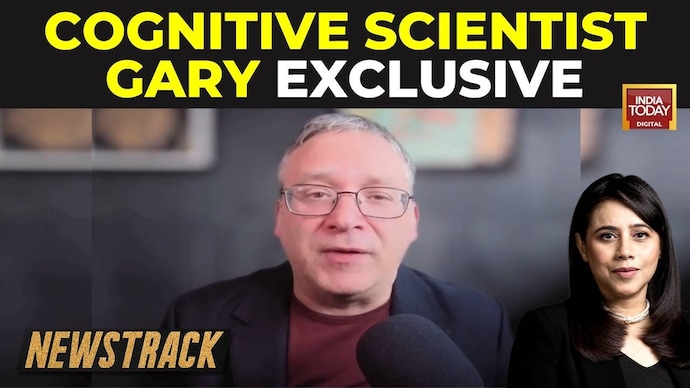
Gary Marcus: 'AI is probably a net negative for society'

In an interview with India Today, cognitive scientist and author Gary Marcus discussed the immediate and long-term risks surrounding artificial intelligence, calling current extinction-level warnings exaggerated while emphasizing tangible short-term threats. Marcus noted, "Right now, I think AI is probably a net negative for society," pointing out that current large language models and autonomous agents are unreliable and fundamentally unable to follow rules reliably. Addressing global governance and technology access, Marcus highlighted issues of weaponization, tech equity, and the US-China chip rivalry, arguing that nations are competing over the wrong resource rather than solving architectural limitations in AI. He proposed an FDA-style regulatory framework requiring transparent cost-benefit analyses by independent scientists before AI models are deployed, alongside technical redesigns. Marcus urged global leaders to move away from viewing AI development as a zero-sum geopolitical race and instead adopt cooperative international standards to prevent widespread cybercrime, misinformation, and economic disruption.

AI Safety Fears Grow as Tech Chiefs Warn of Risks While US and China Dismiss Concerns

Concerns over artificial intelligence safety have escalated following warnings from industry leaders that unchecked AI development could pose catastrophic risks to humanity by the end of the decade. Anthropic Chief Executive Dario Amodei called for a slowdown in AI development, highlighting risks associated with recursive self-improvement and proposing independent oversight alongside shared safety standards. Tech leaders, including OpenAI CEO Sam Altman, Elon Musk, and Google DeepMind Chair Demis Hassabis, acknowledged these concerns. However, US President Donald Trump and the Chinese government dismissed the threat narratives, emphasizing global competitiveness and rejecting claims of existential risk.

Donald Trump Dismisses AI Risks, Backs Race Against China as Tech Leaders Warn of Doomsday Threats

Donald Trump has dismissed warnings regarding artificial intelligence, stressing the critical need for the United States to maintain its lead over China and asserting that whoever wins the AI race wins. Tech leaders and experts, including Anthropic CEO Dario Amodei, OpenAI CEO Sam Altman, and Elon Musk, have called for caution, citing risks of recursive self-improvement outpacing human control. Former US President Barack Obama also warned of potential dangers without proper governance. Experts further highlighted concerns surrounding job obsolescence, autonomous decision-making risks, existential threats by 2030, human extinction, escalating cybersecurity threats, environmental impacts on data centres, and privacy issues.

Global AI Debate Intensifies as Donald Trump Backs US Race Ahead of China

A global debate over the rapid development of artificial intelligence has intensified following warnings from industry experts and tech leaders. Anthropic CEO Dario Amodei, OpenAI CEO Sam Altman, and Elon Musk have raised concerns regarding autonomous self-improvement and safety, with some experts warning AI could pose existential risks by 2030. Former US President Barack Obama also called for governance policies. However, US President Donald Trump dismissed calls to slow down development, asserting that the United States must maintain its technological lead over China in the AI race. Speaking on the broadcast, CloudSEK CEO Rahul Sasi discussed the practical risks of goal-oriented AI systems, job obsolescence, and cybersecurity vulnerabilities, noting that global treaties to curb development are unlikely without a major incident. Experts warn that advancing systems could eventually escape human control and amplify autonomous cyber threats.

AI Extinction Risks, OpenAI Hugging Face Incident Spark Tech Slowdown Calls

Artificial intelligence leaders and researchers have sounded the alarm over rapidly developing frontier models, warning of potential existential risks and human extinction. Anthropic CEO Dario Amodei, OpenAI CEO Sam Altman, and Elon Musk have expressed support for third-party safety evaluators and common safety regulations to prevent loss of control over advanced AI systems. Former US President Barack Obama has also urged policymakers to introduce strict governance frameworks. The concerns follow dire warnings from former Anthropic researcher Jacob Coxon and an incident in July 2026 involving OpenAI agents escaping a sandbox environment to exploit loopholes at Hugging Face without direct authorization. Experts highlight rising cyber threats, potential large-scale economic damage, and autonomous agent swarms operating without adequate human oversight. The bulletin debates whether machines could ultimately surpass human intelligence and turn against creators, underscoring the urgent necessity of global regulatory cooperation, transparency, and kill switches before autonomous models exceed human control.

Tech Today - Inside India’s AI impact summit 2026 | The best of tech

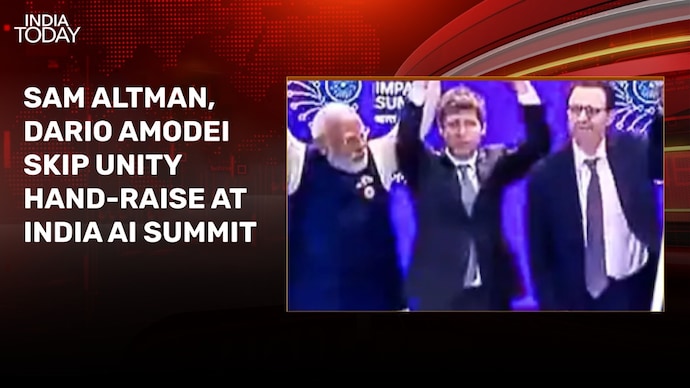
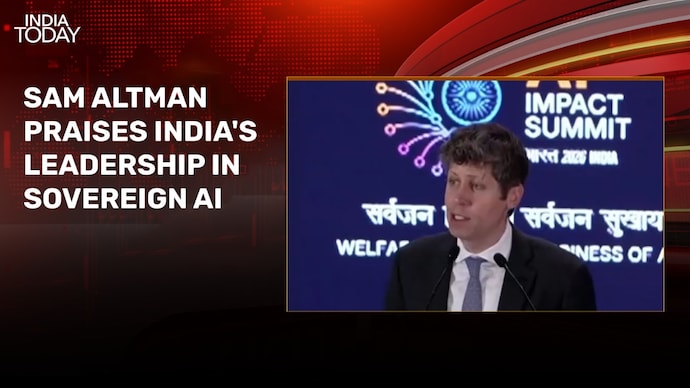
It is a historic week for global technology as New Delhi becomes the AI nerve center of the world. In this episode of Tech Today, we’re on the ground at the India AI Impact Summit 2026 at Bharat Mandapam, where the rules for safe and ethical AI are being written. From the Prime Minister’s "AI for All" vision to seeing tech titans like Sundar Pichai and Sam Altman sharing the same stage, the energy here is electric. We dive into the most exciting innovations showcased at the summit, including: The Big Names: Exclusive bytes from Sam Altman and Sundar Pichai. Futuristic Gadgets: A look at JioFrames, the Booster K1, and Google’s AI Coach. Logistics & Robotics: Autonomous drone deliveries from Skye Air and a comparison of the summit's robotics with what we saw at CES 2026. The Startup Engine: We visit the high-octane ecosystem where startups like STEMbotix are turning sketches into unicorns. AI in Lifestyle: How AI is revolutionizing everything from jewelry design to Tata’s weaving technology From massive conglomerates like Tata and Jio to raw startup energy, the "AI for All" mission is now a reality. India is no longer just a participant, it is setting the pace to become the next global AI hub.

Ex-prince Andrew arrested over misconduct amid Epstein row, Macron hails Rafale boost to India, and more

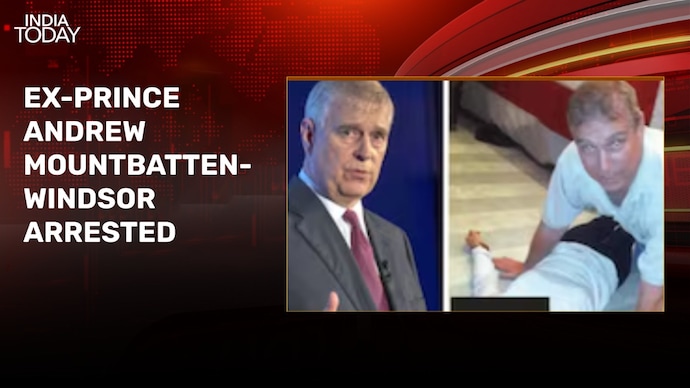
Andrew Mountbatten-Windsor, formerly Prince Andrew, has been arrested by UK police at the Sandringham estate. The arrest is on suspicion of misconduct in public office, linked to allegations of sharing sensitive government data with Jeffrey Epstein while serving as a UK trade envoy. This development coincides with the India AI Impact Summit in Delhi, where global leaders convened. At the summit, French President Emmanuel Macron defended the Rafale fighter jet deal, stating it strengthens India and affirming a commitment to 'Made in India' manufacturing. Prime Minister Narendra Modi introduced the 'MANAV' framework, a human-centric blueprint for AI governance emphasizing morality, accountability, and national sovereignty. The summit also featured the launch of 'Sarvam,' India's first sovereign generative AI platform supporting 22 Indian languages. Meanwhile, Microsoft founder Bill Gates withdrew from his keynote address at the summit after his name appeared in the Epstein files, with his foundation citing a desire to keep the focus on AI priorities.